Early Life & Artistic Foundations: From Portraiture to Landscape
 Wikipedia: Sanford Robinson Gifford
Sanford Robinson Gifford (July 10, 1823 – August 29, 1880) was an American landscape painter and a leading member of the second generation of Hudson River School artists. A highly-regarded practitioner of Luminism, his work was noted for its emphasis...
Sanford Robinson Gifford, born in 1823 in the rural tranquility of Greenfield, New York, initially embarked on a path seemingly divergent from his eventual artistic renown. The fourth of eleven children raised by Quaker ironmaker Elihu Gifford and Eliza Robinson Starbuck, young Sanford’s early inclinations didn't immediately signal the landscape painter he would become. His formal education began at Brown University in 1842, but a burgeoning passion for art drew him away after just two years to the bustling artistic hub of New York City. There, he diligently studied drawing, perspective, and anatomy under the tutelage of John Rubens Smith, a British watercolorist who had established a respected reputation for his instructional skills. This foundational training in portraiture—a common starting point for aspiring artists of the era—provided Gifford with a crucial understanding of form and composition. However, it was a series of sketching expeditions into the picturesque hills of New England and the majestic Catskill Mountains in 1846 that ignited a transformative shift within him. These experiences weren’t merely exercises in technique; they were awakenings to the profound beauty and emotional resonance of the natural world, fostering an “absolute freedom” he found impossible to reconcile with the constraints of portrait work.
The Hudson River School & Gifford’s Emergence as a Luminist Painter
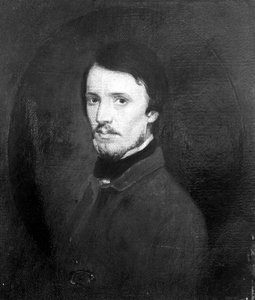 Sanford Robinson Gifford
Sanford Robinson Gifford (1823-1880) was a leading American Luminist landscape painter of the Hudson River School. Explore serene scenes, atmospheric light & notable works like 'Tivoli'. Discover his legacy and influence on 19th-century art.
Gifford's artistic trajectory soon aligned him with the burgeoning Hudson River School, a distinctly American art movement that celebrated the grandeur and sublime beauty of the nation’s landscapes. While deeply influenced by the pioneering spirit of Thomas Cole, the founder of the school, Gifford carved his own unique path within this vibrant community. He wasn’t drawn to Cole’s dramatic, often allegorical compositions; instead, he gravitated towards a more subtle, atmospheric approach—one that would ultimately define him as a leading practitioner of Luminism. This style, characterized by its meticulous attention to light and shadow, sought not merely to depict the *appearance* of nature but to capture its very essence, its ethereal quality and emotional impact. Elected an associate and then an academician of the National Academy of Design in 1851 and 1854 respectively, Gifford’s growing recognition signaled his rising prominence within the New York art world. He became known for paintings that evoked a sense of tranquility and reverence, reflecting a deep spiritual connection to the American wilderness.
Mastering Light & Atmosphere: Key Characteristics of Gifford's Style
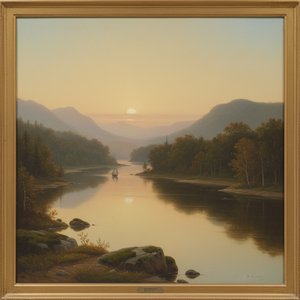
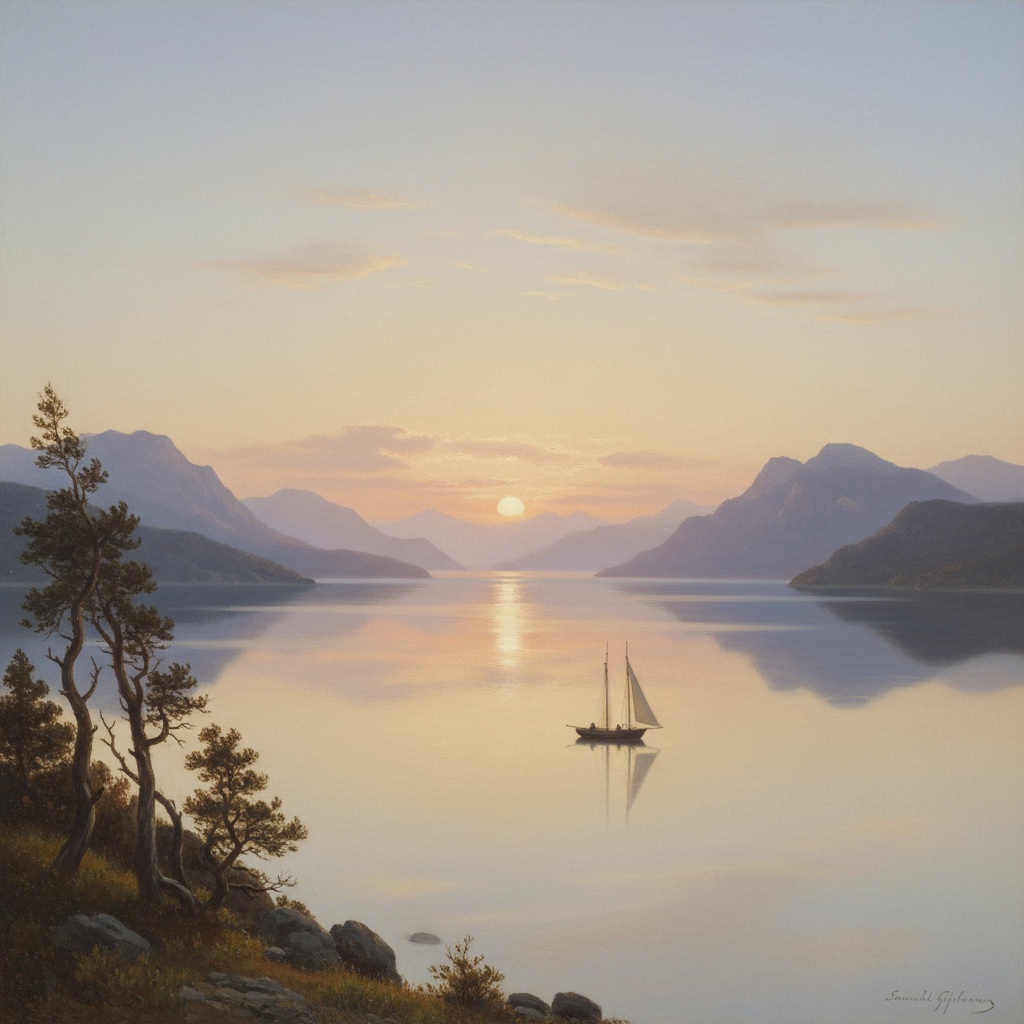
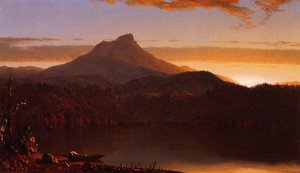 A Lake Twilight 1
Discover 'A Lake Twilight 1' by Sanford Robinson Gifford – a stunning Hudson River School landscape showcasing dramatic light & sublime beauty. Explore Luminism’s elegance.
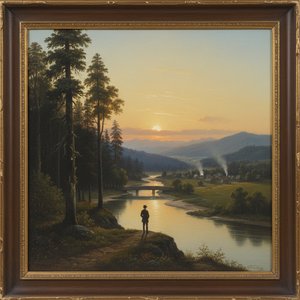
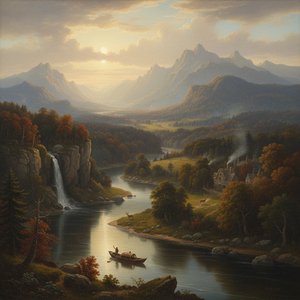
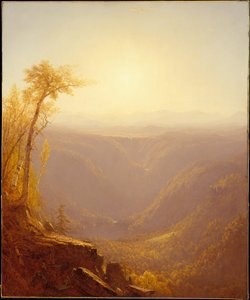
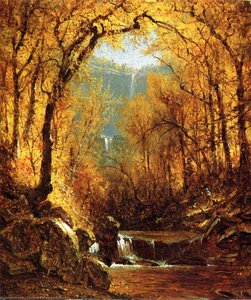
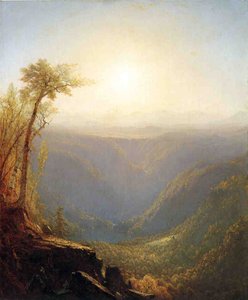
The hallmark of Sanford Robinson Gifford’s artistry lies in his unparalleled ability to render light and atmosphere. He didn’t simply paint landscapes; he painted *air*, capturing the subtle gradations of color, the delicate haze of distance, and the luminous glow that defines moments like sunrise or twilight. This mastery wasn't accidental. Gifford employed a smooth, almost imperceptible brushstroke, eschewing visible texture in favor of polished surfaces that allowed light to play across the canvas with remarkable realism. His compositions often feature low horizon lines, emphasizing the vastness of the sky and creating a sense of boundless space. Water—rivers, lakes, and coastal scenes—frequently serves as a reflective mirror, amplifying the atmospheric effects and drawing the viewer deeper into the scene. Crucially, human presence is minimized or entirely absent in his works; figures are small, often dwarfed by the immensity of nature, reinforcing the idea that these landscapes exist beyond the realm of human intervention – spaces for contemplation and spiritual renewal.
Travels and Influences: Europe, the Middle East, and the American West
--- title: Hudson River School Visions: The Landscapes of Sanford R. Gifford - The Metropolitan Museum of Art author: Avery; Kevin J; Franklin Kelly; With Claire A Conway; Essays By Heidi Applegate; Eleanor James Harvey url: https://www.metmuseum.org...
Like many artists of his generation, Gifford recognized the importance of broadening his horizons through travel. His first sojourn to Europe between 1855 and 1857 proved pivotal, exposing him to the artistic traditions of England, Scotland, and France. He forged a close friendship with Albert Bierstadt, another prominent Hudson River School painter, and together they explored the European landscape, sketching subjects that would later inform their work. A subsequent journey in 1868 took Gifford further afield, across Europe and into the exotic landscapes of the Middle East, including Egypt. These travels profoundly impacted his palette and compositional sensibilities, introducing new perspectives and a heightened appreciation for atmospheric effects. However, it was his expeditions within the American West—particularly a trip with Worthington Whittredge and John Frederick Kensett in 1870—that truly solidified his artistic vision. These journeys were often undertaken as part of the Hayden Expedition, led by Ferdinand Vandeveer Hayden, documenting the vast expanses of the Rocky Mountains and contributing to a growing national awareness of the American wilderness.
Gifford’s Legacy: Influence on Subsequent Landscape Artists & Modern Photography
Sanford Robinson Gifford's influence extended far beyond his own lifetime. His meticulous attention to light and atmosphere, coupled with his serene compositions, profoundly impacted subsequent generations of landscape artists. While he didn’t explicitly found a school of followers, his style resonated deeply with painters seeking to capture the transcendent beauty of nature. His work also foreshadowed developments in modern photography. The clarity of his depictions, the subtle gradations of tone, and the emphasis on atmospheric perspective anticipated many of the techniques employed by early landscape photographers. Furthermore, Gifford’s commitment to capturing the emotional resonance of a scene—his ability to evoke a sense of tranquility and reverence—continues to inspire artists today. His paintings serve as powerful reminders of the enduring beauty of the natural world and the importance of preserving it for future generations.
Exploring Gifford’s Works: Notable Paintings and Enduring Appeal
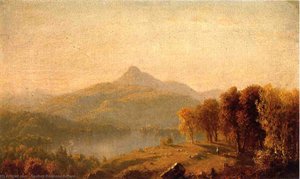
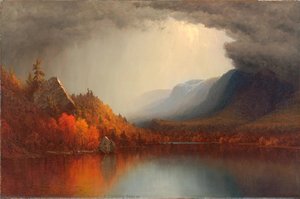
A Coming Storm, painted in 1860, exemplifies Gifford's ability to convey a sense of impending drama through subtle atmospheric effects. The ominous clouds gathering on the horizon create a palpable tension, yet the overall composition remains remarkably serene. Sketch, from 1873, showcases his mastery of light and shadow in capturing the beauty of Vermont’s landscape. A Lake Twilight 1, another captivating work, demonstrates his skill in rendering the delicate hues of twilight, creating a scene that is both peaceful and evocative. These paintings, along with numerous others, continue to captivate audiences with their timeless appeal. They offer not merely depictions of landscapes but invitations to experience the sublime—to connect with nature on a deeper emotional level. At ArtsDot.com, you can explore high-quality reproductions of Gifford’s masterpieces, bringing the beauty and tranquility of his art into your own home.