Beyond the Horizon: The Emergence of a New Visual Language in the North
The fifteenth century in Northern Europe witnessed a profound departure from the stylized, ethereal abstractions of the Gothic tradition, marking instead an era of unprecedented empirical observation. While the Italian Renaissance sought beauty through the mathematical perfection of proportion and classical idealism, the masters of the North—spanning Flanders, the Netherlands, and beyond—found their inspiration in the tangible, the minute, and the ephemeral. This was a visual revolution rooted not in the reconstruction of ancient ruins, but in the meticulous study of the natural world. The horizon expanded to include the texture of a velvet sleeve, the glint of light on a teardrop, and the rugged landscape of the Low Countries. It was a movement that celebrated the sacrosanct nature of reality, asserting that truth could be found within the most microscopic details of our existence.
The Luminous Revolution: Pioneering Oil Techniques and the Mastery of Light
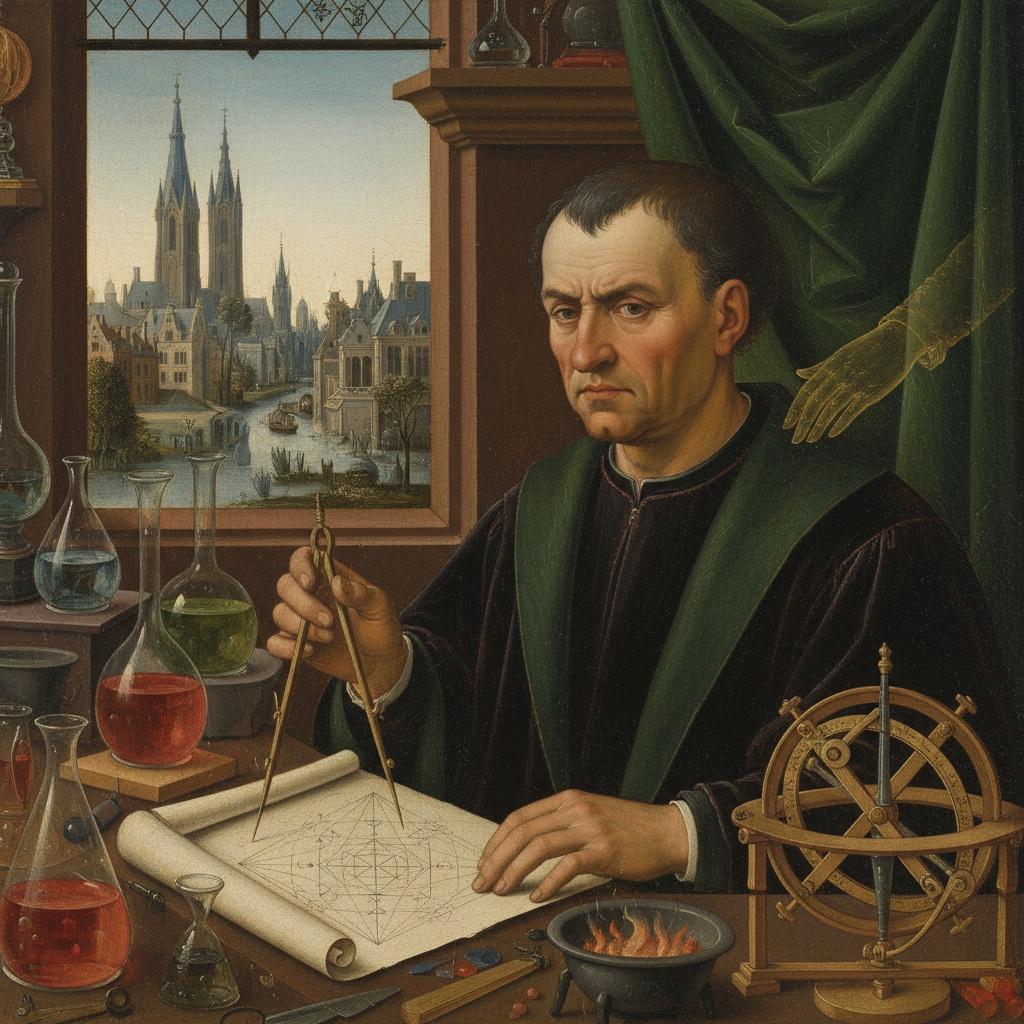
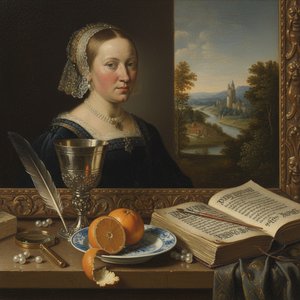
At the heart of this aesthetic shift lay a technical triumph: the refinement of oil painting. The transition from tempera to an oil-based medium allowed artists such as Jan van Eyck and his successors to manipulate pigment with a newfound, almost miraculous, translucency. By applying successive, thin layers of glaze, these masters achieved a depth of color that seemed to emanate from within the canvas itself. This technique enabled a luminosity that captured the complex behavior of light—how it refracts through a glass vessel, how it softens upon a petal, and how it dances across metallic surfaces. The medium did not merely represent light; it embodied it. Through this mastery of oil, the Northern Renaissance achieved a tactile realism so profound that the boundary between the painted image and the physical object began to dissolve, inviting the viewer into a world of unparalleled sensory richness.
Disguised Symbolism: Deciphering the Sacred within the Profane
To the modern eye, these paintings appear as breathtakingly realistic portraits of domestic life, yet beneath this surface of profound realism lies a complex web of disguised symbolism. In the Northern Renaissance, no object was truly mundane. A single candle burning in a chandelier was rarely just a source of light; it often served as a silent sentinel for the presence of the Divine. A lily resting in a porcelain vase whispered of purity and the Annunciation, while the reflections in a polished mirror could reveal hidden spiritual truths. This seamless integration of the sacred within the profane allowed artists to transform everyday interiors into cathedral-like spaces of contemplation. Every fold of fabric, every piece of fruit, and every shadow held a coded meaning, requiring the viewer to engage in a slow, meditative act of deciphering—a spiritual journey through the very textures of the material world.
The Human Tapestry: Landscape, Peasantry, and Narrative Depth in Bruegel
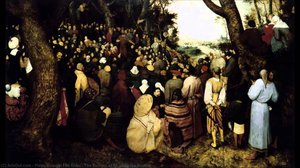
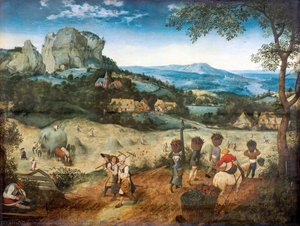
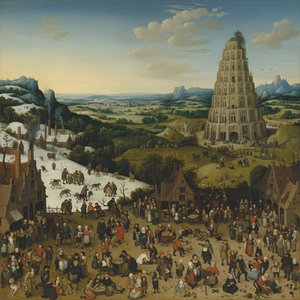
As the Renaissance progressed into the sixteenth century, the focus of this detailed observation expanded from the intimate religious interior to the vast, sweeping narratives of human life. Pieter Bruegel the Elder emerged as the preeminent architect of this new landscape, weaving a complex tapestry of peasant life, communal joy, and seasonal struggle. In works such as Children's Games, Bruegel utilized his characteristic precision to document the vibrant, chaotic energy of Flemish childhood. His landscapes were not merely backdrops but living participants in the human drama, characterized by an innovative use of perspective and a deep empathy for the common man. Through his lens, the landscape became a stage where the cycles of nature and the rhythms of human existence were inextricably linked, celebrating the profound dignity found within the simplest of human endeavors.
An Enduring Precision: The Lasting Legacy of Northern Renaissance Realism
The legacy of the Northern Renaissance remains an enduring cornerstone of art history, a testament to the power of precision and the beauty of the observed truth. This era taught us that there is no detail too small for reverence and no subject too humble for greatness. Today, this passion for historical accuracy and textural depth continues to inspire those who seek to preserve the soul of the Old Masters. At ArtsDot.com, we honor this tradition of meticulous craftsmanship by creating hand-painted oil reproductions that capture the very essence of these masterpieces. Through the careful layering of pigments and a dedication to the tactile quality of the brushstroke, we strive to bring the luminous revolution of the North into the modern home, ensuring that the magic of detail remains an eternal part of our visual heritage.