





Introduction: The Enduring Power of Specificity
The human eye is drawn to detail, a primal fascination rooted perhaps in our ancestors’ need to decipher the subtle signs of survival within their environment. But beyond mere recognition, detail holds a deeper power – it imbues art with life, narrative weight, and ultimately, value. For the discerning collector, understanding *how* an artist employs detail is as crucial as appreciating the subject matter itself. It speaks to intention, skill, and a profound connection between creator and canvas. This exploration delves into the captivating history of specificity in art, tracing its evolution from the meticulous realism of the Renaissance through the focused clarity of modern movements, revealing how artists have harnessed the power of observation to create works that resonate across centuries.
Renaissance Realism & Intellectual Detail: Zelotti's 'Hall of the Arts'
 Decoration in the Hall of the Arts (detail)
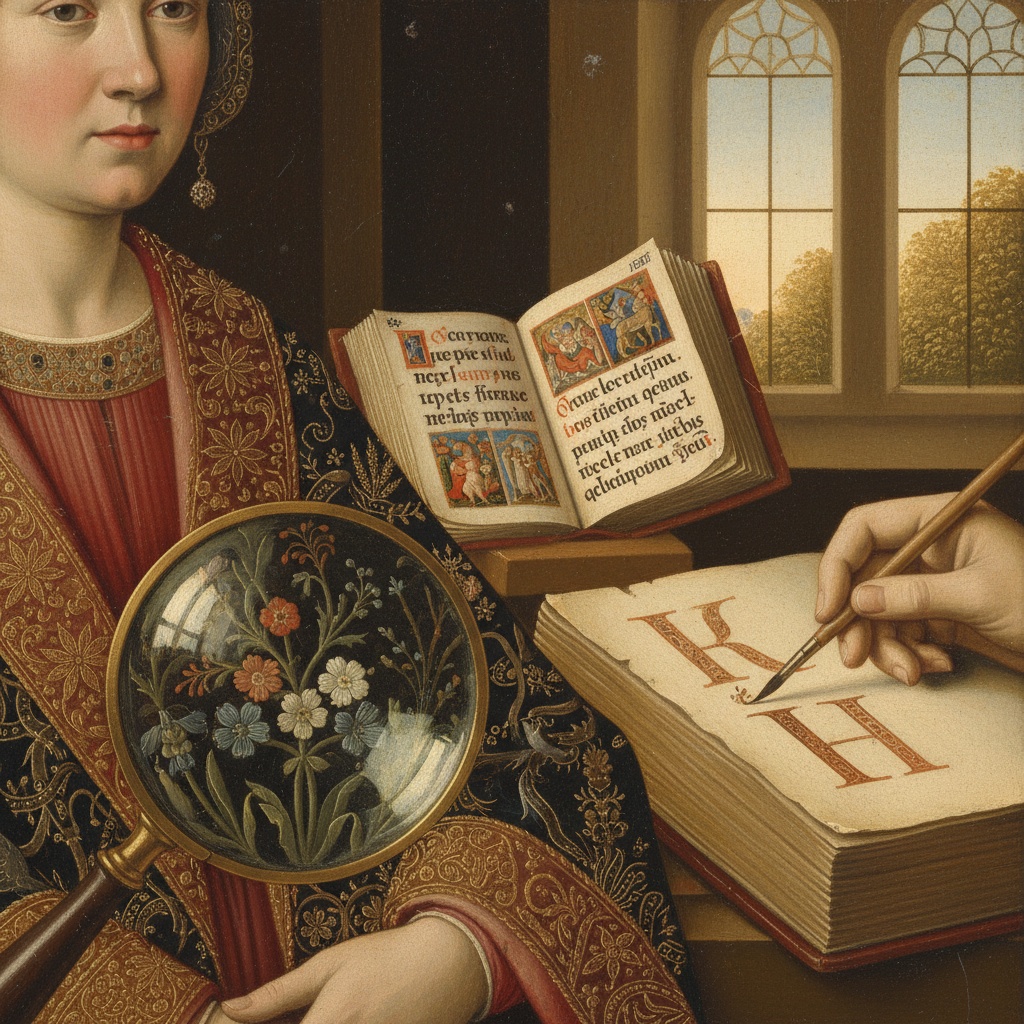
Giovanni Battista Zelotti’s 'Decoration in the Hall of the Arts (detail)' (1564) showcases Renaissance realism & intellectualism. Oil on canvas, balanced composition, classical setting. A captivating portrait of contemplation.
The Renaissance witnessed a rebirth not only of classical forms but also of observational rigor. Artists sought to accurately depict the world around them, driven by humanist ideals and a burgeoning scientific curiosity. Giovanni Battista Zelotti’s ‘Decoration in the Hall of the Arts (detail)’ (1564) exemplifies this pursuit. The oil on canvas showcases an astonishing level of realism – balanced composition, classical setting, and figures rendered with anatomical precision. However, Zelotti doesn't merely replicate; he elevates. The detail isn’t simply about *seeing* accurately but about conveying intellectualism and contemplation. Note the subtle play of light across fabrics, the individualized expressions on each face, the carefully arranged objects hinting at scholarly pursuits. This wasn’t just decoration; it was a visual statement about the power of knowledge and the refined life of the mind – qualities highly prized by Renaissance patrons and collectors alike.
The Baroque Embrace of Intricacy: Francken and the Art Collector’s Gaze
 Art Room (detail)
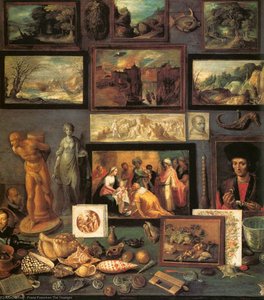
Admire Frans Francken the Younger's 'Art Room (detail)' – a stunning Baroque masterpiece depicting a museum setting with vibrant colors and intricate compositions. Explore Antwerp’s artistic heritage!
Moving into the Baroque period, detail took on a different character—less about scientific accuracy and more about opulent display and dramatic effect. Frans Francken the Younger's ‘Art Room (detail)’ is a stunning example. This masterpiece depicts a museum setting brimming with vibrant colors and intricate compositions. The sheer density of objects – paintings within paintings, sculptures, globes, and curious artifacts – creates a visual feast for the eye. But this isn’t random abundance; it’s a carefully constructed tableau designed to impress. Francken understood his audience—the burgeoning class of art collectors who sought not just beautiful objects but symbols of their wealth, taste, and erudition. The detail in ‘Art Room’ functions as a form of social currency, demonstrating the collector's discerning eye and access to rare and valuable treasures. The painting itself becomes a miniature collection, reflecting the status of its owner.
Vermeer's Microscopic Worlds: Detail as a Pathway to Narrative Depth
 The Art of Painting (detail)
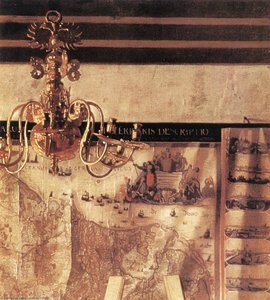
Johannes Vermeer stands apart even within the Baroque tradition for his unparalleled mastery of light and detail. While Francken’s intricacy is expansive, Vermeer’s is microscopic. Consider ‘The Art of Painting (detail)’. The focus isn't on grand narratives or dramatic gestures but on the quiet intimacy of a painter at work. Every surface – the tapestry, the map, the model’s skin – is rendered with painstaking accuracy. But this detail isn’t merely technical; it’s profoundly psychological. The light filtering through the window, the subtle textures of the fabrics, the delicate expression on the model's face—all contribute to a sense of stillness and contemplation. Vermeer uses detail not to overwhelm but to draw the viewer into the scene, inviting them to share in the artist’s private world and unravel the hidden layers of meaning within it. The power lies in what is *not* explicitly stated, allowing the narrative to unfold through subtle observation.
Precisionism: A Modern Celebration of Industrial Form & Clarity
 Precisionism: A Study of Industrial Aesthetics & Modern American Art
Explore Precisionism, a pivotal American art movement celebrating the Machine Age. Discover key artists like Sheeler & O'Keeffe, its European roots, and lasting influence on modern aesthetics. Expert analysis for collectors.
The 20th century brought a radical shift in artistic focus with the emergence of Precisionism. Rejecting the emotional subjectivity of earlier movements, Precisionist artists turned their attention to the sleek geometry and dynamism of the industrial landscape. Artists like Charles Sheeler and Charles Demuth celebrated the Machine Age, reducing subjects to their essential forms and eliminating extraneous detail. This wasn’t about romanticizing industry; it was about finding a new aesthetic language for a modern America. Precisionism, as explored in articles dedicated to the movement, embraced clarity and order, reflecting the perceived efficiency and progress of the era. The smooth brushwork and sharp lines evoke a sense of cool detachment, transforming factories and skyscrapers into monumental symbols of American ingenuity. This focus on form over feeling resonated with collectors seeking a distinctly American artistic identity.
Orientalist Detail & Genre Painting: Lewis and the 19th-Century British Aesthetic
 John Frederick Lewis: Orientalism, Detail & Genre Painting in 19th-Century British Art
Explore the captivating Orientalist paintings of John Frederick Lewis! Discover his mastery of detail, genre scenes & influence on 19th-century British art. Learn about his life, techniques & legacy at ArtsDot.
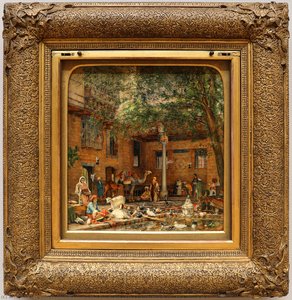
John Frederick Lewis offers a fascinating case study in the power of detail within a specific genre – Orientalism. His captivating paintings, explored through dedicated articles on his work, showcase an extraordinary mastery of texture, pattern, and light. Lewis didn’t simply depict scenes from the Middle East; he meticulously recreated them, immersing himself in the culture and painstakingly rendering every object with astonishing accuracy. This dedication to detail wasn't merely about exoticism; it was about creating a believable and immersive world. His genre scenes – interiors of harems, bustling marketplaces – are filled with intricate patterns, luxurious fabrics, and carefully arranged objects that convey a sense of authenticity and opulence. For 19th-century British collectors, Lewis’s paintings offered a glimpse into a distant and alluring culture, meticulously rendered for their enjoyment and contemplation. The detail became synonymous with the perceived richness and mystery of the Orient.






