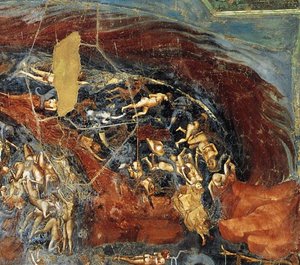
![Scrovegni - Last Judgment (detail) [05] — Giotto Di Bondone](/media/artworks/images/thumbnails/19/ec/19ecce7315fc49889ebab4e974a4a7fe.jpg)
![Scrovegni - Last Judgment (detail) [03] — Giotto Di Bondone](/media/artworks/images/thumbnails/3a/8d/3a8d38fa6f054e659e9d04930988a1b3.jpg)
The Trecento Context: Italy on the Brink of Change
The Trecento ( tray-CHEN-toh, US also treh-, Italian: [treˈtʃɛnto]; short for milletrecento, "1300") refers to the 14th century in Italian cultural history. The Trecento is considered to be the beginning of the Italian Renaissance or at least the Pr...
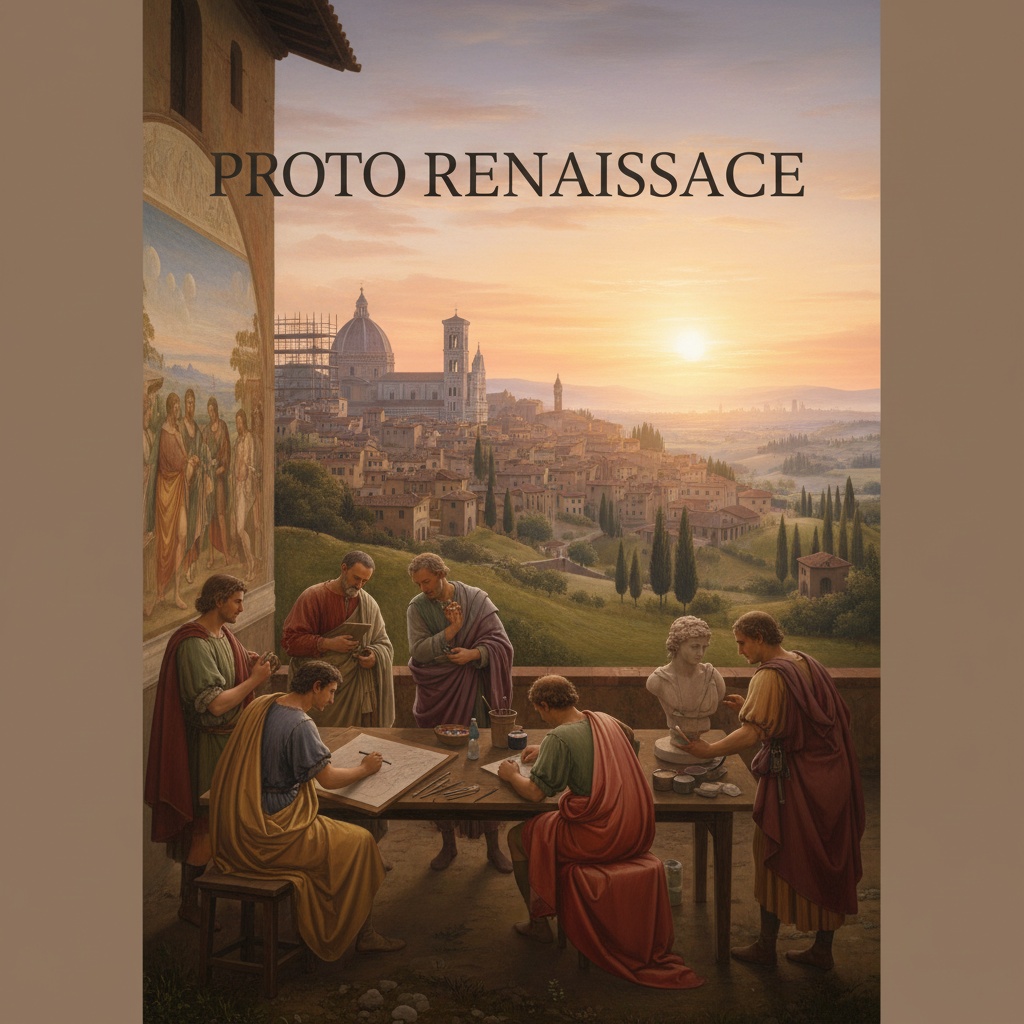
The 14th century, known as the *Trecento* in Italian, was a period of profound transition—a crucible where the established order of the medieval world began to yield to the burgeoning spirit of the Renaissance. While often overshadowed by its more celebrated successor, the Proto-Renaissance represents a critical turning point in art history, a time when artists first dared to break free from centuries of stylistic convention and embrace a new naturalism. Italy itself was far from unified; instead, it comprised a patchwork of powerful city-states—Florence, Siena, Milan, Venice—each vying for economic and political dominance. This competitive environment fostered a unique atmosphere of innovation, as wealthy patrons commissioned increasingly ambitious works to showcase their power and piety. However, this era wasn’t solely defined by artistic ambition; the shadow of the Black Death loomed large, profoundly impacting society and influencing the themes explored in art—a heightened focus on mortality, religious devotion, and human suffering.
Breaking with Tradition: The Italo-Byzantine Style & Its Limitations
For centuries, the dominant artistic style across Italy was rooted in the Byzantine tradition. Characterized by its flattened perspective, stylized figures, lavish use of gold leaf, and emphasis on symbolic representation rather than realistic depiction, Italo-Byzantine art served primarily to convey religious narratives with a sense of otherworldly grandeur. Figures were elongated and ethereal, their expressions often distant and hieratic, designed to inspire reverence rather than empathy. While beautiful in its own right, this style increasingly felt inadequate to express the growing complexities of human experience. Artists began to chafe against its limitations—the lack of depth, the static poses, the emotional detachment. The desire for greater realism wasn’t simply a matter of technical skill; it reflected a broader shift in worldview, a burgeoning interest in the physical world and the individual's place within it. This dissatisfaction paved the way for artists to seek new approaches, drawing inspiration from classical antiquity and a more direct observation of nature.
Giotto di Bondone: A Revolutionary Approach to Form and Space
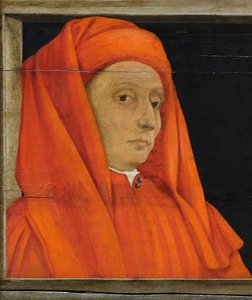 Giotto di Bondone
Explore Giotto di Bondone (1267-1337), the revolutionary Italian painter! Discover his proto-Renaissance frescoes, naturalism & emotional depth in works like the Scrovegni Chapel. A key figure in art history.
Enter Giotto di Bondone (c. 1267-1337), widely considered the father of Renaissance painting. While not entirely abandoning the Byzantine tradition, Giotto fundamentally altered its core principles. His figures possessed a newfound weight and solidity—they occupied space rather than floating ethereally within it. He pioneered techniques like *modeling*, using gradations of light and shadow to create the illusion of volume and depth, giving his subjects a tangible presence previously unseen in Italian art. Perhaps most importantly, Giotto imbued his figures with genuine emotion—joy, sorrow, anger, fear—making them relatable and human. Giovanni Villani, a contemporary banker and chronicler, famously wrote that Giotto “drew all his figures and their postures according to nature,” a testament to his commitment to realism. This wasn’t merely about replicating physical appearances; it was about conveying psychological truth.
The Scrovegni Chapel Frescoes: Narrative, Emotion, and Innovation
![Scrovegni - [30] - Washing of Feet](/media/artworks/images/thumbnails/e0/79/e079b0e087a84ad896ac68b0b4256c59.jpg) Scrovegni - [30] - Washing of Feet
Scrovegni - [30] - Washing of FeetDiscover Giotto’s ‘Washing of Feet,’ a pivotal Early Renaissance fresco showcasing humility & innovative art. Explore this masterpiece from Padua's Scrovegni Chapel.
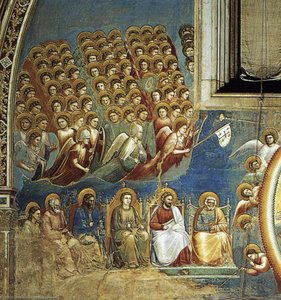
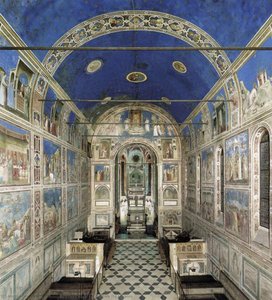
Nowhere is Giotto's revolutionary approach more evident than in the frescoes he painted for the Scrovegni Chapel in Padua (c. 1305-1310). Commissioned by Enrico Scrovegni as an act of penance, the chapel’s cycle depicts scenes from the life of Christ and the Last Judgment with unprecedented emotional intensity and narrative clarity. Consider “The Washing of Feet,” a pivotal scene showcasing humility and compassion. Unlike earlier depictions that focused on symbolic gestures, Giotto portrays the intimate interaction between Christ and his disciples—their expressions of surprise, tenderness, and devotion are strikingly lifelike. Similarly, “Christ Before Caiaphas” captures the drama and tension of the moment with powerful psychological insight. The composition is carefully structured to draw the viewer’s eye to the central figures, while the use of light and shadow creates a sense of depth and realism. These frescoes weren't simply decorative; they were intended to evoke an emotional response in the viewer, fostering a deeper connection with the sacred narrative.
Beyond Florence: Duccio, Simone Martini, and the Sienese School
While Giotto dominated Florentine painting, Siena emerged as another important center of artistic innovation. Artists like Duccio di Buoninsegna (c. 1255/60-1318/9) and Simone Martini (1284-1344) developed a distinct style characterized by its elegance, refinement, and lyrical beauty. Duccio’s *Maestà Altarpiece*, commissioned for the Siena Cathedral, is a masterpiece of Italo-Byzantine painting that nevertheless demonstrates a growing interest in naturalism and emotional expression. Simone Martini, a student of Duccio, further refined this style, incorporating elements of Gothic elegance and courtly grace into his works. While their approach differed from Giotto’s more grounded realism, both artists contributed significantly to the Proto-Renaissance aesthetic, pushing the boundaries of artistic convention and paving the way for future generations.
Legacy of the Proto-Renaissance: Paving the Way for the High Renaissance
The innovations of Giotto and his contemporaries weren’t immediately embraced universally. The Italo-Byzantine style persisted alongside these new developments, but the seeds of change had been sown. The Proto-Renaissance laid the groundwork for the artistic explosion of the 15th century—the High Renaissance. Artists like Masaccio, Donatello, and Leonardo da Vinci built upon Giotto’s foundations, further refining techniques of perspective, anatomy, and realism. The emphasis on humanism, a renewed interest in classical antiquity, and the celebration of individual genius all trace their origins back to this pivotal period. The Proto-Renaissance wasn't simply a prelude; it was a vital artistic movement in its own right—a time when artists dared to envision a new world, one where art could reflect not only divine truth but also the beauty and complexity of human experience. At ArtsDot.com, we celebrate this legacy by offering meticulously crafted reproductions of these masterpieces, allowing you to bring the spirit of the Proto-Renaissance into your own home.