

Introduction: The Rise of Abstract Expressionism in Modern Interiors
Modernism was an early 20th-century movement in literature, visual arts, performing arts, and music that emphasized experimentation, abstraction, and subjective experience. Philosophy, politics, architecture, and social issues were all aspects of thi...
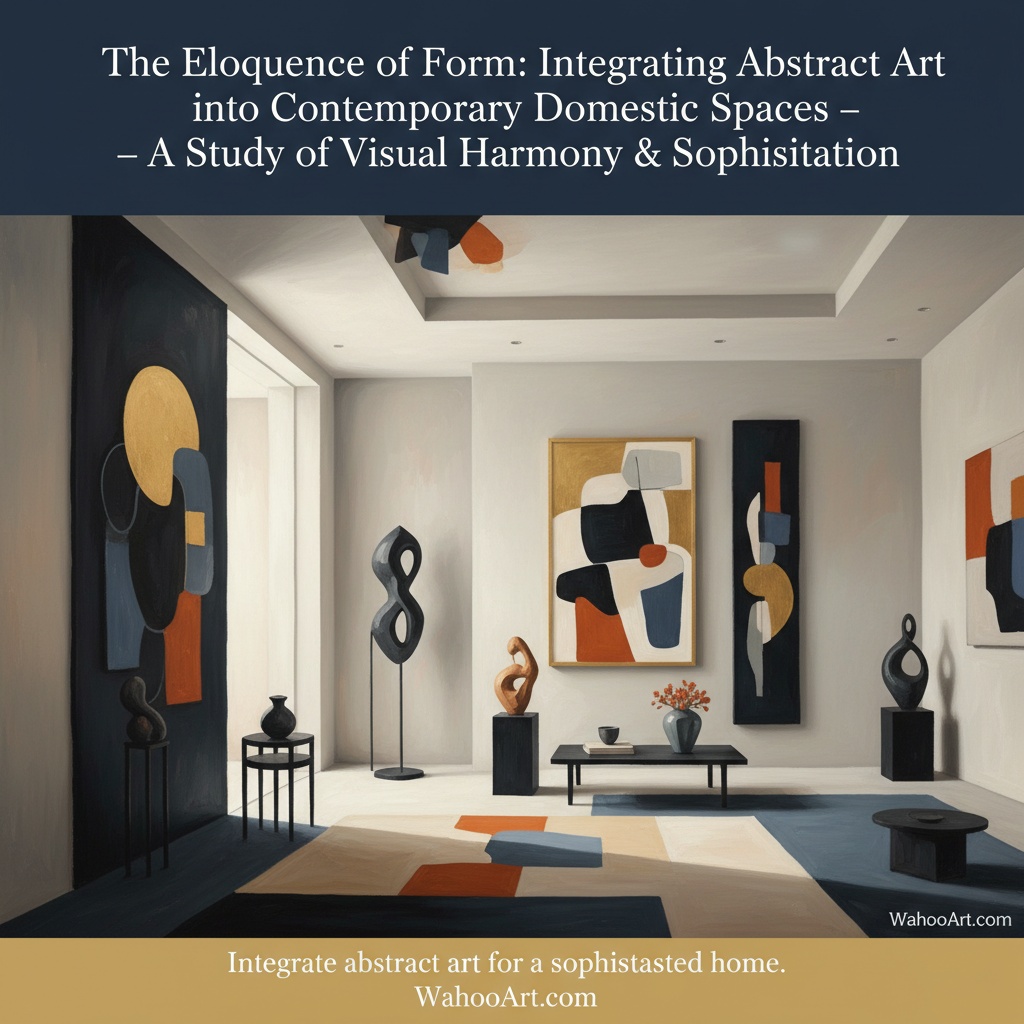
The mid-20th century witnessed a seismic shift in artistic expression, one that reverberated far beyond the canvas and into the very fabric of domestic life. Abstract Expressionism, with its bold gestures, emotive power, and rejection of representational form, wasn’t merely a new style of painting; it was a philosophical statement – a liberation from convention and an embrace of subjective experience. This movement, born from a post-war desire for authenticity and individual freedom, found surprisingly fertile ground in the homes of those seeking to define a modern identity. Where once interiors were meticulously curated collections of recognizable scenes and portraits, a new appetite emerged for works that spoke not *of* something, but *to* something – to emotions, memories, and the intangible currents of human consciousness. The integration of abstract art into contemporary spaces wasn’t simply about aesthetics; it was about creating environments that resonated with a deeper sense of self, reflecting a world increasingly defined by complexity and nuance.
Decoding Abstraction: Understanding Key Styles & Movements
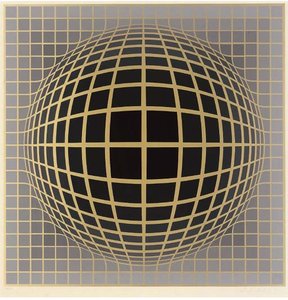
 Victor Vasarely
Explore the captivating world of Victor Vasarely (1906-1997), pioneer of Op Art! Discover his geometric abstractions, optical illusions & lasting influence on modern art and design.
To navigate the landscape of abstract art successfully requires a basic understanding of its diverse currents. While often lumped together, various movements within abstraction offer distinct visual languages and philosophical underpinnings. Geometric Abstraction, pioneered by artists like Victor Vasarely, emphasizes precise forms, mathematical ratios, and optical illusions – creating dynamic compositions that challenge perception itself. Consider his ‘Trophee-Lancome,’ a mesmerizing interplay of concentric circles and vibrant color patterns; it’s not merely decorative but an exploration of visual harmony and the power of repetition. In contrast, Lyrical Abstraction, exemplified by artists like Joan Mitchell, prioritizes gestural brushwork, fluid forms, and emotive color palettes. This style evokes a sense of spontaneity and organic growth, often resembling landscapes or natural phenomena. Then there’s Abstract Expressionism itself, encompassing both the ‘action painting’ of Jackson Pollock – with its energetic drips and splatters – and the ‘color field’ paintings of Mark Rothko, which immerse viewers in vast expanses of saturated hue. Understanding these nuances is crucial; a carefully chosen geometric piece can lend structure and sophistication to a minimalist space, while a lyrical abstraction might infuse warmth and emotional depth into a more traditional setting.
Color Theory & Emotional Resonance: Selecting the Right Palette
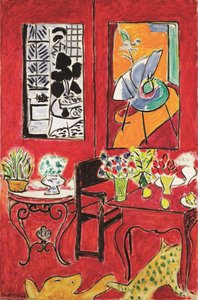 Grand Intérieur rouge Huile sur Toile Paris, Musée national d'Art Moderne
Explore Henri Matisse’s "Grand Intérieur rouge" – a vibrant Fauvist masterpiece! Discover its bold colors, dynamic composition & intimate Parisian scene at the Musée National d'Art Moderne.
Color is arguably the most potent element in abstract art, capable of evoking powerful emotions and shaping the atmosphere of a room. The principles of color theory – understanding how different hues interact and influence perception – are paramount when selecting pieces for your home. Warm colors like reds, oranges, and yellows tend to be energizing and stimulating, ideal for spaces where you want to foster creativity or social interaction. Cool colors like blues, greens, and purples promote calmness and tranquility, perfect for bedrooms or meditation areas. However, the context is key. A vibrant Matisse ‘Grand Intérieur rouge’ – with its bold reds and dynamic composition – can be a focal point in a neutral living room, injecting life and personality into the space. Conversely, a more subdued palette of muted blues and grays might create a sense of serenity in a brightly lit dining area. Consider also the psychological associations of color; red often symbolizes passion and energy, while blue evokes feelings of peace and stability. Don’t be afraid to experiment with complementary colors – those opposite each other on the color wheel – to create visual contrast and excitement.
Scale, Composition & Placement: Harmonizing Art with Architectural Space
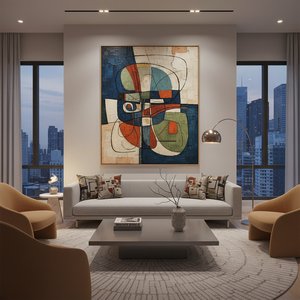 The Dynamic Dialogue: How Abstract Art Enhances Modern Interior Spaces
Discover how abstract art elevates modern interiors. Expert guidance for designers & homeowners. Explore styles, placement, & custom reproductions with .
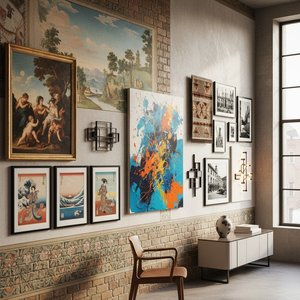
The impact of an abstract artwork isn't solely determined by its aesthetic qualities; it’s profoundly influenced by its relationship to the surrounding space. Scale is a critical consideration. A large-scale painting can become a dominant feature in a room, anchoring the design and creating a sense of grandeur. However, it’s essential to ensure that the piece doesn’t overwhelm the space or clash with existing furniture. Conversely, smaller works can be grouped together to create a gallery wall effect, adding visual interest and personality. Composition also plays a vital role. A horizontally oriented painting might visually expand a narrow room, while a vertically oriented piece can draw the eye upwards, creating a sense of height. Placement is equally important. Consider the natural light in the room; avoid placing artwork directly opposite windows where glare might obscure the colors or details. Hang pieces at eye level to ensure comfortable viewing and create a connection with the viewer. Think about the flow of movement within the space; artwork should complement, not obstruct, the natural pathways.
Beyond Aesthetics: Abstract Art as a Reflection of Personal Identity
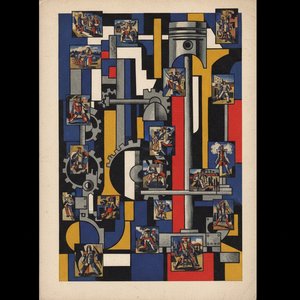
For many collectors, abstract art transcends mere decoration; it becomes a reflection of their personal identity and values. Unlike representational art which often tells a specific story, abstraction allows for open interpretation – inviting viewers to project their own emotions, memories, and experiences onto the canvas. This subjective quality makes abstract art particularly powerful in creating spaces that feel deeply personal and authentic. Choosing pieces that resonate with your individual aesthetic preferences is paramount. Do you gravitate towards bold, energetic compositions or more subtle, contemplative works? Are you drawn to geometric forms or fluid, organic shapes? The answers to these questions will guide you towards artwork that truly speaks to your soul. Furthermore, consider the artist’s intent and background; understanding their motivations and influences can deepen your appreciation for the work and create a stronger connection. A piece by Peter Phillips, with its dynamic Pop Art fusion of industry & abstraction – as seen in ‘Custom Print No. II’ – might appeal to those who appreciate bold colors and layered design.
Curating Your Collection: Building a Cohesive and Sophisticated Gallery Wall
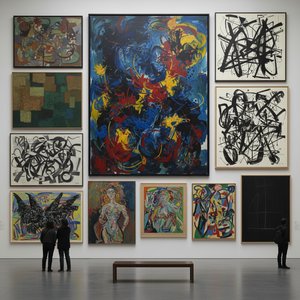
A gallery wall is an excellent way to showcase a collection of abstract artwork, adding visual interest and personality to any space. However, creating a cohesive and sophisticated display requires careful planning. Start by selecting a theme or color palette that unifies the pieces; this could be based on style, artist, or emotional resonance. Varying the sizes and shapes of the artwork will create a more dynamic composition. Don’t be afraid to mix different mediums – paintings, prints, and even sculptural elements can work together harmoniously. Consider the spacing between the pieces; a consistent gap creates a sense of order, while a tighter arrangement can feel more intimate. Before hanging anything on the wall, lay out the artwork on the floor to experiment with different arrangements. A balanced composition is key – distribute larger pieces strategically and avoid clustering all the focal points in one area. Ultimately, a successful gallery wall should tell a story – reflecting your personal taste and creating a visual narrative that engages the viewer. ArtsDot.com offers an extensive library of abstract art, allowing you to curate a collection that perfectly complements your home and expresses your unique style.