The Genesis of Shadow: Early Representations & Philosophical Underpinnings
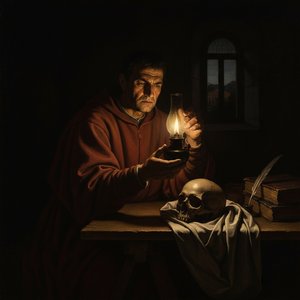
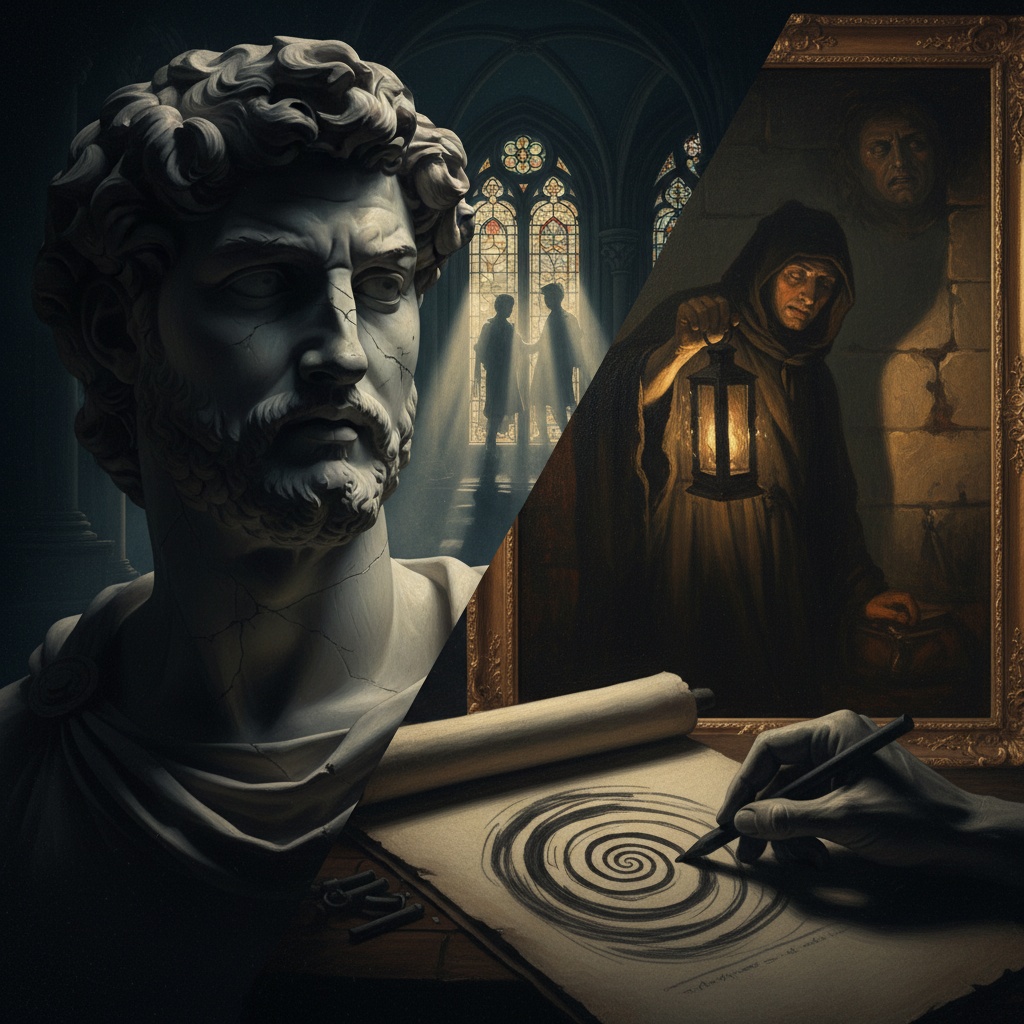
Before the dramatic flourishes of Caravaggio and Rembrandt, shadow existed as a fundamental element within artistic representation – not merely as an absence of light, but as a potent force in defining form and conveying meaning. Its earliest presence wasn’t necessarily about creating theatrical effects; rather, it was intrinsically linked to the very act of depicting three-dimensionality on a two-dimensional surface. Consider the cave paintings of Lascaux, where subtle gradations of tone suggest volume and depth, born from an intuitive understanding of how light interacts with surfaces. This primal awareness evolved alongside philosophical inquiries into perception itself. The ancient Greeks, while prioritizing idealized form, nonetheless recognized the importance of *chiaroscuro* – though their application was often restrained, focused on modeling rather than stark contrast. However, it was with the rise of Neoplatonism and a growing interest in the metaphysical that shadow began to acquire deeper symbolic weight, representing the unseen realms, the imperfect reflections of ideal forms, and the inherent duality within existence.
Chiaroscuro's Ascent: Mastering Light and Dark in Renaissance Painting
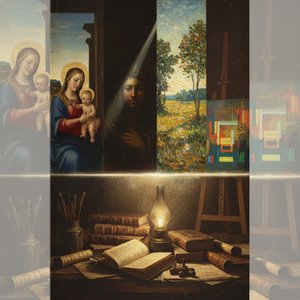 Illuminating Visions: A Historical & Artistic Exploration of Light in Painting
Explore the captivating history of light in painting! From Renaissance chiaroscuro to American Luminism, discover how artists mastered illumination for dramatic effect & emotional resonance. Expert insights at ArtsDot.
The Renaissance witnessed a deliberate exploration of *chiaroscuro* as a technical and expressive tool. Leonardo da Vinci, arguably its earliest master, didn’t employ it for dramatic effect in the manner of later artists, but rather to achieve an unparalleled sense of realism and psychological nuance. His “Adoration of the Magi” (1481) exemplifies this – figures emerge from a soft, atmospheric haze, their forms subtly modeled through delicate gradations of light and shadow. This technique, known as *sfumato*, created a palpable sense of depth and atmosphere, blurring outlines and lending an ethereal quality to his subjects. Later Renaissance painters like Correggio further refined these techniques, using stronger contrasts to create more dynamic compositions. The emphasis shifted towards highlighting key figures and creating focal points within the artwork, but it was still largely employed as a means of enhancing naturalism and conveying religious narratives.
Baroque Drama: Tenebrism, Caravaggio, and the Power of Emotional Contrast
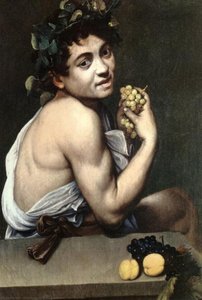 sick bacchus
Explore Caravaggio (1571-1610): Baroque master of realism & tenebrism. Dramatic religious scenes, intense chiaroscuro, and a revolutionary style that influenced Rubens & Rembrandt.
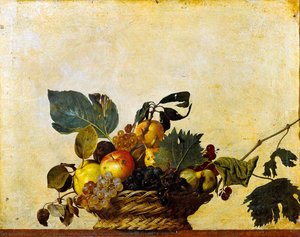
The Baroque period exploded with an unprecedented intensity, and nowhere is this more evident than in the revolutionary use of *tenebrism* – a heightened form of chiaroscuro characterized by extreme contrasts between light and dark. Caravaggio (1571-1610) stands as its undisputed pioneer. Rejecting the idealized forms of the Renaissance, Caravaggio embraced realism, often depicting ordinary people in dramatic scenes with unflinching honesty. His paintings aren’t merely representations of biblical stories; they are visceral encounters with human emotion and spiritual struggle. Works like “Sick Bacchus” (1600) showcase his masterful manipulation of light – a single source illuminating the languid figure against a profoundly dark background, creating an atmosphere of both intimacy and unease. This wasn’t simply about technical skill; it was a deliberate attempt to shock and engage the viewer on a deeply emotional level. The darkness isn't just *around* the figures; it feels like it permeates them, reflecting their inner turmoil.
Beyond Realism: Symbolism and Psychological Depth Through Shadow
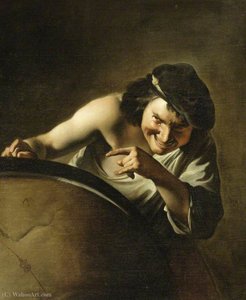 Democritus
Paulus Moreelse’s ‘Democritus’ – a dramatic Baroque oil painting featuring a man before a cauldron. Explore tenebrism, chiaroscuro & symbolic intrigue. A captivating piece of Dutch art.
While Caravaggio’s tenebrism often served to heighten realism, other Baroque artists explored the symbolic potential of shadow with equal fervor. Paulus Moreelse’s “Democritus” (c. 1630) offers a compelling example. The painting depicts the ancient philosopher contemplating a cauldron, bathed in dramatic light that emphasizes his isolation and intellectual pursuit. The shadows aren't merely aesthetic; they symbolize the obscurity of knowledge, the weight of contemplation, and the inherent limitations of human understanding. Francisco de Zurbarán’s “Saint Margaret in Antioch” (c. 1630) similarly employs shadow to convey a sense of spiritual intensity and vulnerability. The stark contrast between light and dark emphasizes the saint's piety and her confrontation with darkness – both literal and metaphorical. These artists understood that shadow could be used not just to define form, but to reveal character, explore psychological states, and communicate complex theological ideas.
The Enduring Legacy: Chiaroscuro’s Influence on Subsequent Art Movements
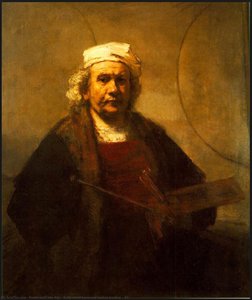
The impact of chiaroscuro extended far beyond the Baroque period. Rembrandt van Rijn (1606-1669) arguably perfected the technique, using it to create portraits and biblical scenes of unparalleled psychological depth. Unlike Caravaggio's often abrupt contrasts, Rembrandt employed a more subtle approach, allowing light to gradually reveal forms and textures, creating an atmosphere of introspection and emotional resonance. His mastery of light and shadow wasn’t merely technical; it was deeply intertwined with his exploration of the human condition. The Dutch Golden Age, in general, embraced chiaroscuro as a means of conveying realism and psychological nuance. Even beyond painting, the principles of chiaroscuro influenced printmaking – particularly woodcuts where different blocks were used to create varying tones of light and dark. The technique continued to resonate throughout subsequent art movements, influencing Romantic painters who sought to evoke emotion and drama through their work.
Shadow as Subject: Modern & Contemporary Explorations of Darkness
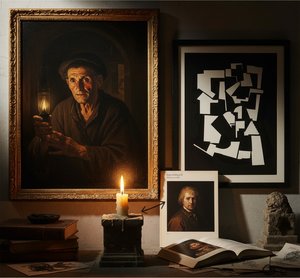
In the modern and contemporary eras, artists have continued to explore the power of shadow, often pushing its boundaries beyond traditional representation. While not always employing the strict techniques of Caravaggio or Rembrandt, they’ve embraced the symbolic weight and emotional resonance of darkness in new and innovative ways. Artists use shadow to create abstract compositions, explore themes of alienation and isolation, and challenge conventional notions of perception. The legacy of chiaroscuro isn't simply about replicating a specific style; it’s about understanding the fundamental power of light and dark as tools for conveying meaning, evoking emotion, and engaging the viewer on a deeply visceral level. At ArtsDot.com, we celebrate this enduring tradition by offering meticulously crafted reproductions of masterpieces that showcase the beauty and complexity of shadow – allowing you to bring these captivating works into your own home and experience their power firsthand.