Introduction: The Allure of Movement in Art
From the earliest cave paintings depicting galloping bison to the swirling brushstrokes of Van Gogh’s starry nights, humanity has been captivated by the representation of motion. But capturing movement is not merely about replicating physical action; it's about conveying a sense of energy, emotion, and even the passage of time itself. For the discerning collector, understanding how artists have approached this challenge throughout history unlocks deeper appreciation for their techniques and the underlying philosophies that drive their work. It’s a journey through visual languages – from meticulously controlled chiaroscuro to the seemingly chaotic freedom of abstract expressionism – revealing a constant pursuit of dynamism in its myriad forms.
Chiaroscuro & Tenebrism: Sculpting Form with Light and Shadow
The Renaissance witnessed a profound shift in artistic representation, moving beyond stylized depictions towards a more naturalistic portrayal of the world. Central to this evolution was the mastery of chiaroscuro, an Italian term meaning “light-dark.” Pioneered by artists like Leonardo da Vinci in works such as *The Adoration of the Magi*, chiaroscuro wasn’t simply about creating realistic shadows; it was a technique for sculpting form with light, imbuing figures with volume and presence. This subtle interplay of illumination and darkness created an emotional depth previously unseen. Later, artists like Caravaggio took this concept to its extreme with tenebrism, a dramatic use of stark contrasts where figures emerged from intensely dark backgrounds. The effect was powerfully theatrical, heightening the psychological tension and drawing the viewer into the heart of the scene. Consider *The Martyrdom of Saint Matthew*; the darkness isn’t merely an absence of light but an active force that amplifies the drama and spiritual weight of the moment. This manipulation of light wasn't just a technical achievement; it was a philosophical statement about the struggle between good and evil, knowledge and ignorance.
Kandinsky’s Abstraction & the Energetic Canvas
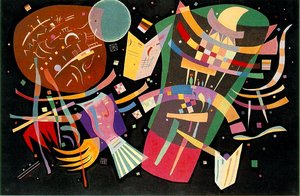 Composition X
Explore Wassily Kandinsky’s ‘Composition X,’ a dynamic abstract masterpiece from 1939. Vibrant colors, geometric forms & profound symbolism – a statement piece for art lovers.
By the early 20th century, artists began to question the very foundations of representation. Wassily Kandinsky, a pivotal figure in abstract art, believed that color and form possessed inherent spiritual qualities capable of evoking emotion directly, independent of recognizable subject matter. His groundbreaking work, Composition X (1939), exemplifies this pursuit. Vibrant colors – fiery reds, electric blues, and dynamic yellows – collide and interact on the canvas, creating a sense of unrestrained energy. Geometric forms aren’t merely shapes; they are visual vibrations, symbolic representations of inner states and cosmic forces. Kandinsky sought to translate the invisible energies of music and spirituality into a purely abstract language. For collectors interested in the origins of non-figurative art, understanding Kandinsky's theoretical writings alongside his paintings is crucial – it reveals that each element isn’t arbitrary but carefully chosen to resonate with specific emotional frequencies.
Paul Klee: Static-Dynamic Gradation – Balancing Order and Change
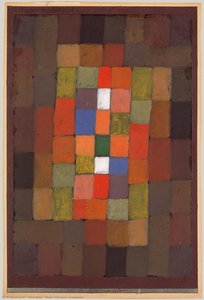 Static-Dynamic Gradation
Paul Klee’s Static-Dynamic Gradation (1923) exemplifies Expressionism with a grid of rectangles exploring form, movement, and color theory. Employing hues like red and orange alongside blues and greens, it symbolizes stability and change through geom...
While Kandinsky embraced pure abstraction, Paul Klee approached the concept of movement through a more nuanced lens. Static-Dynamic Gradation (1923) is a masterful example of Expressionism that explores the tension between stability and change. The painting features a grid of rectangles, each filled with subtly varying hues – reds and oranges juxtaposed with blues and greens. This isn’t chaotic randomness; it's a carefully orchestrated exploration of color theory and form. Klee, deeply influenced by Bauhaus aesthetics, believed in the power of underlying structure to create harmony even within apparent disorder. The painting symbolizes the cyclical nature of life, the interplay between opposing forces, and the delicate balance required for growth and evolution. It’s a work that rewards prolonged contemplation, revealing layers of meaning through its seemingly simple composition.
Abstract Expressionism: Pollock and the Embodiment of Pure Energy
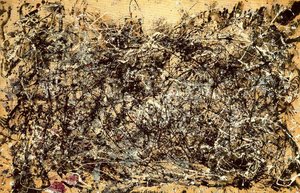
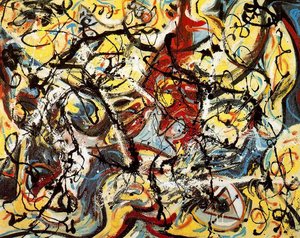 Untitled (Composition with Pouring I)
Explore Jackson Pollock’s "Untitled (Composition with Pouring I)", a dynamic abstract expressionist masterpiece. Witness chaotic brushstrokes & vibrant color in this iconic drip painting.
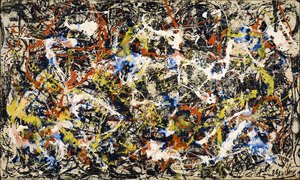
Emerging in post-World War II America, Abstract Expressionism represented a radical departure from traditional painting techniques. Artists like Jackson Pollock rejected representational imagery altogether, focusing instead on the act of painting itself as a means of expressing raw emotion and subconscious impulses. Pollock’s iconic “Untitled (Composition with Pouring I)” is a prime example of this approach. He famously dripped and splattered paint onto canvas laid directly on the floor, abandoning traditional brushes and easels. The resulting work is a chaotic yet mesmerizing web of lines and colors – an embodiment of pure energy. This wasn’t simply about creating visually striking compositions; it was about capturing the immediacy of experience, the unfiltered expression of the artist's inner world. For collectors seeking works that challenge conventional notions of beauty and representation, Pollock represents a pivotal moment in art history—a complete rejection of form in favor of feeling.
Conclusion: The Enduring Legacy of Dynamic Composition
The pursuit of dynamic composition has been a constant thread throughout the history of art. From the subtle gradations of light and shadow employed by Renaissance masters to the unrestrained energy of Abstract Expressionism, artists have continually sought new ways to convey movement, emotion, and the passage of time on canvas. Understanding these techniques – chiaroscuro, tenebrism, abstraction, and beyond – isn’t merely about appreciating artistic skill; it's about unlocking deeper layers of meaning and connecting with the underlying philosophies that drive creative expression. At ArtsDot.com, we are dedicated to making these masterpieces accessible to collectors worldwide, offering handmade oil paintings and museum-quality prints that capture the essence of each artist’s vision. Explore our collection today and discover the power of dynamic composition for yourself.