
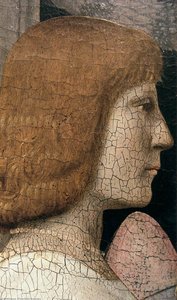

The Dawn of Humanism: Rediscovering Classical Antiquity
Renaissance art (1350 – 1620) is the painting, sculpture, and decorative arts of the period of European history known as the Renaissance, which emerged as a distinct style in Italy in about AD 1400, in parallel with developments which occurred in phi...
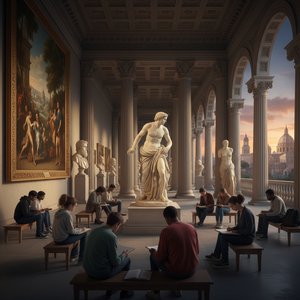
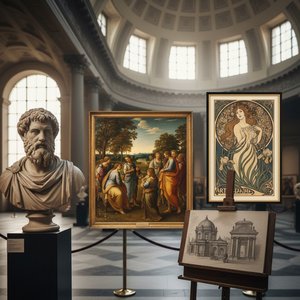
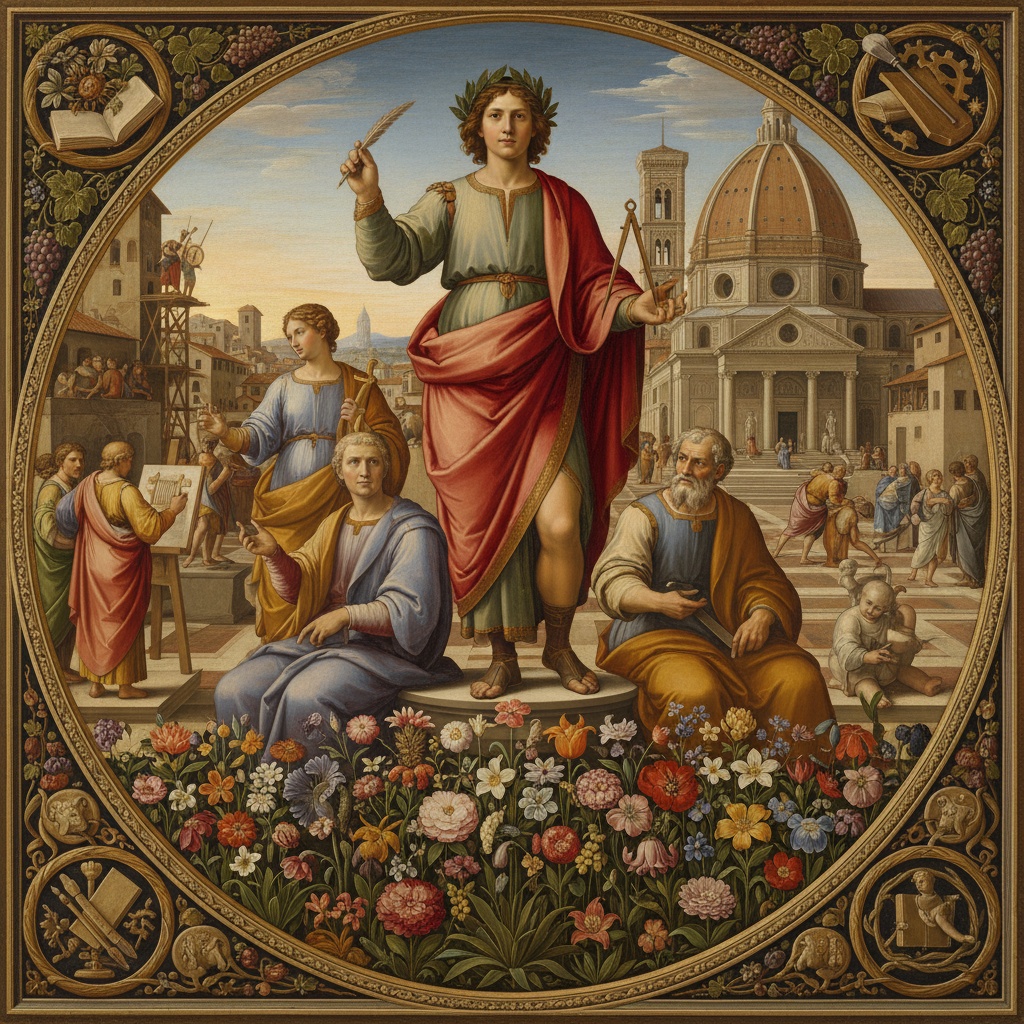
The Renaissance, a term meaning “rebirth,” wasn’t simply a revival of artistic styles; it was a fundamental shift in worldview. Emerging from the late medieval period, particularly within the vibrant city-states of Italy, this era witnessed a renewed fascination with the classical civilizations of Greece and Rome. This wasn't merely an aesthetic preference—it represented a profound intellectual awakening. Scholars began to unearth forgotten texts, meticulously copying manuscripts that had languished in monastic libraries for centuries. These weren’t just stories or poems; they were windows into a different way of thinking, one that prioritized human potential, reason, and earthly experience alongside spiritual concerns. The rediscovery of works by Cicero, Plato, and Aristotle provided the intellectual fuel for what would become Renaissance Humanism, challenging established dogma and fostering a spirit of inquiry.
This renewed engagement with antiquity wasn’t about slavishly copying classical forms. Instead, it was an act of interpretation and adaptation. Artists and thinkers sought to understand the principles that underpinned classical art and philosophy, then apply those principles to their own time. The emphasis shifted from a solely divine focus—characteristic of much medieval art—to a more balanced consideration of humanity’s place in the cosmos. This is not to say religion disappeared; rather, it was recontextualized within a broader framework that celebrated human achievement and intellectual curiosity.
Civic Virtue & Eloquence: The Studia Humanitatis in Practice
Renaissance humanism is a worldview centered on the nature and importance of humanity that emerged from the study of Classical antiquity. Renaissance humanists sought to create a citizenry able to speak and write with eloquence and clarity, and thus...
Central to Renaissance Humanism was the studia humanitatis—a curriculum focused on grammar, rhetoric, history, poetry, and moral philosophy. This wasn’t simply an academic exercise; it was a deliberate attempt to cultivate a citizenry capable of eloquent speech, persuasive writing, and informed participation in public life. The ideal humanist was not just learned but also virtuous, possessing the ability to contribute meaningfully to their community. Figures like Coluccio Salutati championed this approach, emphasizing the power of classical literature to shape moral character.
The impact extended beyond political discourse. Artists were increasingly seen as intellectuals—individuals capable of both technical skill and profound conceptual understanding. Patrons, particularly wealthy families like the Medici in Florence, actively supported artists who embodied these humanist ideals. They commissioned works that not only displayed artistic mastery but also conveyed moral lessons or celebrated civic pride. This patronage system fostered a climate of innovation and experimentation, allowing artists to push the boundaries of their craft.
Perspective, Proportion & the Renaissance Artist's Eye
Linear or point-projection perspective (from Latin perspicere 'to see through') is one of two types of graphical projection perspective in the graphic arts; the other is parallel projection. Linear perspective is an approximate representation, gener...
Perhaps the most visible manifestation of humanist principles in art was the development of linear perspective. Before the Renaissance, depictions of space often lacked realism, relying on symbolic representation rather than accurate observation. Artists like Filippo Brunelleschi pioneered techniques to create a convincing illusion of depth on a flat surface, based on mathematical principles and careful study of optics. This wasn’t merely about technical accuracy; it was about representing the world as it *was* perceived—a testament to human reason and understanding.
Alongside perspective came a renewed emphasis on anatomical correctness and proportion. Artists meticulously studied the human body, seeking to understand its underlying structure and accurately represent its form. This pursuit of realism wasn’t simply aesthetic; it reflected a broader humanist interest in the beauty and complexity of the natural world. Giotto's ‘Saint Stephen’, though pre-Renaissance, foreshadowed this shift with its more lifelike figures compared to earlier Byzantine art, hinting at the burgeoning focus on human form and emotion.
Piero della Francesca: A Paragon of Humanist Painting
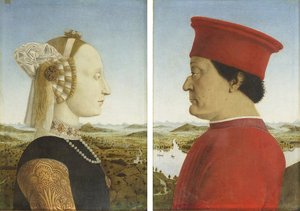 Piero della Francesca
Explore Piero della Francesca's Renaissance masterpieces (1415-1492). Known for geometric precision, perspective & serene humanism in works like 'The Resurrection'. #RenaissanceArt
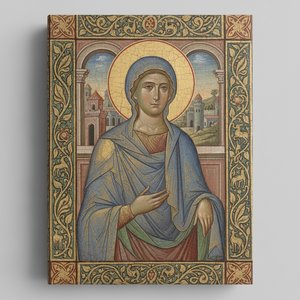
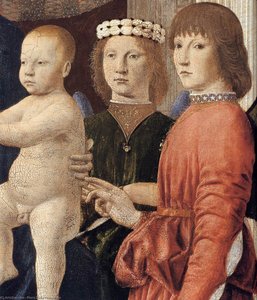
Few artists embody the spirit of Renaissance Humanism as completely as Piero della Francesca. His works are characterized by a remarkable clarity of form, geometric precision, and serene beauty. ‘The Madonna del Parto’, for example, is not simply a depiction of the Virgin Mary; it’s a meditation on motherhood, grace, and divine order. The composition is meticulously balanced, with the figure of Mary occupying a central space that evokes both earthly solidity and spiritual transcendence.
Piero wasn't merely a painter; he was also a mathematician and theorist. His treatise on perspective demonstrates his deep understanding of the underlying principles governing visual representation. This intellectual rigor is evident in all his works, which are characterized by a sense of calm contemplation and harmonious order. He sought to create paintings that were not just beautiful but also intellectually stimulating—a reflection of his humanist belief in the power of reason and knowledge.
Botticelli and the Mythological Revival
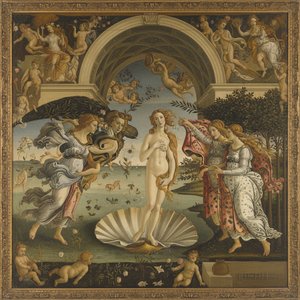 Botticelli's Masterpieces: Explore 25 Iconic Renaissance Paintings | ArtsDot
Journey through Botticelli's world with 25 iconic Renaissance paintings. Explore 'Birth of Venus,' 'Primavera,' and more—stories, techniques & timeless beauty. Find museum-quality art reproductions for your home at ArtsDot.com.
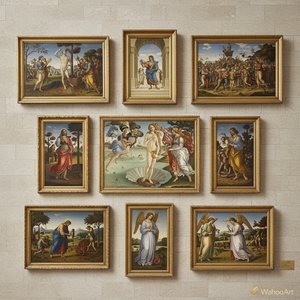
While Piero della Francesca focused on religious themes, Sandro Botticelli embraced classical mythology with unparalleled enthusiasm. His ‘Birth of Venus’ and ‘Primavera’ are iconic examples of this trend, depicting scenes from ancient literature with a delicate grace and lyrical beauty. These weren't simply illustrations of mythological stories; they were reinterpretations that explored themes of love, beauty, and the human condition.
Botticelli's paintings often feature allegorical figures and symbolic imagery, inviting viewers to contemplate deeper meanings beyond the surface narrative. His work reflects a broader humanist interest in the power of classical literature to inspire moral reflection and aesthetic appreciation. The revival of mythological subjects wasn’t about rejecting Christianity; it was about expanding the scope of artistic expression and exploring the full range of human experience.
The Enduring Legacy: How Humanism Shaped Western Art
The impact of Renaissance Humanism on art is immeasurable. It fostered a spirit of innovation, experimentation, and intellectual inquiry that continues to shape artistic practice today. The emphasis on perspective, proportion, and anatomical correctness laid the foundation for centuries of artistic development. More importantly, it elevated the status of the artist—transforming them from skilled craftsman to respected intellectual.
The legacy extends beyond technique. Renaissance Humanism’s celebration of human potential, reason, and earthly experience continues to resonate in contemporary art. From the masterpieces of Leonardo da Vinci and Michelangelo to the works of modern artists who challenge conventional boundaries, the spirit of inquiry and individual expression that defined the Renaissance remains a powerful force. At ArtsDot, we are proud to offer museum-quality reproductions of these iconic artworks, allowing you to experience the beauty and intellectual depth of the Renaissance in your own home.