The Genesis of Neoplasticism: Piet Mondrian and the Pursuit of Universal Order
In the turbulent dawn of the twentieth century, as the world grappled with the fragmentation of old empires and the industrialization of human existence, a profound movement emerged from the heart of Europe to seek something more permanent. This was the birth of Neoplasticism, a radical departure from the representational traditions that had dominated Western art for centuries. At its epicenter stood Piet Mondrian, a visionary whose journey began in the lush, descriptive landscapes of Dutch tradition but ultimately transcended them to find a deeper, spiritual truth. For Mondrian, art was not a mirror held up to nature, but a tool to uncover the underlying mathematical and spiritual equilibrium that governs the cosmos.
The pursuit of this universal order required a stripping away of the superfluous. To reach the essence of reality, the artist had to abandon the curve, the shadow, and the organic irregularity of the natural world. In its place, Mondrian developed a visual language of absolute clarity. This was not merely an aesthetic choice but a philosophical necessity; he believed that by reducing art to its most fundamental elements, one could communicate a sense of cosmic balance that remains untouched by the chaos of human emotion or temporal decay. It was a quest for the immutable, a search for a rhythm that resonates with the very structure of the universe itself.
The Grammar of Abstraction: Analyzing Primary Colors and Orthogonal Lines
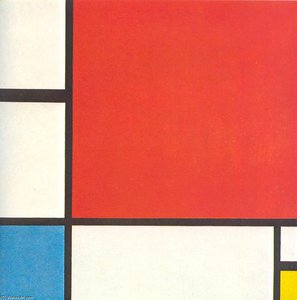
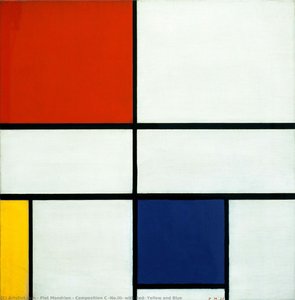
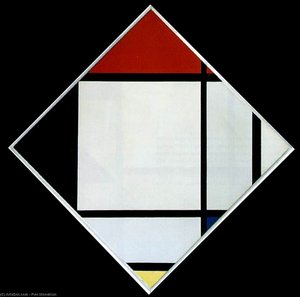
To understand Neoplasticism is to master its strict yet breathtakingly potent grammar. The movement operates through a highly disciplined vocabulary consisting of only three primary colors—red, yellow, and blue—complemented by the non-colors of white, black, and grey. These pigments are not used for their descriptive qualities but as pure energetic forces. When a vibrant block of red meets a stark field of white, it creates a tension that is both visual and intellectual, a dialogue between presence and void. This economy of palette ensures that no single element overwhelms the composition, allowing each color to exist in its most potent, unadulterated state.
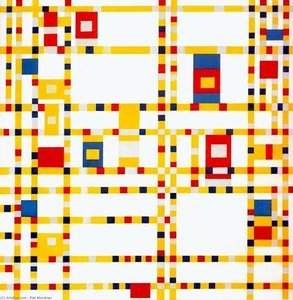
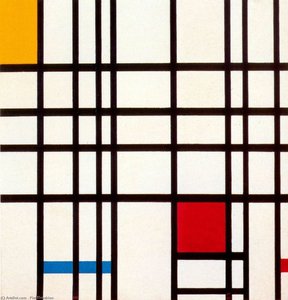
This chromatic balance is held in place by the movement's most iconic structural element: the orthogonal line. By utilizing only vertical and horizontal black lines, the Neoplasticist artist eliminates the "distraction" of the diagonal or the curve, which were seen as too closely tied to the unpredictable movements of nature. These intersecting lines create a grid-like architecture that defines space without enclosing it. In masterpieces such as Composition with Red, Yellow & Blue, we see how these lines do not merely border shapes but actively direct the eye through a carefully orchestrated dance of weight and lightness. The result is a composition that feels both incredibly stable and vibrantly alive, achieving a state of dynamic equilibrium where every element is essential to the whole.
De Stijl and Beyond: The Global Influence of Geometric Harmony
While Mondrian provided the spiritual and theoretical foundation, the movement found its collective voice through the De Stijl group in the Netherlands. This collective of artists, architects, and designers shared a singular devotion to the principles of Neoplasticism, seeking to integrate this new aesthetic into every facet of human life. The influence of De Stijl was not confined to the canvas; it bled into the very fabric of modern living, informing furniture design, typography, and even urban planning. The movement proposed that if our surroundings were governed by harmony and clarity, our internal lives might follow suit.
As these ideas traveled beyond the borders of the Netherlands, they ignited a global revolution in abstraction. In America, artists like Ilya Bolotowsky and Burgoyne Diller embraced the De Stijl ethos, translating Mondrian’s rigorous logic into a new American modernist idiom. They expanded upon the geometric vocabulary, exploring how the interplay of planes and lines could reflect the energy of the modern industrial age. This global dissemination ensured that Neoplasticism was not merely a localized art movement but a fundamental shift in the tectonic plates of visual culture, establishing a blueprint for abstraction that would influence generations of painters, architects, and designers across the globe.
From Canvas to Architecture: The Lasting Legacy of Neoplasticist Design
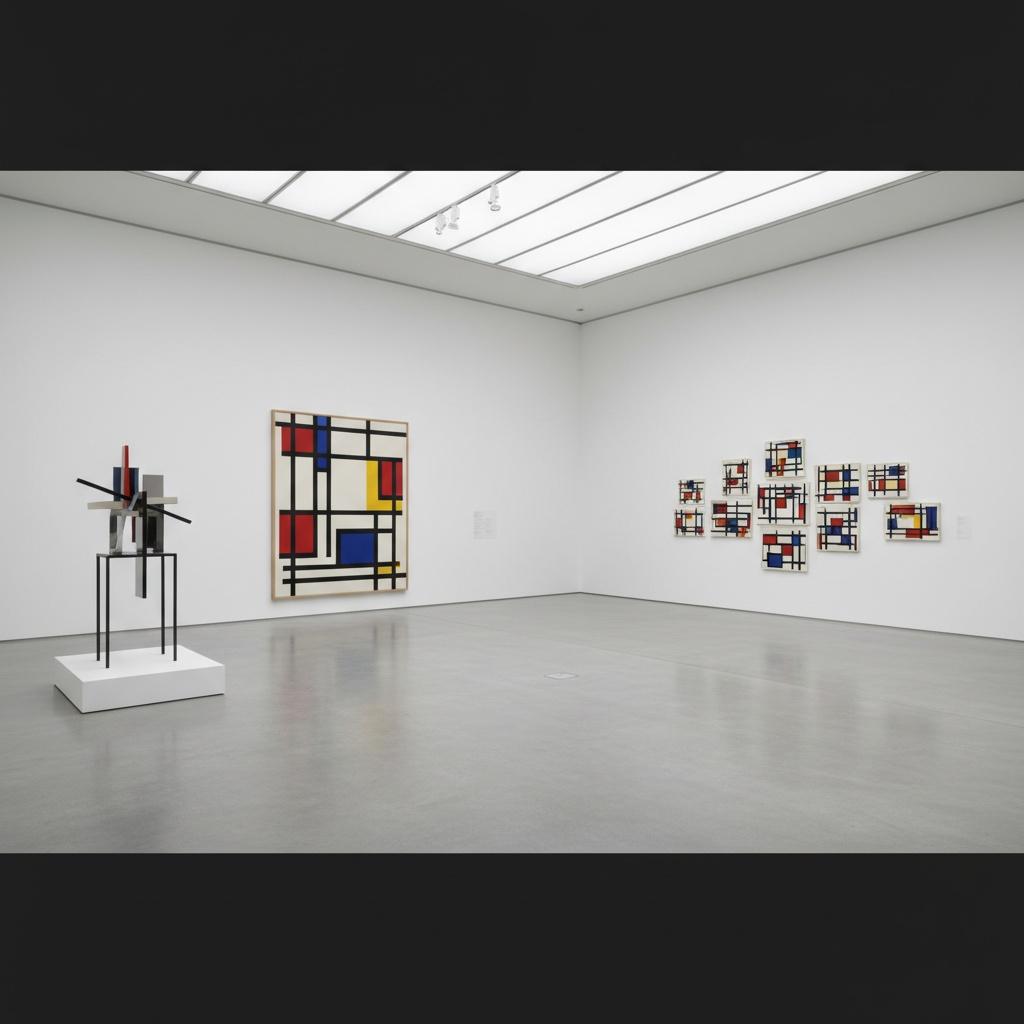
The true triumph of Neoplasticism lies in its ability to transcend the frame of the painting and inhabit the three-dimensional world. The principles of pure color and geometric form found a natural home in the burgeoning field of modern architecture. The clean lines, the rejection of ornament, and the emphasis on functional clarity seen in the works of De Stijl practitioners paved the way for the International Style. Architects began to view buildings not as heavy, earthbound masses, but as transparent, interlocking volumes of light and space, much like a Mondrian composition brought to life in steel and glass.
This architectural legacy is visible in the way modern spaces are curated today—the emphasis on open floor plans, the use of primary color accents in minimalist interiors, and the appreciation for structural honesty. The movement taught us that beauty does not require complexity; rather, it arises from the perfect arrangement of simple, fundamental truths. When we walk through a modern gallery or reside in a space defined by geometric precision, we are experiencing the enduring echoes of Neoplasticist thought, a testament to the power of an aesthetic that seeks to harmonize the human experience with the structural logic of the world.
Curating Modernity: Integrating Abstract Geometry into Contemporary Collections
For the discerning collector, integrating Neoplasticist-inspired works into a contemporary collection offers a unique opportunity to introduce a sense of timeless stability and intellectual depth. These pieces act as anchors within a room, providing a focal point that is both visually striking and conceptually profound. Because the language of abstraction is so distilled, it possesses a remarkable versatility; it can complement the sleekness of mid-century modern furniture or provide a sophisticated contrast to more textured, organic elements in a room.
Collecting such works requires an appreciation for the subtle nuances of execution—the way a brushstroke defines a boundary or how the saturation of a pigment affects the perceived weight of a shape. Whether one is acquiring a museum-quality reproduction of a classic Mondrian or a contemporary piece that pays homage to geometric abstraction, the goal remains the same: to surround oneself with art that celebrates order, clarity, and the eternal beauty of form. In doing so, the collector does more than decorate a space; they curate an environment of profound equilibrium, honoring a legacy of artistic excellence that continues to shape our visual reality.
At ArtsDot.com, we are dedicated to preserving this rich history of human creativity. From meticulously handcrafted oil reproductions of Mondrian’s iconic compositions to bespoke commissions that reimagine modern life through the lens of geometric abstraction, we provide collectors with access to the very essence of art history. Our commitment to academic excellence and technical mastery ensures that every piece—whether a textured oil painting or a museum-grade Giclée print—retains the spirit, depth, and transformative power of the masters.