The Allure of Subtlety: Why Artists Choose Grayscale
There’s a quiet power in restraint, a profound eloquence found not in the riotous spectrum of color but in its deliberate absence. For centuries, artists have turned to grayscale – encompassing shades from the deepest blacks to the most luminous whites – not as a limitation, but as an extraordinary means of expression. This isn't merely about what is *removed* from the canvas; it’s about what remains: form, texture, light, and the raw emotional weight they carry. The decision to work monochromatically demands a heightened sensitivity to nuance, forcing a deeper engagement with composition and value – the very building blocks of visual art. It's a path chosen by those seeking not to replicate reality, but to distill it, to reveal its essential structure and underlying emotion.
Chiaroscuro & Beyond: Mastering Light and Shadow in Monochromatic Art
In art, chiaroscuro (English: kee-AR-ə-SKOOR-oh, -SKURE-, Italian: [ˌkjaroˈskuːro]; lit. 'light-dark') is the use of strong contrasts between light and dark, usually bold contrasts affecting a whole composition. It is also a technical term used by ...
At the heart of many grayscale masterpieces lies the technique of chiaroscuro, an Italian term meaning “light-dark.” Originating during the Renaissance, chiaroscuro isn’t simply about contrasting light and shadow; it's a dramatic interplay used to sculpt form, create depth, and evoke a powerful sense of realism. Think of Caravaggio’s intensely lit figures emerging from profound darkness – each crease in their skin, each fold of fabric rendered with breathtaking precision thanks to this masterful manipulation of tone. But the exploration didn’t end there. Artists like Rembrandt van Rijn pushed chiaroscuro further, employing tenebrism, an even more extreme form where darkness dominates and light is used sparingly for focused effect. This technique isn't confined to painting; it permeates photography as well, shaping mood and narrative through the careful control of illumination.
Historical Echoes: From Early Experiments to Modern Movements
While often associated with Baroque drama, the roots of monochromatic art stretch far back in time. Ancient cave paintings utilized earth pigments – ochres, umbers, charcoals – creating evocative images within a limited palette. Japanese sumi-e ink wash painting, emphasizing brushstrokes and subtle gradations of gray, exemplifies a centuries-old tradition of expressive minimalism. However, it was the early 20th century that truly cemented grayscale’s place in modern art. Kazimir Malevich's radical abstractions, culminating in works like “Black Square” (1915), stripped painting down to its most fundamental elements, challenging conventional notions of representation and paving the way for non-objective art. The Bauhaus movement further explored geometric abstraction within restrained color schemes, emphasizing form and function. These early experiments weren’t simply stylistic choices; they were philosophical statements about the nature of art itself.
Iconic Gray Paintings: A Showcase of Masterful Technique
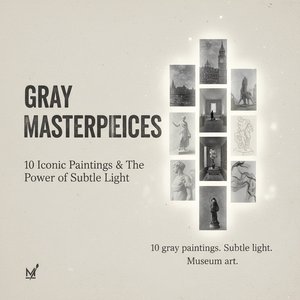
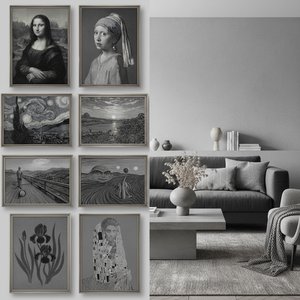 Gray Masterpieces: 10 Iconic Paintings & Timeless Home Decor Ideas
Explore 10 iconic gray paintings by masters like Rembrandt, Hopper & Whistler. Discover the stories behind these atmospheric artworks and find museum-quality art reproductions for your home decor at . Explore the full collection online.
The legacy of grayscale continues to inspire. Jacopo Tintoretto's dramatic “Christ” (several versions exist) exemplifies Baroque intensity, a monumental lamentation rendered in powerful shades of gray. Pierre-Paul Prud’hon’s “Female Nude Leaning 1” showcases an exquisite sensitivity to form and light, capturing the delicate contours of the human body with masterful chiaroscuro. Beyond these examples, consider the evocative portraits of Rembrandt, where subtle shifts in tone reveal not just physical likeness but also profound psychological depth. Even more contemporary artists continue to explore grayscale’s potential; Hopper's atmospheric cityscapes often employ a muted palette to convey feelings of isolation and melancholy, while Whistler’s “Nocturnes” capture the ethereal beauty of twilight with delicate gradations of gray. These works demonstrate that grayscale isn’t a constraint but a powerful tool for achieving emotional resonance.
The Psychology of Gray: Evoking Mood and Emotion Through Tone
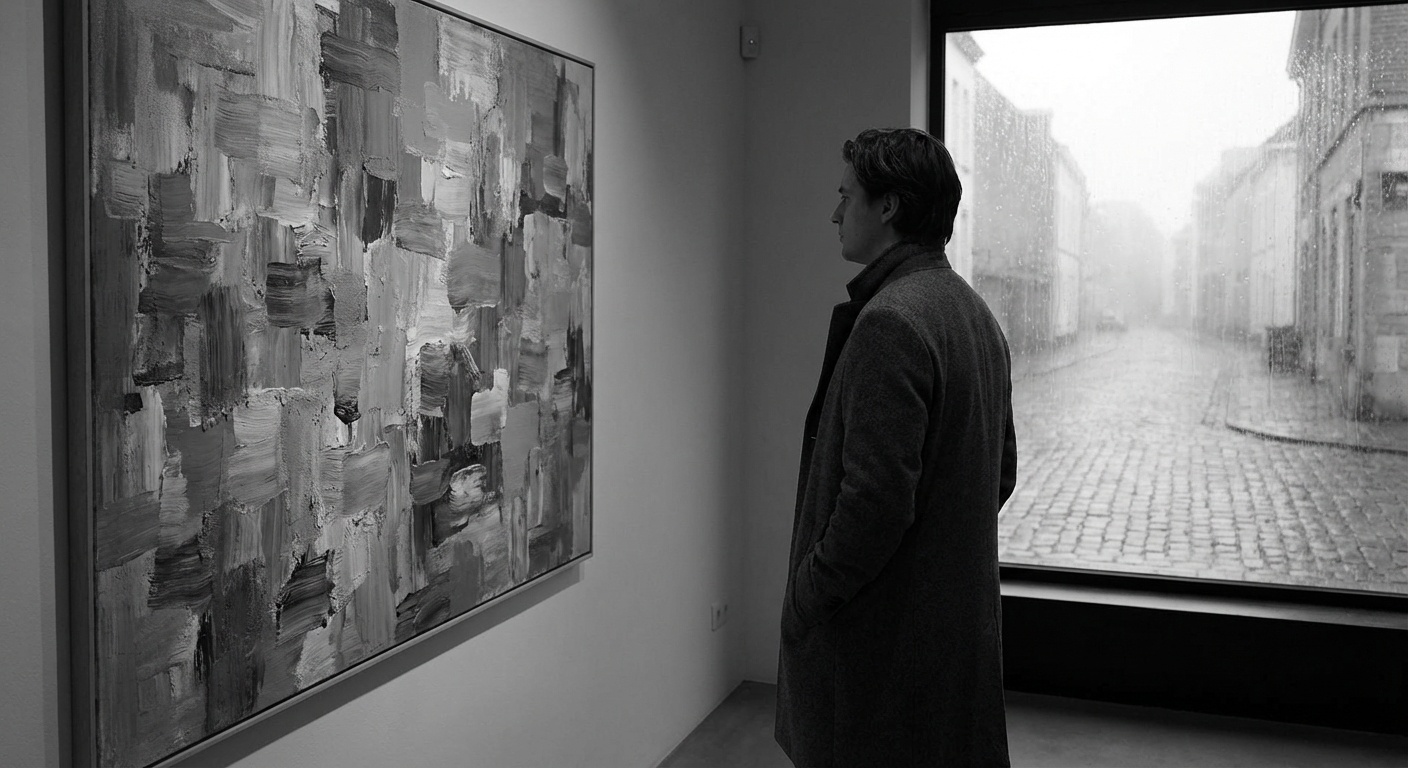
Gray is often perceived as neutral, even melancholic, but its psychological impact is far more complex. It represents balance – the space between black and white, darkness and light. This ambiguity allows it to evoke a wide range of emotions depending on context and application. Darker grays can convey seriousness, sophistication, or even mystery, while lighter shades suggest tranquility, peace, or introspection. The absence of vibrant color forces viewers to focus on other elements – texture, composition, subject matter – leading to a more contemplative experience. A grayscale artwork invites us to fill in the emotional gaps ourselves, creating a deeply personal connection with the piece.
Bringing Grayscale Home: Integrating Atmospheric Art into Your Space
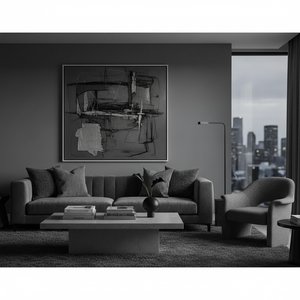 Dark Gray Masterpieces: 10 Iconic Paintings & Timeless Home Decor Ideas
Explore 10 iconic paintings dominated by dark gray tones, from Rembrandt & Caravaggio to Goya. Discover the stories behind these masterpieces and find museum-quality art reproductions for your home at . Explore the full collection online.
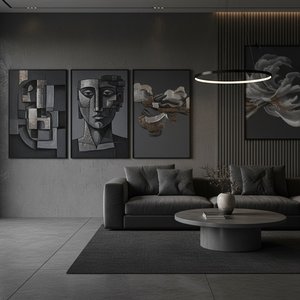
Incorporating grayscale art into your home can create a sense of calm, sophistication, and timeless elegance. These pieces are remarkably versatile, complementing a wide range of décor styles – from minimalist modern interiors to more traditional settings. A large-scale monochrome painting can serve as a focal point in a living room or bedroom, while smaller works add subtle depth to hallways or studies. Consider the mood you wish to evoke: darker grays for a dramatic and intimate atmosphere, lighter shades for a serene and airy feel. At ArtsDot, we offer museum-quality reproductions of iconic grayscale paintings, allowing you to experience the power of these masterpieces in your own home. Explore our collection today and discover how the subtle eloquence of gray can transform your living space.