The Seeds of Rebellion: Challenging Academic Art Traditions
In the arts of the Western world, Primitivism is a mode of aesthetic idealization that means to recreate the experience of the primitive time, place, and person, either by emulation or by re-creation. In Western philosophy, Primitivism proposes that ...
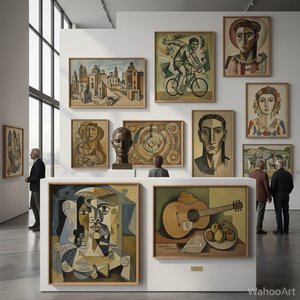
For centuries, the art world operated under a strict hierarchy, governed by academies that dictated proper technique, subject matter, and even acceptable emotional expression. The Renaissance ideals of perspective, anatomical accuracy, and historical or mythological narratives held sway, leaving little room for deviation. But as the 19th century progressed, a quiet rebellion began to brew – a rejection of these established norms fueled by a desire for authenticity, personal vision, and a connection to something more primal. This wasn’t a sudden upheaval, but rather a gradual erosion of faith in the traditional system, paving the way for movements like Naïve Art and Primitivism that celebrated alternative ways of seeing and representing the world.
The very foundations of academic art were rooted in imitation – the meticulous copying of classical models. Artists spent years mastering drawing skills, learning to render form with photographic precision. But what if one bypassed this rigorous training? What if an artist approached painting not as a technical exercise but as a direct expression of inner experience? This question lay at the heart of the burgeoning avant-garde, and it would soon find compelling answers in the work of self-taught creators who operated outside the established art world. The emphasis shifted from *how* something was painted to *what* was being painted – and, crucially, *why*.
Defining Naïve Art: Innocence, Instinct & the Absence of Formal Training
 Wikipedia: Naïve art
Naïve art is usually defined as visual art that is created by a person who lacks the formal education and training that a professional artist undergoes (in anatomy, art history, technique, perspective, ways of seeing). When this aesthetic is emulate...
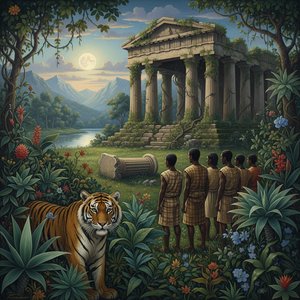
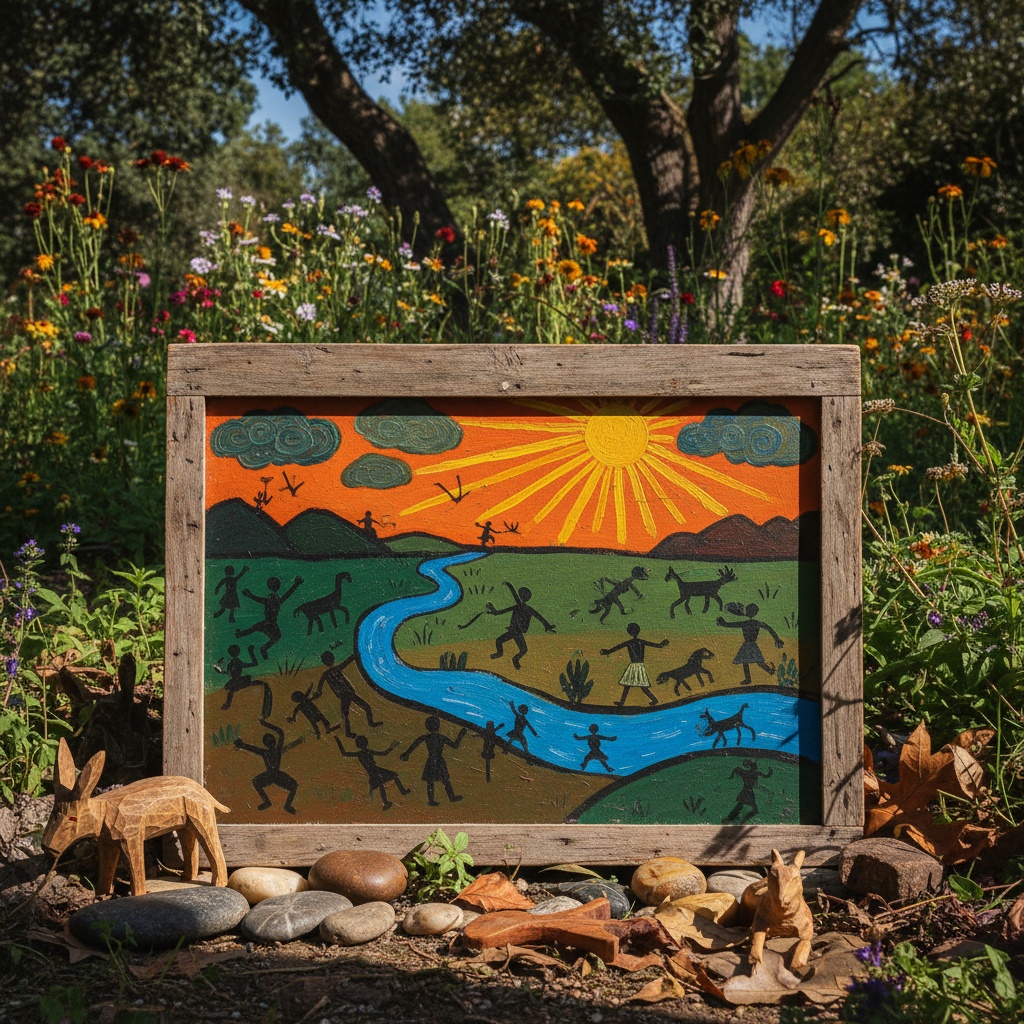
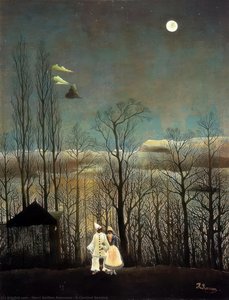
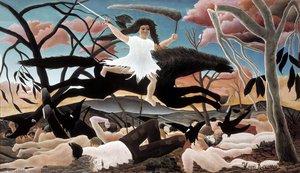
Naïve Art, often characterized by its childlike simplicity and apparent lack of sophistication, emerged as a distinct genre in the late 19th and early 20th centuries. However, it’s crucial to understand that “naïve” doesn't equate to unskilled or untalented. Rather, it describes artists who lacked formal training in art academies – individuals who approached painting with an instinctive understanding of color, composition, and form, unburdened by the constraints of academic rules. Henri Rousseau, perhaps the most iconic figure of Naïve Art, exemplifies this perfectly. A customs officer by profession, Rousseau painted lush jungle scenes, portraits of friends and family, and dreamlike landscapes fueled by his imagination rather than direct observation.
His paintings are instantly recognizable for their flattened perspective, vibrant colors, and meticulous detail – qualities that initially drew ridicule from the art establishment. Yet, Picasso and other modern masters recognized something profound in Rousseau’s work: a purity of vision, an uninhibited expression of emotion, and a rejection of conventional representation. Unlike folk art, which often stems from specific cultural traditions, Naïve Art doesn't necessarily have roots in popular culture; it arises from the individual artist’s unique perspective, informed by their life experiences but not bound by pre-existing stylistic conventions. The artists are aware of “fine art” conventions, but choose to interpret them through a personal lens.
Primitivism and its Complex Legacy: Borrowing from 'Other' Cultures
Concurrent with the rise of Naïve Art was Primitivism – a mode of aesthetic idealization that sought inspiration in non-Western art forms. European artists, disillusioned with the perceived decadence of modern civilization, turned to African masks, Oceanic sculptures, and other “primitive” artifacts for a sense of authenticity and spiritual power. This fascination wasn’t simply about aesthetics; it was often intertwined with philosophical ideas about the inherent morality and ethics of pre-industrial societies.
However, it's vital to acknowledge the problematic aspects of Primitivism. The term itself carries colonial undertones, implying a hierarchy between Western “civilized” art and the art of non-Western cultures. Artists often appropriated motifs and styles without fully understanding their cultural context, leading to misinterpretations and perpetuation of stereotypes. Paul Gauguin’s Tahitian paintings, while visually stunning, are now viewed with critical awareness due to his exploitative relationship with the local population. Nevertheless, Primitivism played a significant role in breaking down traditional artistic boundaries and paving the way for abstraction and other modern art movements.
Picasso’s Embrace: How Modern Masters Found Inspiration in ‘Primitive’ Aesthetics
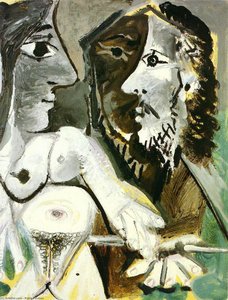 Naked woman and musketeer
Witness Picasso's poignant 'Naked Woman & Musketeer'! This 1967 Naive Art masterpiece captures a dramatic conversation amidst swords and intrigue, reflecting his exploration of primitivism and human connection.
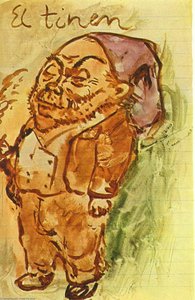
Pablo Picasso stands as a pivotal figure in bridging Naïve Art and Primitivism. His early work demonstrates a clear fascination with both styles, evident in paintings like A Child with Pigeons (1943), which captures youthful innocence through simplified forms and bold colors, showcasing his exploration of Naïve Art’s directness. But it was his encounter with African masks that arguably had the most profound impact on his artistic development. The angularity, distortion, and symbolic power of these objects resonated deeply with Picasso, inspiring him to challenge conventional notions of representation.
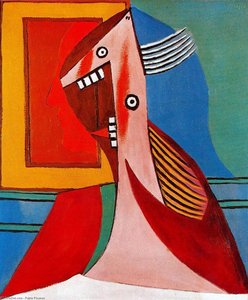
Works like Naked Woman & Musketeer (1967) demonstrate this influence, blending elements of Naïve Art’s emotional intensity with the fragmented forms and bold lines inspired by African sculpture. Similarly, Woman in Striped Armchair (1941) showcases Picasso's versatility and experimentation with form, reflecting a poignant moment in modern art where traditional perspectives were being actively dismantled. He wasn’t simply copying these styles; he was synthesizing them into something entirely new – a visual language that reflected the anxieties and uncertainties of the 20th century.
Beyond Technique: The Emotional Resonance of Naïve and Primitivist Expression
Ultimately, the enduring appeal of Naïve Art and Primitivism lies in their emotional power. These artists weren’t concerned with technical perfection; they were focused on conveying feeling, telling stories, and expressing their unique perspectives on the world. The lack of academic polish often allows for a greater sense of intimacy and authenticity – as if we are glimpsing directly into the artist's soul.
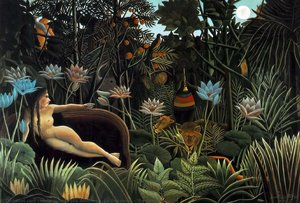
The Sleeping Gypsy, by Rousseau, is a prime example; its dreamlike quality and evocative symbolism invite viewers to connect with the artist’s inner world. Similarly, the raw energy of Primitivist art – even when viewed through a critical lens – speaks to a fundamental human desire for connection to something primal and spiritual. These movements remind us that art isn't solely about skill or technique; it’s about communication, expression, and the power of imagination.
A Lasting Influence: Naïve Art & Primitivism in Contemporary Practice
The legacy of Naïve Art and Primitivism continues to resonate with contemporary artists. While direct imitation is rare, the spirit of rebellion, the embrace of unconventional techniques, and the focus on personal vision remain powerful influences. Artists today are increasingly challenging traditional boundaries, exploring new forms of expression, and questioning established norms.
At ArtsDot.com, we celebrate this diversity of artistic expression by offering high-quality reproductions of masterpieces from all periods – including the iconic works of Rousseau and Picasso. Whether you’re drawn to the childlike simplicity of Naïve Art or the raw energy of Primitivism, our collection offers a glimpse into the revolutionary movements that transformed the art world. Explore our selection today and discover the power of untamed vision for yourself. We also offer custom reproduction services, allowing you to bring your own unique style to life – perhaps inspired by the artists who dared to challenge convention.