A Life Shrouded in Mystery: Unraveling the Early Years of Thomas Whitcombe
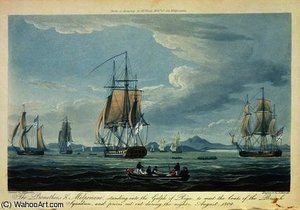
Thomas Whitcombe (c. 19 May 1763 – c. 1824) was an English painter who specialised in marine art. Among his work are over 150 actions the Royal Navy participated in during the French Revolutionary and Napoleonic Wars, and he exhibited his works at th...
The name Thomas Whitcombe resonates with a particular vibrancy amongst collectors of British marine art, yet the man himself remains an elusive figure. Born sometime between 1752 and 1763 – a frustratingly broad timeframe – Whitcombe’s origins are largely undocumented, adding to the romantic allure surrounding his prolific output. Unlike many artists whose paths were meticulously charted through academy training and patronage networks, Whitcombe emerges from relative obscurity, his early life a canvas sparsely populated with verifiable facts. Speculation naturally arises when considering the breadth of locations depicted in his work; Bristol, Cardiff, and Swansea all claim an early association, suggesting formative years spent immersed in the bustling port cities of Wales. This itinerant beginning likely instilled within him a keen observational eye and a deep appreciation for the nuances of maritime life – qualities that would become hallmarks of his distinctive style.
What *is* known is that Whitcombe possessed an exceptional ability to capture the energy and drama of naval engagements, coastal scenes, and ship portraits. This talent wasn’t born in a vacuum; it suggests either a period of dedicated self-study or apprenticeship within a shipbuilding environment. The meticulous detail with which he rendered vessels – their rigging, sails, and hull construction – speaks to an intimate understanding of nautical engineering. His early career was marked by a restless energy, moving between coastal towns before establishing a more consistent presence in London during the 1780s, where he began exhibiting his work.
The Maritime Canvas: Whitcombe’s Specialization and the French Revolutionary & Napoleonic Wars
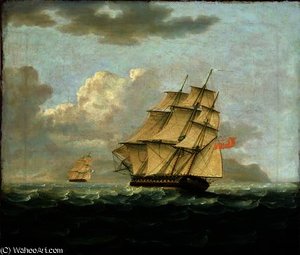
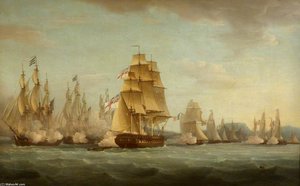
Whitcombe's artistic trajectory coincided with a period of intense naval activity – the tumultuous years of the French Revolutionary and Napoleonic Wars. This historical context is crucial to understanding not only the *subject matter* of his paintings but also their enduring appeal. He didn’t merely document these conflicts; he captured their raw power, the tension of impending battle, and the sheer scale of maritime operations. Over 150 actions of the Royal Navy found expression on his canvases, a remarkable feat that cemented his reputation as a leading chronicler of Britain's naval prowess.
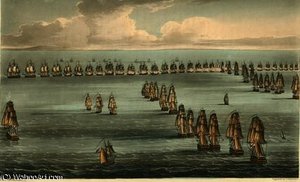
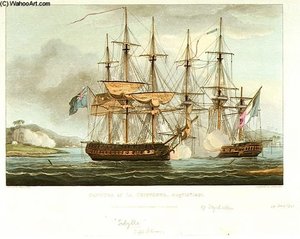
His involvement with “The Naval Achievements of Great Britain,” contributing fifty plates to this ambitious publication after the cessation of hostilities, further solidified his position. These weren’t simply illustrations; they were carefully composed narratives, imbued with a sense of patriotic fervor and technical accuracy. Whitcombe wasn't just painting ships; he was painting national identity, heroism, and the very spirit of an empire at war. The demand for such works was understandably high, fueling his prolific output and establishing a loyal clientele amongst naval officers and wealthy patrons eager to possess tangible reminders of Britain’s victories.
Master of Atmosphere: Examining Whitcombe's Technical Prowess and Distinctive Style
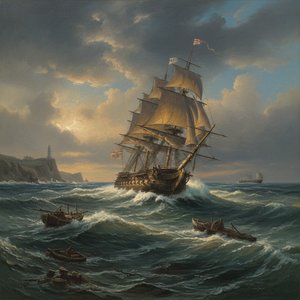
While the historical significance of Whitcombe’s subject matter is undeniable, it’s his technical skill that truly sets him apart. He possessed a remarkable ability to convey atmosphere – the shifting light on water, the ominous gathering of storm clouds, the subtle gradations of color that suggest distance and depth. His range embraced everything from tranquil coastal scenes bathed in golden sunlight to ferocious naval battles rendered with dramatic chiaroscuro. The topography within his backgrounds is consistently well-observed, providing a sense of place and grounding the action within recognizable landscapes.
A defining characteristic of Whitcombe’s style is his preference for a dark foreground, which serves to heighten the drama and draw the viewer's eye towards the central subject. This technique, common amongst British marine artists of the 18th and 19th centuries, creates a sense of depth and emphasizes the power of the sea. He wasn’t afraid to employ bold brushstrokes and dynamic compositions, conveying movement and energy with remarkable skill. His ships are not static objects; they *feel* as though they are cutting through the waves, responding to the forces of nature.
Beyond Battleships: Exploring the Breadth of Whitcombe's Topographical Subjects
To categorize Whitcombe solely as a painter of naval battles would be a disservice to his artistic versatility. While those scenes undoubtedly form the core of his oeuvre, he demonstrated a keen interest in broader topographical subjects. His travels extended beyond the British coastline, encompassing scenes from the Cape of Good Hope, Madeira, Cuba, and even Cape Horn – exotic locales that provided ample opportunities for showcasing his skill. These paintings reveal a fascination with diverse maritime cultures and a willingness to venture beyond familiar shores.
He also excelled at capturing quieter moments: ships at anchor in peaceful harbors, coastal villages bathed in the warm glow of sunset, merchant vessels navigating calm waters. These works offer a more intimate perspective on maritime life, revealing his ability to find beauty and tranquility even amidst the challenges of seafaring. This breadth of subject matter suggests a restless curiosity and a desire to capture the full spectrum of human experience at sea.
Whitcombe’s Legacy: Influence on British Marine Painting and Enduring Appeal
Thomas Whitcombe stands alongside contemporaries like Nicholas Pocock, Thomas Luny, and Robert Dodd as pivotal figures in British marine painting. His influence is evident in the meticulous detail with which he rendered ships, his dramatic compositions, and his ability to convey atmosphere. He wasn’t simply replicating scenes; he was interpreting them through a uniquely personal lens, imbuing them with emotion and narrative power.
Today, Whitcombe's paintings are highly sought after by collectors worldwide, adorning the walls of prestigious museums like the National Maritime Museum in Greenwich and gracing private collections. His enduring appeal lies not only in his technical skill but also in his ability to transport viewers back in time – to a period of naval heroism, imperial ambition, and breathtaking maritime adventure. His work serves as a powerful reminder of Britain’s seafaring past and the artists who so skillfully captured its spirit.
Collecting Whitcombe Today: A Guide for Enthusiasts & Investors
For those seeking to acquire a piece of Thomas Whitcombe's legacy, several factors should be considered. Given the prolific nature of his output, authenticity is paramount. Careful examination of brushwork, signature details (though often inconsistent), and provenance are essential. Paintings depicting specific naval engagements or featuring particularly dramatic compositions tend to command higher prices.
The market for Whitcombe’s work remains robust, with prices ranging considerably depending on size, subject matter, and condition. Oil paintings in excellent condition can represent a significant investment, while smaller watercolors or sketches offer more accessible entry points for new collectors. Resources like Art UK and auction house databases provide valuable insights into recent sales and market trends. Ultimately, the most rewarding aspect of collecting Whitcombe is appreciating the artistry and historical significance of his captivating maritime scenes.