The Art of Presence: Elevating Wedding Entertainment Through Live Painting
In the realm of high-end wedding curation, the most profound luxury is often found not in what is seen, but in what is experienced. While a meticulously designed floral installation or a bespoke menu provides the sensory backdrop for a celebration, live painting introduces an element of living artistry that breathes life into the atmosphere. For the discerning wedding planner, integrating a live painter is more than a mere addition to the entertainment roster; it is the introduction of a silent, captivating performance that anchors the event in the present moment.
As guests mingle amidst the soft glow of candlelight and the murmur of celebration, the rhythmic movement of the brush against canvas creates a focal point of quiet fascination. This is an art form that demands presence. Unlike digital displays or static decor, the act of creation unfolds in real-tme, drawing onlookers into a shared state of wonder. It transforms the wedding from a standard social gathering into a cultural event, where the very air seems charged with the creative energy of a master at work.
By choosing to feature live painting, you are offering your clients something far more rare than entertainment: you are providing a window into the soul of their celebration. It is an intentional choice that signals sophistication and a deep appreciation for the ephemeral beauty of the ceremony itself.
Beyond the Lens: Why Live Art Offers a Sensory Experience Photography Cannot Replicate
In an era dominated by the instant gratification of digital photography, there remains a profound distinction between capturing a moment and witnessing its creation. While the wedding photographer excels at freezing time through a lens, the live painter captures the essence of the atmosphere through texture, light, and emotion. There is a visceral, tactile quality to oil on canvas—the visible impasto, the deliberate layering of pigments, and the way light dances across a fresh coat of varnish—that a two-dimensional photograph simply cannot convey.
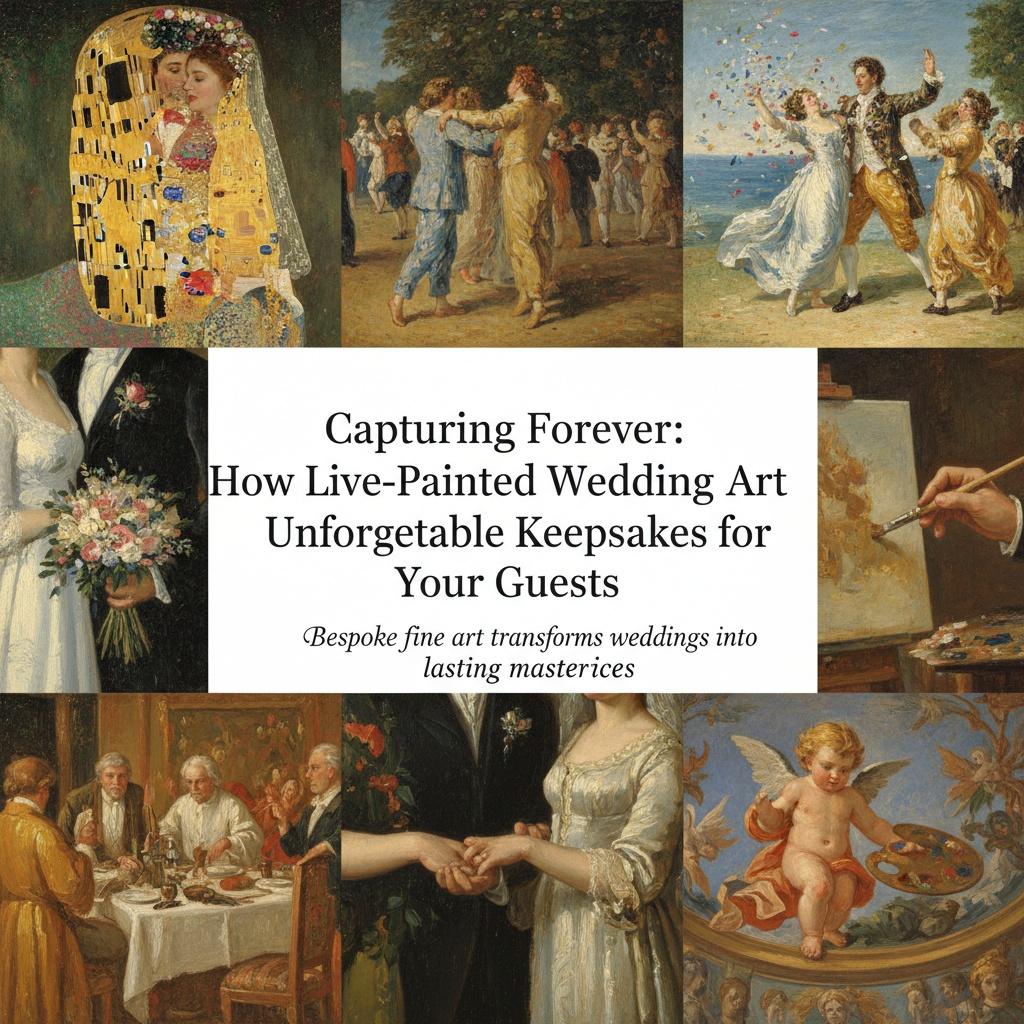
Consider the historical weight of the masters. When we look at Jan Steen’s Wedding of Tobias & Sarah, we are not merely seeing a scene; we are immersed in the vibrant Dutch Golden Age through his use of drama and rich detail. Similarly, the communal joy found in Pieter Bruegel’s Wedding Dance in the Open Air is felt through the lively composition and social depth of the brushwork. A live painter brings this same historical gravity to a modern wedding, translating the laughter, the tears, and the movement of silk and lace into a medium that possesses physical depth and tonal range.
The experience for the guest is multi-sensory. They hear the soft scrape of the palette knife, they smell the subtle, earthy aroma of linseed oil, and they witness the evolution of a masterpiece. This creates a layer of engagement that exists alongside photography, providing a soulful, interpretive counterpart to the documentary nature of the camera.
Curating the Masterpiece: Integrating Live Painters into Luxury Wedding Design
For the professional planner, the challenge lies in seamless integration. A live painter should never feel like an interloper in a carefully curated design; rather, they should function as a living extension of the wedding's aesthetic theme. Whether the event leans toward the romantic opulence of a Renaissance feast or the minimalist elegance of a contemporary gallery opening, the artist’s presence must be harmonized with the surrounding decor.
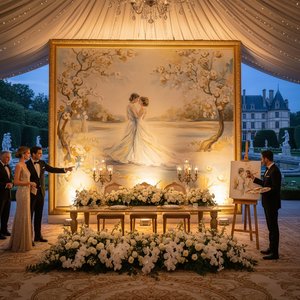
Strategic placement is paramount. Positioning the easel in a location that allows for visibility without obstructing the flow of service requires a keen eye for spatial design. The lighting must be considered with extreme care—enough to illuminate the canvas and allow guests to admire the progress, yet subtle enough to maintain the intimate ambiance of the evening. When executed correctly, the artist becomes part of the scenery, much like a beautifully placed sculpture or a grand floral centerpiece.
Furthermore, the painter’s palette can be curated to reflect the wedding's color story. By coordinating with the floral designer and the lighting technician, the artist can emphasize specific tones—perhaps the soft blush of peonies or the deep gold of candlelight—ensuring that the resulting artwork is a perfect chromatic reflection of the event's overall design language.
A Legacy in Oil: Transforming Moments into Heirloom Keepsakes for the Couple and Guests
The true value of live wedding art lies in its longevity. While flowers will wilt and the cake will be consumed, the oil painting remains—a permanent, physical manifestation of a single day. For the couple, this is the ultimate heirloom. It is a piece of fine art that can be passed down through generations, carrying with it the indelible memory of their union.
This legacy extends to the guests as well. In many luxury settings, the creation of smaller, bespoke works or the sharing of the artist's process serves as an unforgettable gift. The painting becomes a conversation piece in the couple's future home, a window back to the moment their lives were joined. It is art that does not merely decorate a wall; it tells a story.
The permanence of oil on cotton canvas, protected by layers of gesso and Damar varnish, ensures that the vibrancy of the wedding day remains untarnished by time. Unlike a digital file stored in a cloud, the painting possesses a physical presence that commands attention, offering a tactile connection to the past that grows more precious with every passing year.
The Planner’s Guide to Commissioning Bespoke Wedding Artworks
Commissioning such a specialized service requires meticulous planning and clear communication. To ensure the final work meets the highest standards of excellence, planners should approach the process with the same rigor applied to selecting a venue or a caterer. The first step is identifying an artist whose style aligns with the wedding's vision—whether that be the light-drenched impressionism of Monet or the dramatic, expressive strokes reminiscent of Goya.
Key considerations for the commission include:
- Timeline Management: Unlike ready-made decor, a bespoke oil painting requires time for the artist to capture the event and for the subsequent layers of paint to dry properly.
- The Digital Mockup: For complex compositions or group portraits, utilizing professional digital mockup services can remove uncertainty, allowing the planner to visualize the composition before the first stroke is applied.
- Logistics and Preservation: Planning for the safe transport of a wet canvas and selecting appropriate framing—such as gold leaf or natural wood—is essential to protecting the investment.
By treating the commission as a collaborative project between the planner, the artist, and the client, you ensure that the final result is not just a painting, but a masterpiece of event design. It is an opportunity to push the boundaries of what a wedding can be, moving beyond the temporary and into the realm of the eternal.
At ArtsDot.com, we specialize in making the extraordinary accessible. From transforming personal milestones into hand-painted oil masterpieces to providing expert art consultation for grand architectural projects, our mission is to preserve human creativity for a modern audience. Whether you are looking to commission a custom wedding portrait or explore the intersection of AI and classical technique, our global network of academy-trained artists is dedicated to bringing your most cherished visions to life.