The Echo of Emotion: Tracing the Lineage from Impressionism to Abstraction
To understand the profound resonance of contemporary abstraction, one must first look back through the soft, luminous veils of the Impressionist era. For those of us who have spent decades finding solace in the dappled sunlight of a Monet or the gentle, rhythmic strokes of Renoir, the transition to abstraction may at first seem like a departure from beauty. Yet, it is, in truth, a continuation of a sacred pursuit. The Impressionists taught us that reality is not found in rigid outlines, but in the fleeting interplay of light and atmosphere. They moved away from the literal to capture the essence of a moment, prioritizing the sensory experience over the anatomical or architectural truth.
As we journey forward into the twentieth century, this focus on perception evolved into something even more internal. The movement toward abstraction was not an abandonment of feeling, but an expansion of it. Where Claude Monet sought to capture the way light dances upon a water lily, the abstract expressionists sought to capture the very vibration of that light within the human spirit. This lineage is a continuous thread of emotional honesty, moving from the external observation of nature to the internal exploration of the soul. It is a journey from the visible world into the realm of the felt, where the brushstroke becomes a direct conduit for the artist's deepest intentions.
The Language of Gesture: Decoding the Energy of Abstract Expressionism
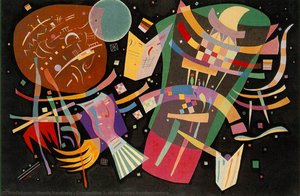
In the realm of contemporary abstraction, the canvas often serves as an arena for action rather than a mere surface for depiction. This is most vibrantly realized in the tradition of Abstract Expressionism, where the physical movement of the artist—the gesture—becomes the subject itself. When we observe works such as those by Kazuo Shiraga, we see a dynamic, non-representational mastery where lines are not merely drawn but are birtantly energetic, reflecting a raw, visceral power. There is a profound intimacy in witnessing these gestural marks; they are the fingerprints of a moment in time, frozen in oil and pigment.
This kinetic energy finds modern echoes in the works of artists like Keltie Ferris, whose large-scale canvases explore the intersection of painting and performance. Her work challenges us to question our very perception, much like how the bold, black brushstrokes of Hsiao Chin’s The Travel of Tao- evoke a sense of cosmic energy. For the collector, these pieces offer more than visual interest; they offer a rhythmic pulse. To stand before a gestural masterpiece is to participate in a silent dialogue with the artist's motion, feeling the velocity and the hesitation, the strength and the grace, all captured within the textured layers of the paint.
Color as Atmosphere: From Monet’s Light to Rothko’s Emotional Depth
Perhaps the most profound connection between the Impressionist masters and the contemporary abstract movement lies in the use of color as a vessel for atmosphere. We remember how the soft, pastel palettes of Pissarro or Sisley could evoke the dampness of a morning mist or the warmth of a summer afternoon. This mastery of color field was later elevated to new heights by artists like Mark Rothko, whose iconic works define the emotive power of color. In these masterpieces, color is no longer a tool to describe an object; it becomes the object itself, enveloping the viewer in a meditative, immersive experience.
This pursuit of emotional depth through color continues in the contemporary era with artists like Mattheus Terwesten and Hans Andersen Brendekilde, who utilize captivating palettes to create immersive environments reminiscent of Rothko’s own spiritual fields. Even in more chaotic works, such as David Michael Hinnebusch’s Pippi Floating, the layered colors serve to reflect the vibrant, often overwhelming energy of modern life. For the discerning eye, these paintings offer a sanctuary of color, where one can lose oneself in the subtle gradations and profound depths of hue, finding a sense of peace or a surge of vitality that transcends language.
Texture and Transcendence: The Tactile Soul of Contemporary Canvas
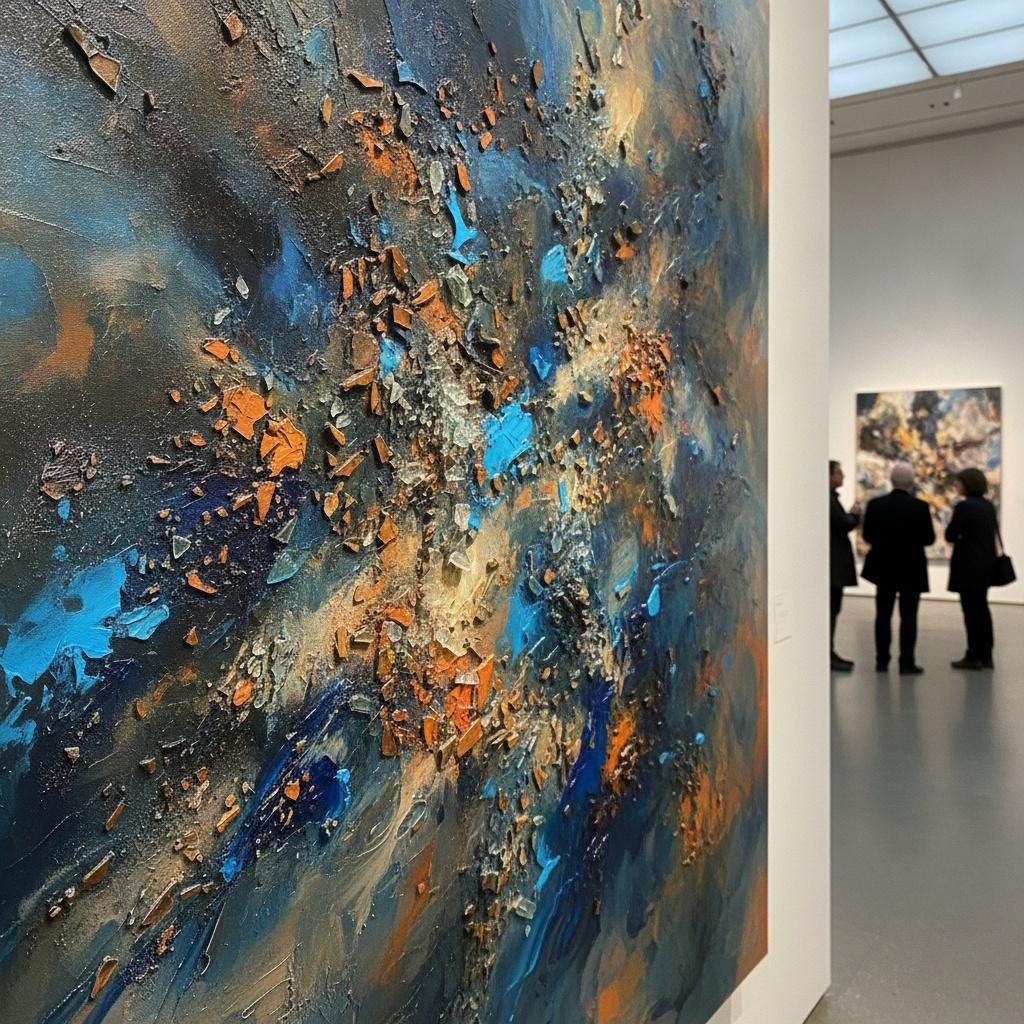
There is a tactile truth in a hand-painted oil work that no digital print can ever replicate. In the world of abstraction, texture serves as the bridge between the physical and the metaphysical. When we look at the works of Nicola de Maria, we see a vibrant explosion of energy through layered textures and dynamic compositions. The thickness of the paint—the impasto technique—creates shadows and highlights on the canvas itself, giving the artwork a three-dimensional presence that breathes within a room. This physical depth invites the viewer to reach out, not with hands, but with the eyes, tracing the ridges and valleys of the artist's labor.
This emphasis on texture is what allows an abstract piece to possess a "soul." It is found in the way light catches a heavy stroke of white or how a deep glaze adds a sense of infinite recession. Collectors of fine art understand that this materiality is essential for transcendence. Whether it is the bold, expressive forms of Studio Marion or the complex, layered textures of more contemporary masters, the physical presence of the paint provides an anchor for the abstract concept. It reminds us that even in the most non-representational works, there is a grounded, human element—a tangible connection to the earth and the artist's hand.
Curating the Unseen: Integrating Abstract Masterpieces into the Modern Home
Integrating contemporary abstraction into a curated collection or a modern living space requires a delicate balance of intuition and aesthetic vision. An abstract piece does not merely occupy a wall; it alters the very atmosphere of a room. Much like how a Renoir might bring a sense of soft warmth to a dining area, a large-scale abstract work can act as an architectural anchor, providing a focal point that stimulates thought and conversation. The key is to consider the dialogue between the artwork and its surroundings—the interplay of light, the existing color palette, and the emotional tone you wish to cultivate.
For those looking to expand their horizons, the possibilities are endless. One might choose to pair a textured, gestural work with more structured, classical elements, creating a sophisticated tension between the old and the new. For larger architectural projects, such as murals or multi-panel sets that flow across staircases, abstraction offers a way to create a cohesive, modern aesthetic that feels both grand and intimate. Ultimately, collecting abstract art is about curating an experience of the unseen—bringing into your home those profound, beautiful, and often wordless emotions that only a true masterpiece can evoke.
At ArtsDot.com, we are dedicated to preserving this legacy of human creativity. Whether you are seeking a hand-painted reproduction of an established master or looking to commission a bespoke contemporary piece that captures a personal moment, our mission is to make fine art accessible and enduring. From the meticulous six-step process of our oil paintings to our expert art consultations, we invite you to join us in a lifelong journey through the beauty of the visible and the profound depths of the soul.