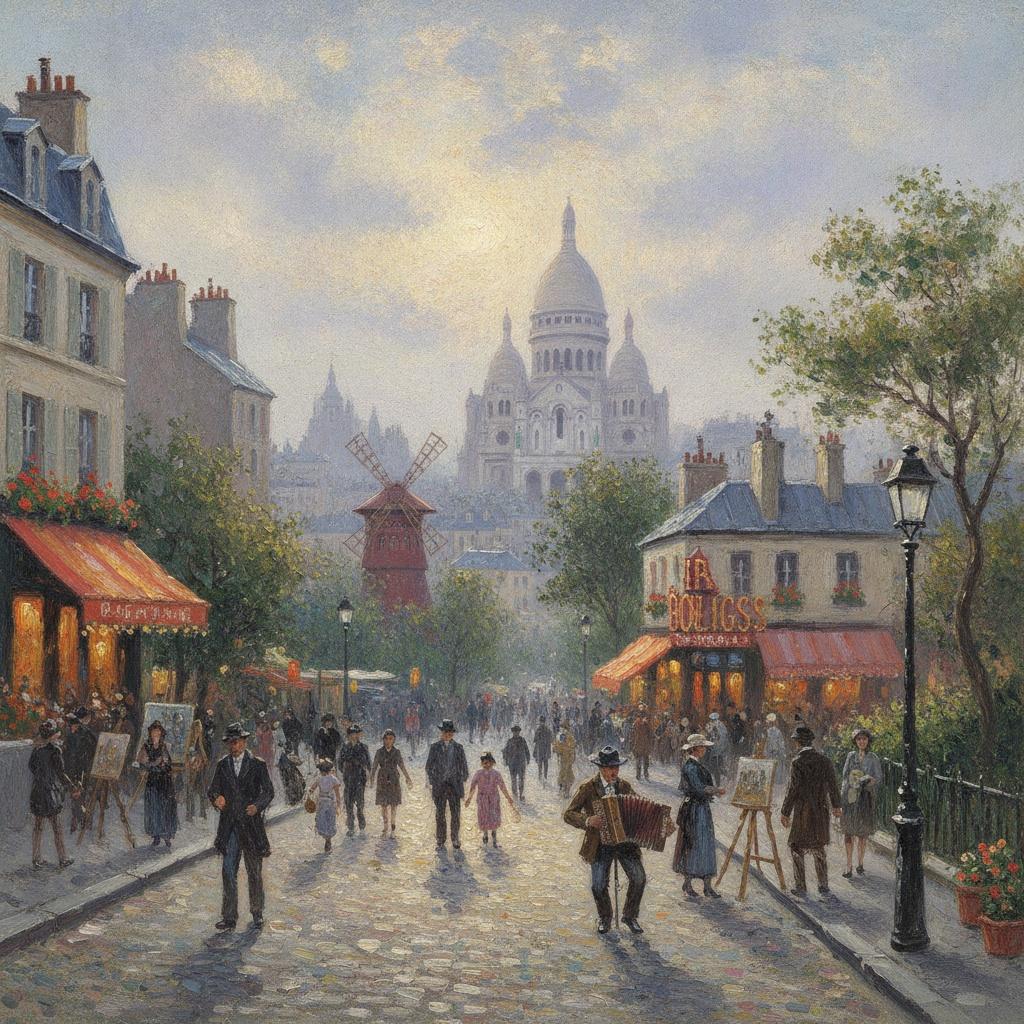
The Golden Light of Morning: Pissarro’s Luminous Boulevards
 Le Boulevard de Montmartre, matinée de printemps
Le Boulevard de Montmartre, matinée de printemps (English: Boulevard Montmartre, Spring) is an 1897 oil on canvas painting of Paris' Boulevard Montmartre by Camille Pissarro. The work is part of a series of 14 paintings from the same year depicting P...
To wander through the works of Camille Pissarro is to experience Paris not as a collection of stone and mortar, but as a living, breathing entity composed entirely of light. As we reflect on the late 19th century, we find Pissarro standing as a steadfast observer of the urban pulse, particularly along the bustling Boulevard Montmartre. His series of paintings, captured from his vantage point at the Grand Hôtel de Russie, offers us more than mere scenery; they provide a window into the very soul of a city in transition. In Le Boulevard de Montmartre, matinée de printemps, we are invited to witness the soft, burgeoning energy of a spring morning, where the air feels as fresh as the delicate brushstrokes that define it.
Pissarro’s mastery lies in his ability to capture the ephemeral. He did not seek the grand, static monuments of history, but rather the flickering vitality of the everyday. Through his mature Impressionist style, characterized by loose, confident brushwork and a vibrant palette, he achieved a shimmering effect that mimics the way sunlight dances across a rain-slicked street or filters through a morning mist. When we gaze upon his depictions of the boulevard during a spring morning, we feel the warmth of the sun and the gentle movement of pedestrians, all frozen in a moment of perfect, luminous clarity. It is a profound lesson in the beauty of the present, reminding us that true art resides in the ability to see the extraordinary within the ordinary.
This sensitivity to atmosphere extends even to his more somber reflections, such as Le Boulevard Montmartre, temps de pluie, apres-midi. Here, the palette shifts to cool blues and greys, yet the energy remains undiminished. The wet pavement becomes a mirror, reflecting the rhythmic movement of carriages and the colorful silhouettes of passersby. In these works, Pissarro proves that even a rainy afternoon can be a subject of immense beauty, provided one has the eyes to find the light hidden within the clouds.
Bohemian Shadows: The Nightlife and Spirit of Toulouse-Lautrec
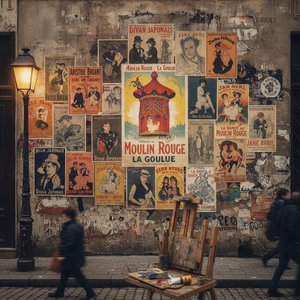 25 Iconic Masterpieces by Henri de Toulouse-Lautrec: The Spirit of Montmartre
Introduction Step into the flickering gaslight of late 19th-century Paris, where the air is thick with the scent of absinthe, tobacco, and the electric energy of a city that never truly sleeps. To wander through the works of Henri de Toulouse-Lautrec...
As the sun dips below the horizon of the Butte, a different kind of magic begins to stir. If Pissarro captured the daylight's grace, Henri de Toulouse-Lautrec mastered the electric, nocturnal pulse of Montmartre’s most intimate corners. To step into his world is to slip unnoticed into the velvet shadows of cabarets and dance halls, where the air is thick with the scent of tobacco, absinthe, and the raw, unbridled energy of a city that refuses to sleep. Lautrec did not view these spaces with the detached curiosity of a tourist; he moved among the dancers of the Moulin Rouge and the street performers with the empathetic heart of an insider.
There is a haunting beauty in his gaze—a way of finding profound dignity in the weary and the exuberant alike. Born into the fading elegance of the French aristocracy, Lautrec chose instead the company of the bohemian outcasts, finding inspiration in the rhythmic sway of a dancer’s skirt and the flickering gaslight that illuminated the night. His work bridges the gap between fine art and the pulsing heartbeat of popular culture, using bold, graphic lines and a mastery of color to translate the smoky atmosphere of Parisian nightlife into something visceral and permanent.
His canvases capture the duality of Montmartre: the theatrical joy of the performance and the quiet, private vulnerabilities of those behind the scenes. In his portraits, we see the slumped fatigue of a performer after the lights have dimmed, yet we also feel the electric tension of the crowd. It is this ability to freeze raw emotion—a shared laugh, a lonely glance, or a burst of theatrical movement—that ensures Lautiente remains an eternal chronicler of the human spirit, reminding us that even in the shadows, there is a light that never truly fades.
A Visionary's Perspective: Van Gogh’s Emotional Montmartre
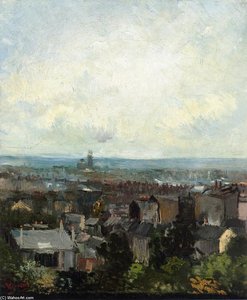 View of Paris from near Montmartre
Introduction to the Painting Vincent Van Gogh's View of Paris from near Montmartre , created in 1886, is a quintessential example of Post-Impressionist art. This oil on canvas painting measures 45 x 38 cm and is a beautiful representation of the city...
While the Impressionists sought to capture the optical truth of light, the Post-Impressionists arrived with a desire to capture something much deeper: the raw, unadulterated soul. No artist embodies this transition more powerfully than Vincent van Gogh. During his time in Paris in 1886, Van Gogh underwent a profound artistic metamorphosis. Moving away from the somber, earthy tones of his earlier Dutch period, he embraced the vibrant, high-voltage rebellion of color and light that defined the Parisian era.
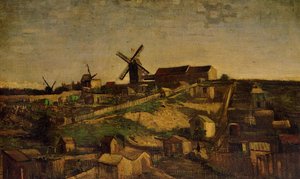
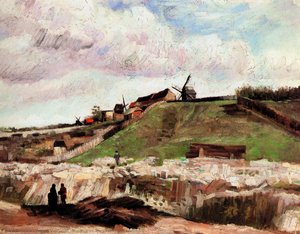
In works such as Montmartre, Paris, we see the beginning of his legendary technique. He began to employ thick, textured brushstrokes—the impasto technique—applying paint in layers to create a sense of depth and physical presence. His use of complementary colors, particularly the striking interplay of blue and orange, creates a dynamic harmony that vibrates on the canvas. For Van Gogh, Montmartre was not just a district; it was a landscape of emotion. In his View of Paris from near Montmartre, the cityscape is rendered with an intensity that reflects his own internal landscape.
Even in his depictions of the more pastoral elements of the hill, such as the Vegetable Gardens in Montmartre, we feel his unique perspective. He captures the industrious beauty of the hillside gardens, with the iconic Sacré-Cœur visible in the distance, yet there is an underlying emotional weight to every stroke. Van Gogh’s Paris was a place of profound connection and intense feeling, where the very texture of the paint served as a testament to his passion for life and his struggle to interpret its overwhelming beauty.
The Impressionist Revolution: Capturing the Fleeting Moment on the Butte
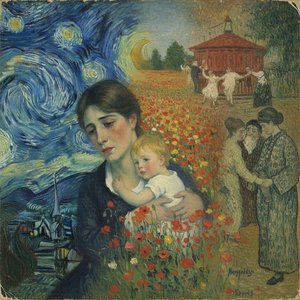 Capturing the Soul: The Most Emotionally Moving Impressionist and Post-Impressionist Masterpieces
The Luminous Revolution: How Impressionism Redefined the Art of Seeing Impressionistic Landscapes: 10 Masterpieces That Changed Art & Decor Introduction To gaze upon these ten canvases is to step directly into a world transformed by light, color, and...
The movement that forever changed our way of seeing was born from a courageous rebellion against the rigid, academic traditions of the past. A group of visionaries sought to dismantle the heavy, somber shadows of the Salon, turning their gaze toward the ephemeral beauty of the present moment. This was a revolution of perception, where the invention of portable paint tubes allowed artists to work en plein air, directly under the vast and ever-changing sky.
The essence of this movement was the embrace of the fleeting. Whether it was the way light dances across a river's surface or how a summer breeze shimmers through the trees, these artists were masters of the optical moment. They rejected meticulous detail in favor of an immediacy that felt as fresh as morning mist. Through broken brushstrokes and vibrant palettes, they created windows into a world transformed by light, where colors do not merely sit on the canvas but seem to vibrate with an ethereal quality.
This era of art redefined our relationship with reality, suggesting that truth is not a fixed, static entity, but a shimmering, subjective experience. To gaze upon these canvases is to celebrate the beauty of a life lived in the light, recognizing that the most precious moments are often those that are the most transient.
Bringing the Spirit of Paris Home: Preserving the Impressionist Legacy
 Art in Paris
For centuries, Paris has attracted artists from around the world, arriving in the city to educate themselves and to seek inspiration from its artistic resources and galleries. As a result, Paris has received a reputation as the "City of Art". In the ...
For those of us who have spent decades admiring these masterpieces, the desire to surround ourselves with their luminous energy is a natural extension of our passion. The legacy of Montmartre—its light, its shadows, and its bohemian soul—deserves to be preserved not just in museums, but within the intimate spaces of our own homes. At ArtsDot.com, we believe that art should be a living part of your daily experience.
We specialize in the creation of exquisite, hand-painted oil reproductions that honor the true spirit of these masters. Unlike mere prints, our works are 100% hand-painted on cotton canvas by artists trained in the finest academies. Each stroke is a deliberate act of passion, designed to capture the tactile depth, the visible brushwork, and the rich tonal range of the originals. Whether you wish to transform a personal photograph into the vibrant impasto style of Van Gogh or seek a custom piece that mirrors the soft light of Pissarro, our artists bring historical techniques to life.
Art is a lasting memory, and we invite you to join us in this journey of preservation. From bespoke multi-panel sets for grand spaces to personalized commissions that turn your own milestones into masterpieces, we are dedicated to the art of the impression. We invite you to explore our collection and discover how the timeless magic of Montmartre can become a permanent part of your world.