The Sacred Presence: An Introduction to the Two Johns in Art History
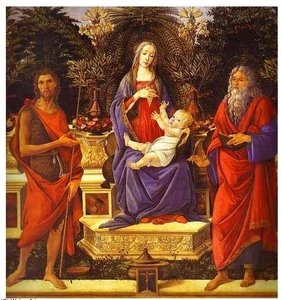
Amidst a rocky landscape and under the threat of a stormy sky, Saint John the Evangelist and Saint John the Baptist are depicted in the ...
These two Johns represent different facets of the spiritual journey: the prophetic call to preparation and the theological witness of revelation. As we wander through the galleries of time, their images serve as anchors for our meditation on faith.
Whispers of Symbolism: Reading the Divine Attributes of Saint John
Saint symbolism has been used from the very beginnings of the religion. Each saint is said to have led an exemplary life and symbols have been used to tell these stories throughout the history of the Church. A number of Christian saints are tradition...
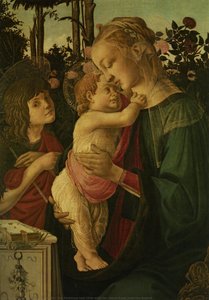
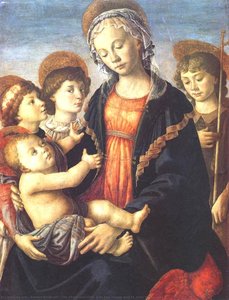
For Saint John the Baptist, we often encounter the rugged texture of animal skins and a slender staff, reminders of his ascetic life in the desert and his role as the forerunner. In contrast, Saint John the Evangelist is frequently identified by the presence of a book, representing the profound wisdom and theological depth of his Gospel. These symbols are far more than mere decorative elements; they are narrative anchors that allow the viewer to recognize the saint’s story, transforming a simple portrait into a complex theological meditation. By recognizing these motifs, we unlock the hidden layers of meaning intended by the artists of the past.
Masterpieces of Grace: Botticelli and the Renaissance Vision of Devotion
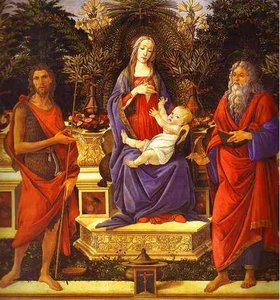
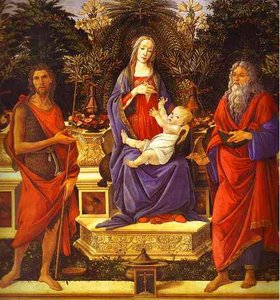 Virgin and Child Enthroned between Saint John the Baptist and Saint John the Evangelis
A Divine Tableau: Botticelli’s ‘Virgin and Child Enthroned’ Sandro Botticelli's “Virgin and Child Enthroned between Saint John the Baptist and Saint John the Evangelist” is more than just a painting; it’s an immersion into the heart of Renaissance sp...
The way the figures flank the enthroned Virgin creates a harmonious tableau, where the earthly realm meets the celestial. Through his signature delicate lines and symbolic motifs—such as the potted plant representing new life—Botticelli invites us into a moment of quiet contemplation, making the divine feel both magnificent and intimately accessible. It is a work that transcends mere representation, offering an immersion into the very heart of Renaissance spirituality.
Light as Divinity: The Mastery of Chiaroscuro in Religious Narratives
 Chiaroscuro
In art, chiaroscuro (English: kee-AR-ə-SKOOR-oh, -SKURE-, Italian: [ˌkjaroˈskuːro]; lit. 'light-dark') is the use of strong contrasts between light and dark, usually bold contrasts affecting a whole composition. It is also a technical term used by a...
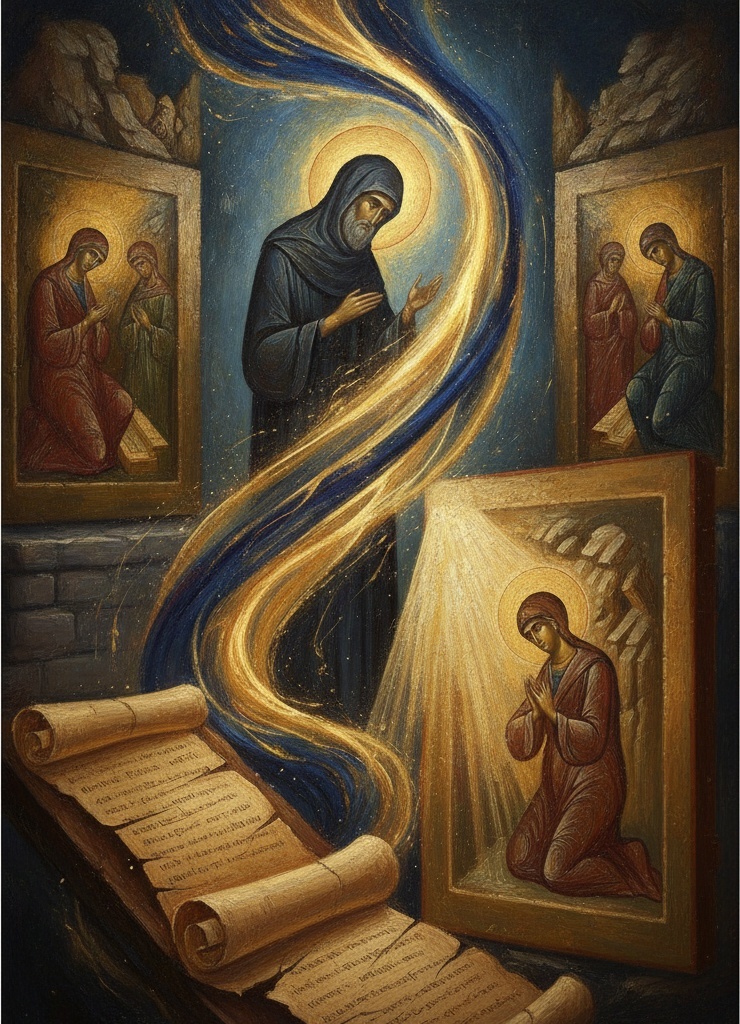
We see this in scenes where deep, meaningful shadows cast across architectural elements, creating a three-dimensional immediacy that makes the historical setting feel palpably present. This interplay of shadow and brilliance serves to focus our attention on the central spiritual drama, using the very physics of light to mirror the revelation of truth within the soul. The mastery of such technique allows the artist to capture moments suspended between earthly suffering and divine grace, making the sacred palpable to the human eye.
Eternal Devotion: The Enduring Emotional Resonance of Saintly Artworks
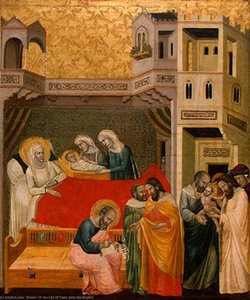 Scenes from the Life of Saint John the Baptist
A Moment of Sacred Intimacy: Scenes from the Life of Saint John the Baptist To gaze upon this depiction of Scenes from the Life of Saint John the Baptist is to step directly into a moment suspended between earthly suffering and divine grace. The comp...
They remind us that art has always been a conduit for our deepest yearnings—for meaning, for connection, and for the light that guides us through the darkness. To gaze upon these works is to participate in an eternal conversation, a testament to the enduring power of beauty to touch the divine within us all. It is a privilege to continue this journey of discovery, finding new layers of meaning in every shadow and every highlight.
Discover more timeless treasures and expert insights at ArtsDot.com.