The Golden Glow: Oranges as Vessels of Light and Vitality
 Still Life with Fruit
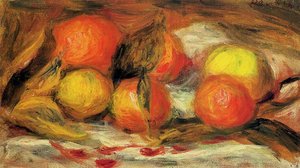
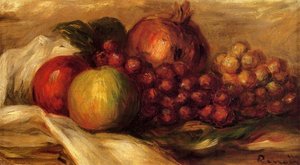
Still Life with Fruit – A Celebration of Impressionistic Light Pierre-Auguste Renoir’s “Still Life with Fruit” stands as an exquisite exemplar of Impressionism, capturing not merely the visual appearance of its subjects but also the ephemeral quality...
To step into the world of Impressionism is to surrender oneself to the light. For those of us who have spent decades admiring the soft, dappled sunlight of a Monet or the luminous warmth of a Renoir, there is a particular magic found in the way these masters treated color. Among their favorite subjects, few possess the radiant energy of the orange. It is more than just a fruit; it is a concentrated orb of sunshine, a vessel designed to capture and hold the fleeting brilliance of a summer afternoon.
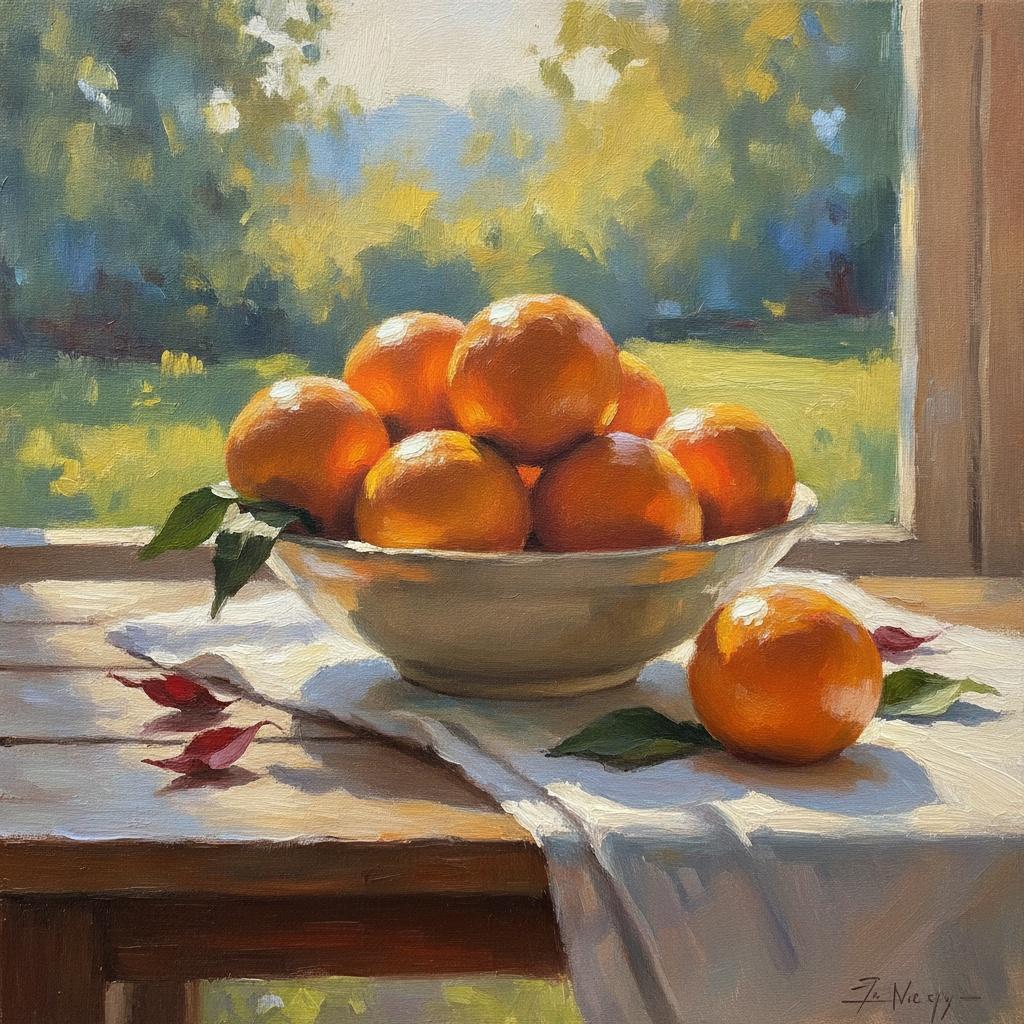
In the hands of an Impressionist, an orange is never merely a static object. Instead, it becomes a study in luminosity. When we gaze upon these works, we are not just seeing pigment on canvas; we and experiencing the way light dances across a textured surface. The vibrant, warm hues—ranging from deep, burnt ambers to bright, citrus yellows—act as anchors of warmth within a composition, often contrasting beautifully against the cooler blues and greens that characterize the movement's palette. This interplay creates a sense of vitality that feels almost breathable, as if the fruit might still carry the heat of the sun from which it grew.
A Sensory Feast: Texture and Taste in the Impressionist Still Life
 Still Life with Fruit
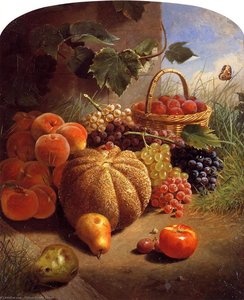
Still Life with Fruit – A Window into Impressionist Light William Merritt Chase’s “Still Life with Fruit,” painted in 1871, is more than just a depiction of luscious produce; it's a vibrant embodiment of the burgeoning Impressionist movement in Ameri...
There is a profound intimacy in a well-executed still life, a quiet invitation to slow down and appreciate the tactile world. When we look at works like William Merritt Chase’s Still Life with Fruit, we are invited into a sensory experience that transcends sight. One can almost feel the waxy sheen of an orange's skin or the delicate, velvety fuzz of a nearby peach. The Impressionists mastered the art of the impasto technique, using thick, energetic brushstrokes to build up layers of paint that give the fruit a palpable, three-dimensional presence.
This tactile richness is what makes these paintings so deeply moving for the seasoned lover of art. It is not about the clinical precision of a photograph, but about the impression of texture. Notice how the broken brushstrokes in a Renoir piece do not seek to smooth over the surface, but rather to create a shimmering effect, mimicking the way light reflects off the uneven, dimpled rind of a citrus fruit. This technique allows the viewer to engage with the painting through a sense of touch, evoking the freshness and succulent abundance of a bountiful harvest. It is a celebration of the everyday, elevated to something extraordinary through the sheer mastery of light and matter.
Beyond the Peel: The Symbolic Language of Citrus in Art History
 The Bountiful Still Life: Symbolism & Artistic Representation of Fruit Across Art History
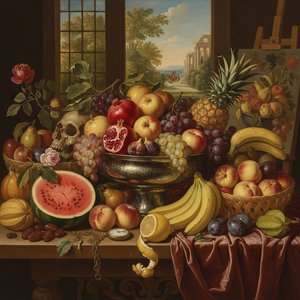
From Ancient Origins to Renaissance Flourishing: The Early Depictions of Fruit Wikipedia: Renaissance art Renaissance art (1350 – 1620) is the painting, sculpture, and decorative arts of the period of European history known as the Renaissance, which ...
While the Impressionists focused on the ephemeral moment, they stood upon a long and storied tradition where fruit carried deep, often spiritual, significance. To understand the beauty of an orange in a 19th-century masterpiece, one must appreciate the echoes of the past. Long before the Impressionist revolution, the roots of still life reached back to the frescoes of ancient Pompeii and the symbolic offerings in Egyptian tombs, where fruit represented prosperity and the sustenance of the soul.
During the Renaissance and the subsequent Dutch Golden Age, artists like Jacob van Hulsdonck or Gerrit Willemsz Heda used fruit to weave complex narratives of vanitas—reminders of the fleeting nature of life. An orange, with its bright, beautiful exterior that eventually withers, served as a poignant metaphor for the transience of earthly pleasures. Even as the Impressionists moved away from these heavy-handed allegories toward a more optimistic celebration of the Belle Époque, the underlying theme of abundance remained. The orange became a symbol of health, vitality, and the joy of the present moment, bridging the gap between the profound meditations of the past and the bright, sensory optimism of the modern era.
Mastering the Moment: Renoir, Cézanne, and the Art of the Fleeting Impression
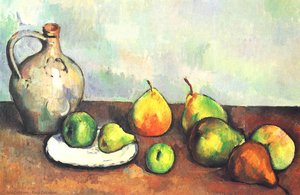
 Still Life with Milk Jug and Fruit
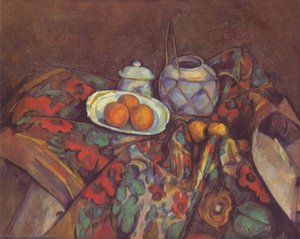
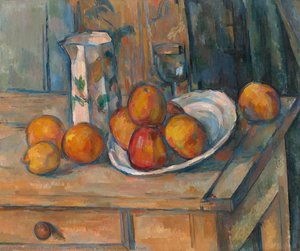
Subject and Composition This captivating still life masterfully captures a simple yet evocative scene filled with everyday objects that resonate with warmth and familiarity. At its center, a white dish holds plump, vibrant oranges and a lemon, their ...
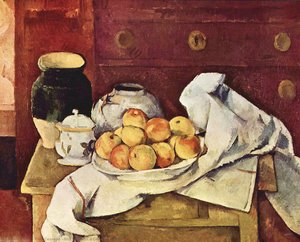
The true genius of the Impressionist and Post-Impressionist masters lies in their ability to capture the "uncapturable." Paul Cézanne, a figure who bridged the gap between the fleeting light of Impressionism and the structured depth of modern art, approached his still lifes with a relentless pursuit of essence. In his works, such as Still Life with Milk Jug and Fruit, we see oranges not just as colorful shapes, but as geometric studies in form and weight. He sought to capture how objects resonated within the space between observation and memory, giving the fruit a structural permanence that feels almost architectural.
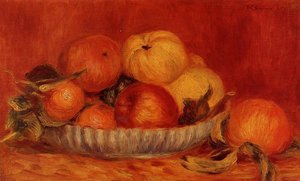
In contrast, Pierre-Auguste Renoir offered us a more lyrical experience. His Still Life with Apples and Oranges is a masterclass in movement and spontaneity. Here, the fruits seem to spill from their bowl, creating a dynamic energy that draws the eye across the canvas. Renoir’s brushwork is softer, more fluid, capturing the way light filters through a room to illuminate a simple arrangement of everyday objects. Together, these artists show us two sides of the same coin: Cézanne provides the soul and the structure, while Renoir provides the breath and the light. Both, however, share an unwavering devotion to the beauty found in the simplest of nature's offerings.
Bringing the Orchard Home: Curating Vibrant Citrus Tones for Your Space
 Cézanne's Masterpieces: 25 Iconic Artworks to Transform Your Space
Introduction There’s a quiet intensity that clings to Paul Cézanne's work, an almost palpable sense of searching—a relentless pursuit of capturing the essence of light and form. To assemble a ‘Top 25’ is, in itself, a somewhat reductive act; it feels...
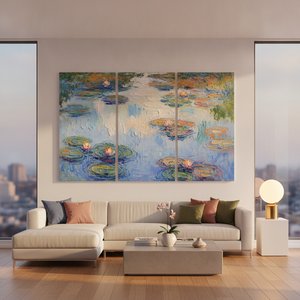
For the collector, bringing these sun-drenched tones into one's home is an act of curation that can transform the very atmosphere of a room. The warm oranges, yellows, and deep reds found in these masterpieces are incredibly versatile. They can serve as a bold, energetic focal point in a modern, minimalist space, or they can add a layer of classical warmth to a more traditional, storied interior.
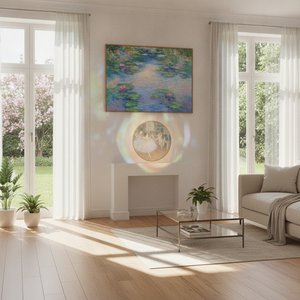
When selecting a piece, consider how the light in your own home interacts with color. A large-scale reproduction of an Impressionist still life can act as a window into another world, providing a sense of depth and vitality even on a cloudy afternoon. Whether you prefer the structured, thoughtful compositions of Cézanne or the light-drenched, joyful arrangements of Renoir, these works offer more than mere decoration; they offer a lasting connection to the beauty of the natural world. By surrounding ourselves with such vibrant, life-affirming imagery, we invite that same sense of warmth and abundance into our daily lives.