
Introduction
Step into a realm where the boundaries between reality and the sublime begin to dissolve, and let yourself be enveloped by the profound shadows of Paul Gustave Doré . To wander through his body of work is not merely to view illustrations or paintings, but to embark on a pilgrimage through the very architecture of the human imagination. There is a certain magic in how Doré captures the weight of a soul in torment and the ethereal lightness of a divine vision, using nothing but the delicate interplay of light and deep, velvety darkness.
Born in the vibrant heart of Strasbourg, Doré emerged during an era of immense cultural transformation. While the world around him shifted from the sweeping emotions of Romanticism toward the starker truths of Realism, he found his true calling in the spaces between—the dreamscapes, the literary legends, and the epic mythologies. He was a master of the chiarosciente , a storyteller who could breathe life into the pages of the Bible, the chivalry of Don Quixote , and the haunting melancholy of Edgar Allan Poe. His work served as a visual bridge, connecting the written word to the visceral experience of sight, making the most fantastical tales feel tangibly present.
Why do these works continue to stir our hearts more than a century later? Perhaps it is because Doré understood that we all carry our own internal shadows and lights. His ability to render the monumental—the vastness of a celestial landscape or the crushing scale of a mythological beast—resonates with our own sense of wonder and our shared human struggle against the unknown. In an age of fleeting digital images, his meticulous compositions offer a sanctuary of depth, texture, and enduring emotional truth.
As we prepare to journey through this curated selection of his top 25 artworks , I invite you to slow your pace. Do not just look at the lines; feel the atmosphere they create. From his most celebrated literary collaborations to his most hauntingly beautiful solo compositions, each piece in this collection is a window into a masterwork of light and shadow that continues to illuminate the corridors of art history.
The Neophyte (First Experience of the Monastery) - Paul Gustave Doré
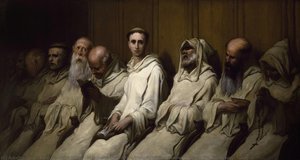 The Neophyte (First Experience of the Monastery) - Paul Gustave Doré
In The Neophyte (First Experience of the Monastery) , Paul Gustave Doré invites us into a visceral plunge into the heart of existential longing. This arresting work stands as a cornerstone among the top 25 artworks of Paul Gustave Doré because it transcends mere illustration, offering a haunting meditation on isolation and the crushing weight of spiritual vows. Through his masterful use of monochrome light and shadow, Doré captures a pivotal moment of profound disillusionment within a medieval cloister.
The scene is a masterclass in emotional contrast; the youthful, tense features of a young novice are set against a towering row of elderly monks, whose bowed postures speak of decades of silent, weary contemplation. This stark visual language—drawing inspiration from George Sand’s Sipiridion —creates a claustrophobic, somber atmosphere that is deeply moving. For the modern collector, this piece brings a dramatic, soulful intensity to a space. Its monochromatic depth and architectural composition offer a timeless elegance, perfect for creating a sophisticated, contemplative ambiance in a library or a study dedicated to the beauty of Romanticism.
Souvenir of Loch Lomond - Paul Gustave Doré
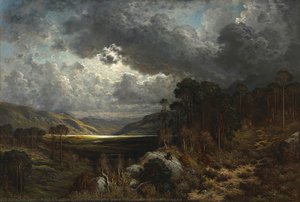 Souvenir of Loch Lomond - Paul Gustave Doré
In Souvenir of Loch Lomond , Paul Gustave Doré transcends mere landscape painting to offer a profound meditation on the sublime. This 1875 masterpiece captures the very essence of Victorian Romanticism, where the dark, reflective waters of the Scottish loch mirror a brooding, atmospheric sky. It stands as a vital inclusion in our collection of the top 25 artworks of Paul Gustave Doré because it showcases his ability to move beyond his famous literary illustrations into a realm of pure, emotive atmosphere.
The work utilizes a masterful interplay of light and shadow; the diffused glow through the clouds illuminates grazing horses and quiet figures, yet maintains an underlying sense of melancholy. For the modern collector, this piece brings a sophisticated, theatrical depth to a room. Its palette of deep greens, misty blues, and earthen tones provides a serene yet powerful focal point, perfect for creating a sanctuary of contemplation within a contemporary home. It is not just a view of Scotland, but an invitation to feel the quiet majesty of nature.
The Inferno, Canto 9, lines 87-89. To the gate He came, and with his wand touch’d it, whereat Open without impediment it flew. - Paul Gustave Doré
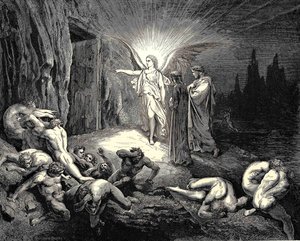 The Inferno, Canto 9, lines 87-89. To the gate He came, and with his wand touch’d it, whereat Open without impediment it flew. - Paul Gustave Doré
There is a profound, haunting stillness in The Inferno, Canto 9, lines 87-89 by Paul Gustave Doré that lingers long after you turn away. It is not merely an illustration of Dante’s descent; it is a visceral encounter with the sublime. As you stand before this masterful engraving, the stark, monochromatic contrasts pull you into a world where light and shadow engage in a celestial struggle. The angel, appearing as a luminous beacon amidst the chaotic despair of suffering souls, touches the gate with a wand, initiating a moment of divine transition that feels both terrifying and sacred.
Doré’s technical virtuosity is breathtaking here; his use of intricate hatching and cross-hatching creates a palpable texture, from the heavy, flowing drapery of the angelic robes to the jagged, oppressive weight of the cavernous entrance. This piece earns its place among the top 25 artworks of Paul Gustave Doré because it does more than depict a literary scene—it invites you to feel the very breath of the abyss and the flicker of hope that pierces it. To possess such a work is to hold a window into the deepest reaches of the human imagination.
Paradise Lost - Paul Gustave Doré
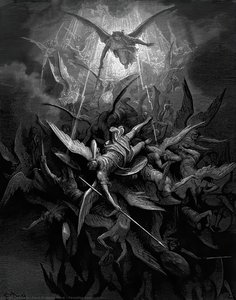 Paradise Lost - Paul Gustave Doré
To gaze upon Gustave Doré’s Paradise Lost is to witness a symphony of shadow and divine radiance. In this breathtaking 1867 engraving, Doré does not merely illustrate Milton’s epic; he breathes life into the very tension between heaven and hell. Can you feel the weight of the atmosphere? It is a visceral experience where light is not just illumination, but a sacred language of grace.
Through the meticulous technique of etching on copper, Doré composes a swirling vortex of conflict. A luminous glow emanates from the upper left, casting a celestial light upon ascending angels, while a heavy, suffocating darkness pulls the demonic figures into the depths of the right side. The fine, intricate lines and masterful cross-hatching create textures so profound you can almost feel the flutter of wings and the coldness of stone. This masterpiece stands in our top 25 because it captures the eternal struggle of the soul—a dramatic, monochrome portal that invites you to contemplate the sublime beauty found even within the most profound chaos.
The Acrobats - Paul Gustave Doré
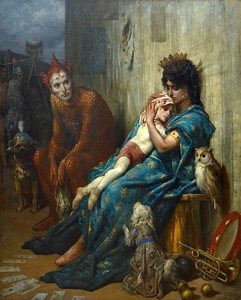 The Acrobats - Paul Gustave Doré
Step into a world of quiet theatricality with The Acrobats by Paul Gustave Doré, a piece that feels less like a mere illustration and more like a whispered secret from the mid-19th century. In this evocative scene, Doré masterfully employs his signature chiaroscuro, allowing pools of soft light to dance across a woman in a striking blue dress as she rests her head in a moment of profound vulnerability. The atmosphere is thick with a beautiful, melancholic nostalgia; shadows drape over the surrounding troupe of performers and a loyal dog, grounding the spectacle in a sense of intimate, everyday reality.
The texture of the work—from the heavy folds of fabric to the delicate presence of a perched bird—invites a tactile connection that is rare in print. For the modern collector, bringing such a masterpiece into a home offers more than just decoration; it introduces a soulful depth and a sense of historical storytelling. Whether placed in a quiet reading nook or as a focal point in a grand hallway, The Acrobats serves as a window into a bygone era of Romanticism, inspiring moments of deep reflection and timeless elegance.
untitled (8555) - Paul Gustave Doré
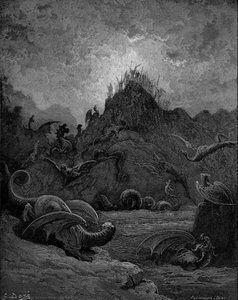 untitled (8555) - Paul Gustave Doré
In untitled (8555) by Paul Gustave Doré, the overwhelming presence of deep, velvety blacks sets a mood of profound mystery and primordial tension. This monochromatic mastery is what secures its place among the top 25 artworks of Paul Gustave Doré; rather than relying on pigment, Doré uses the stark contrast between ink and paper to sculpt light itself. The way the shadows cling to the scales of the writhing serpents creates a tactile, almost breathing texture that pulls the viewer into a fantastical, subterranean realm.
For the discerning collector, this piece offers a sophisticated way to anchor a modern interior. The dramatic interplay of light and shadow can be used to curate an atmosphere of quiet intensity in a study or a dining room, providing a focal point that commands respect without clashing with contemporary palettes. By integrating such a powerful use of tonal range, one can introduce a sense of historical weight and Romantic drama, transforming a simple wall into a window onto the sublime.
The Inferno, Canto 25, lines 59-61. The other two Look’d on exclaiming. “Ah, how dost thou change, Agnello!” - Paul Gustave Doré
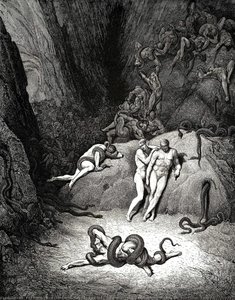 The Inferno, Canto 25, lines 59-61. The other two Look’d on exclaiming. “Ah, how dost thou change, Agnello!” - Paul Gustave Doré
To gaze upon The Inferno, Canto 25 is to witness the very moment where light surrenders to the abyss. In this breathtaking engraving, Paul Gustave Doré does not merely illustrate Dante’s harrowing journey; he orchestrates a symphony of shadows. As we stand before this masterpiece, we feel the chilling breath of the underworld. The way Doré employs dramatic chiaroscuro is nothing short of miraculous—he uses light not to illuminate, but to sculpt the terrifying architecture of despair.
The composition pulls us into a claustrophobic descent, where the eye is led upward toward the grotesque, monumental presence of Lucifer. Through meticulous cross-hatching and fine, etched lines, Doré captures the visceral texture of tormented flesh and the cold, jagged edges of the cavernous pit. It is a profound study of transformation and the heavy weight of sin. This work earns its place among the top 25 artworks of Paul Gustave Doré because it transcends mere illustration; it invites us to feel the psychological gravity of the poem, turning a dark moment of literary history into a timeless, sensory experience that lingers in the soul long after you have turned away.
The Inferno, Canto 21, line 70. “Be none of you outrageous.” - Paul Gustave Doré
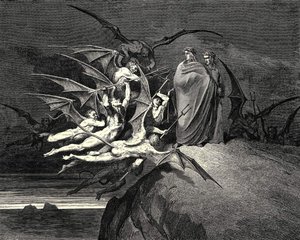 The Inferno, Canto 21, line 70. “Be none of you outrageous.” - Paul Gustave Doré
To gaze upon The Inferno, Canto 21, line 70. “Be none of you outrageous.” is to stand on the precipice of a profound psychological storm. In this breathtaking engraving, Paul Gustave Doré does not merely illustrate Dante’s descent; he captures the very breathlessness of terror and the dizzying scale of divine judgment. The way the light pierces through the swirling, monochromatic chaos to illuminate the central figures creates a sensory experience that feels both haunting and sacred.
This work earns its place among the top 25 artworks of Paul Gustave Doré because of its unparalleled mastery of chiaroscuro. Through meticulous hatching and cross-hatching, Doré transforms a flat copper plate into a visceral landscape of jagged rocks and undulating shadows. It is a masterclass in Romanticism, where the struggle between light and darkness becomes a universal metaphor for the human soul. At ArtsDot.com, we believe such profound emotional depth should not be confined to museum archives. Our hand-painted oil reproductions are crafted to preserve this dramatic intensity, bringing the tactile textures of Doré’s legendary shadows and the sweeping movement of his compositions directly into your personal sanctuary.
Orlando Furioso - Paul Gustave Doré
 Orlando Furioso - Paul Gustave Doré
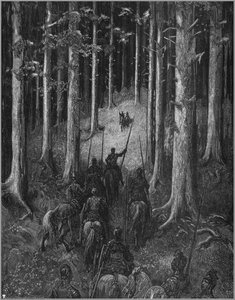
In Orlando Furioso , Paul Gustave Doré achieves a breathtaking structural harmony that anchors this piece within the top 25 artworks of his illustrious career. The composition is masterfully anchored by a pyramidal structure, where a central group of armored riders forms a powerful apex, drawing the eye upward through a dense, vertical labyrinth of ancient trees. This geometric precision creates a sense of timeless perfection, balancing the chaotic energy of the pursuit with a stable, monumental weight.
As you gaze into the monochromatic depths, the interplay of light and shadow—a masterful use of chiaroscuro —transforms the forest into a psychological landscape of mystery and suspense. While the scene is steeped in Romantic drama, its disciplined use of line and tonal depth possesses an internal balance that resonates with the principles of modern minimalist design. This ability to ground intense narrative tension within a clean, structured aesthetic allows such a profound work to provide a sophisticated, grounding element for any contemporary collection, much like a quiet, powerful heartbeat within a room.
The Crowned Virgin Vision Of John - Paul Gustave Doré
 The Crowned Virgin Vision Of John - Paul Gustave Doré
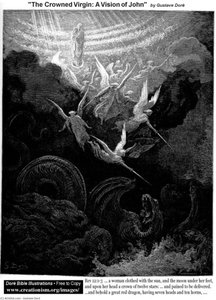
To possess a reproduction of The Crowned Virgin Vision Of John by Paul Gustave Doré is to invite a profound legacy of spiritual drama and Romantic mastery into one’s private collection. As a cornerstone of Doré’s most transcendent period, this work stands as a monumental achievement in the history of engraving, capturing the very essence of the sublime. The composition utilizes a breathtaking pyramidal structure, guiding the eye from the chaotic, serpentine shadows of the dragon toward the luminous, celestial grace of the Virgin Mary at the apex.
Through meticulous crosshatching, Doré creates a palpable tension between light and darkness, a visual symphony of texture that resonates with the intensity of the Book of Revelation. For the discerning collector, this piece represents more than mere biblical illustration; it is an exploration of cosmic struggle. In the context of modern luxury interiors , a high-quality, hand-painted oil reproduction of this masterpiece provides an unparalleled aesthetic authority. Its dramatic interplay of monochrome tones and intricate linework offers a sophisticated focal point, imbuing contemporary spaces with a sense of timelessness, prestige, and deep emotional resonance.
Ecce Homo - Paul Gustave Doré
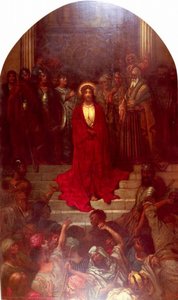 Ecce Homo - Paul Gustave Doré
In Ecce Homo , Paul Gustave Doré achieves a staggering structural mastery that secures its place among the top 25 artworks of Paul Gustave Doré . The composition is anchored by powerful diagonal lines that slice through the canvas, directing our gaze toward the tortured form of Christ. This deliberate use of geometry creates a sense of profound instability and spiritual tension, yet there is an underlying structural harmony in how the Roman figures are positioned to frame the central tragedy. The stark interplay of light and shadow—the quintessential chiaroscuro—functions like a sculptor’s chisel, carving emotion out of the darkness.
While the subject is deeply rooted in biblical drama, the painting's internal balance possesses a rhythmic clarity that resonates with the principles of modern minimalist design. The way Doré strips away the superfluous to focus on the raw, essential weight of the figures provides a grounding force that can anchor a contemporary, clean aesthetic in any sophisticated collection. It is a symphony of light and shadow that remains eternally captivating.
Flower Sellers of London - Paul Gustave Doré
 Flower Sellers of London - Paul Gustave Doré
To step into the world of 1875 London is to encounter a landscape of profound contrasts, where the grandeur of empire met the quiet struggle of the streets. In Flower Sellers of London by Paul Gustave Doré, we are invited into this delicate tension. As part of his evocative series, London: A Pilgrimage , this masterpiece captures the poignant reality of impoverished women and children amidst the bustling heart of the city.
Doré employs a masterful Realist technique, using soft, diffused light to illuminate the faces of his subjects, lending them a dignified, almost saintly presence. The pyramidal composition, anchored by a mother and child, draws the eye upward, suggesting a quiet resilience that transcends their hardship. Muted earth tones dominate the palette, yet the subtle, vibrant hues of the flowers serve as fleeting symbols of hope amidst the gloom. This work earns its place among the top 25 artworks of Paul Gustave Doré for its ability to evoke deep empathy and social reflection. Even today, such a painting brings a soulful, contemplative depth to any collection, transforming a room into a space of historical connection and emotional resonance.
Curs_d wolf thy fury inward on thyself prey and consume thee - Paul Gustave Doré
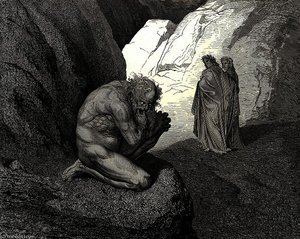 Curs_d wolf thy fury inward on thyself prey and consume thee - Paul Gustave Doré
In the hauntingly beautiful "Curs’d wolf! Thy fury inward on thyself prey, and consume thee" by Paul Gustave Doré, we encounter a masterclass in geometric tension and emotional gravity. As you stand before this profound engraving from Dante’s Inferno , your eyes are immediately drawn into a powerful triangular composition. The kneeling figure forms a stable yet vulnerable base, directing the gaze upward toward a luminous, mysterious gateway that pierces the surrounding gloom. This structural harmony creates a sense of timeless perfection, anchoring the viewer within a moment of intense spiritual supplication.
The meticulous use of cross-hatching and deep, velvety shadows provides a textural richness that feels almost tactile, as if one could reach out and touch the jagged, weathered stone. Interestingly, this stark interplay of light and void mirrors the principles of modern minimalist design; the way Doré uses negative space to define form offers a profound sense of balance that can ground a clean, contemporary aesthetic in any collection. As one of the most striking entries in our selection of the top 25 artworks of Paul Gustave Doré , this piece remains an enduring testament to the sublime power of shadow and light.
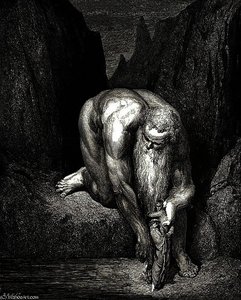
dore gustave - (66) - Paul Gustave Doré
Step into the profound shadows of dore gustave - (66) , a breathtaking descent into the heart of Dante’s Inferno . In this masterful engraving, Paul Gustave Doré captures a moment of visceral tension where light and darkness collide. The composition is anchored by a colossal, muscular figure, whose hunched posture radiates an overwhelming sense of anguish and power, dwarfing the smaller, vulnerable supplicant below. Through meticulous cross-hatching and dramatic chiaroscuro, Doré sculpts the jagged, desolate landscape, making the very air feel heavy with despair and isolation.
The monochromatic brilliance of this work relies on a symphony of textures—the roughness of ancient stone contrasted against the smooth, strained musculature of the figures. It is a hauntingly beautiful exploration of the human condition, reflecting the Romantic era's fascination with the psychological depths of morality. Bringing such a powerful piece into your home offers more than mere decoration; it provides a window into a dramatic, storied past, inviting quiet reflection and adding a layer of intellectual prestige and cinematic depth to any sophisticated interior.
Le reve du moine (The Dream of a Monk) - Paul Gustave Doré
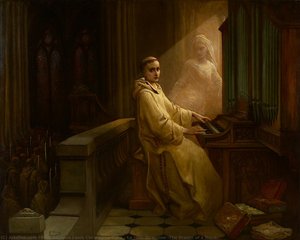 Le reve du moine (The Dream of a Monk) - Paul Gustave Doré
In Le Rêve du Moine (The Dream of a Monk) , the mastery of Paul Gustave Doré is revealed through a breathtaking command of chiaroscuro that feels almost supernatural. A single, divine shaft of light pierces the gloom of a Gothic cathedral, illuminating a young monk at his organ while simultaneously unveiling a spectral, ethereal woman playing alongside him. This dramatic interplay of light and shadow does more than just define form; it captures the very essence of Romanticism—the thin, shimmering veil between our waking reality and the profound mysteries of the soul.
As one of the top 25 artworks of Paul Gustave Doré , this piece stands as a testament to his ability to evoke deep, melancholic beauty. The rich textures of velvet robes and weathered stone, when captured in a hand-painted oil reproduction, bring an unparalleled sense of historical luxury to a modern home. To hang such a work is to invite a contemplative, cinematic atmosphere into your space, where the warmth of gold and deep umber tones creates a sanctuary of light amidst the shadows.
crusades battle of nicaea - Paul Gustave Doré
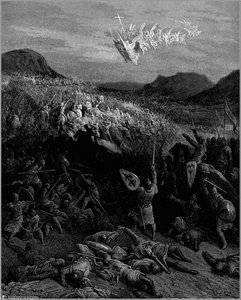 crusades battle of nicaea - Paul Gustave Doré
In the Crusades Battle of Nicaea , Gustave Doré orchestrates a breathtaking symphony of chaos through a masterful use of diagonal geometry. The composition is anchored by a powerful, surging thrust of armored figures that propels the viewer’s eye across a landscape of intense conflict. Amidst this swirling melee, the structural balance is achieved through the striking contrast between the heavy, earthbound weight of the combatants and the ethereal, descending forms of angelic figures. This interplay of vertical divinity and horizontal struggle creates a sense of monumental stability within the tumult.
While the subject is steeped in historical fervor, the artwork’s internal logic—its reliance on stark tonal contrasts and a disciplined use of light and shadow—resonates deeply with the principles of modern minimalist design. The way Doré uses monochromatic depth to define form allows this piece to ground a contemporary space, offering a sophisticated focal point that feels both ancient and strikingly clean. As one of the top 25 artworks of Paul Gustave Doré , it remains an enduring masterpiece of emotional resonance and structural perfection.
A Celestial Light - Paul Gustave Doré
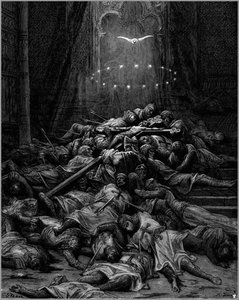 A Celestial Light - Paul Gustave Doré
In A Celestial Light , there is a gaze that follows you—not with judgment, but with a profound, quiet understanding . This masterpiece by Paul Gustave Doré does not merely present a scene; it acts as a mirror for the soul. As you stand before this dramatic vision from 1875, you are drawn into a chaotic landscape of fallen warriors and heavy shadows, where the weight of human suffering feels almost tangible through his meticulous cross-hatching.
Yet, amidst the wreckage of stone and armor, a singular, divine radiance breaks through the darkness. This light, emanating from above, illuminates a central figure bearing the cross, transforming a moment of devastation into one of redemption . The stark, monochromatic contrast creates a sensory experience of texture—the coldness of metal, the roughness of rubble, and the ethereal warmth of grace. Its place among the top 25 artworks of Paul Gustave Doré is a testament to its power to make the invisible visible. Imagine this celestial glow in your own home; it does not merely watch you, but reminds you that even in the deepest shadows, light remains.
Then my guide his palms expanding on the ground thence filled with earth - Paul Gustave Doré
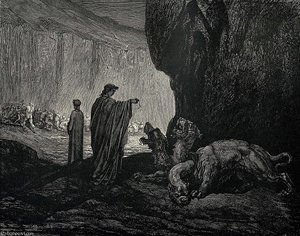 Then my guide his palms expanding on the ground thence filled with earth - Paul Gustave Doré
In the haunting depths of Then my guide his palms expanding on the ground thence filled with earth by Paul Gustave Doré, it is the profound, abyssal black that commands the soul. This isn't merely a lack of light; it is a heavy, velvety darkness that breathes with the weight of Dante’s Inferno , setting a mood of sublime terror and spiritual gravity. As one of the most striking entries in our collection of the top 25 artworks of Paul Gustave Doré , this engraving earns its place through a masterful command of monochromatic contrast. Doré uses intricate hatching to sculpt light out of nothingness, creating a tactile sense of rocky despair and demonic ambition.
For the discerning collector, bringing such a dramatic work into a modern home offers a unique opportunity to anchor a room with theatrical intensity . Imagine this piece framed in a deep espresso wood, serving as a focal point in a study or a sophisticated dining room. The stark interplay of light and shadow can be used to curate an atmosphere of contemplative elegance, providing a soulful, monochromatic anchor that complements contemporary minimalist decor while adding a layer of historical mystery and profound emotional depth.
The Scottish Highlands - Paul Gustave Doré
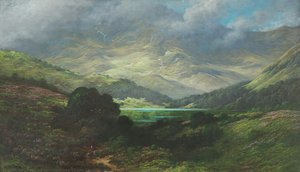 The Scottish Highlands - Paul Gustave Doré
In The Scottish Highlands , the lines of the landscape are not merely painted; they are choreographed . This masterpiece from 1875 transcends simple topography to become a dance frozen in time, where the rugged granite peaks and the shimmering surface of Loch Moraine move in a silent, rhythmic harmony. Doré does not simply record a place; he captures a feeling—a profound, melancholic reverence for a wild land untamed by the encroaching shadows of modernity.
As you gaze upon the layered oils, you feel the atmospheric weight of the mountains and the serene pulse of the water's edge. The figures scattered through the scene—tiny witnesses to the sublime—invite us to contemplate our own vulnerability amidst such permanence. It is a breathtaking testament to Romanticism, making the chaos of nature feel like a structured, soulful melody. What if your own walls could breathe this same rhythm ? To possess such a work is to invite the eternal, mist-covered majesty of the Highlands into the very heart of your home.
Don Quixote (122) - Paul Gustave Doré
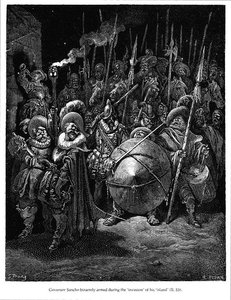 Don Quixote (122) - Paul Gustave Doré
Step into a world of silvered shadows and whispered legends with Paul Gustave Doré’s Don Quixote . This is not merely an illustration; it is a symphony in grayscale, where the flickering light of a single lantern breathes life into the solemn procession of Cervantes' epic. As you gaze upon the intricate wood engravings, you can almost feel the rough texture of weathered stone and the heavy weight of Sancho Panza’s oversized shield, a poignant symbol of loyalty amidst the beautiful absurdity of Quixote’s delusions.
Doré’s mastery of light and shadow—the dramatic chiaroscuro of his era—creates a profound sense of depth that pulls the viewer into the heart of the Spanish landscape. The meticulous hatching and cross-hatching lend a tactile, sculptural quality to every fold of fabric and glint of armor. In a modern home, such a masterpiece serves as a window into the Romantic soul, offering a contemplative focal point that invites quiet reflection and adds a layer of timeless, literary elegance to any curated collection.
dsjslafls - Paul Gustave Doré
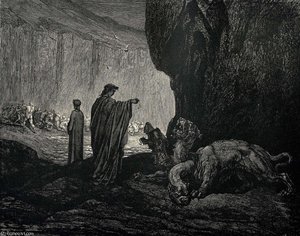 dsjslafls - Paul Gustave Doré
To gaze upon dsjslafls is to stand on the precipice of the human soul, caught between the terrifying vastness of the unknown and the flickering light of courage. In this monumental engraving, Paul Gustave Doré does not merely illustrate a scene from Dante’s Inferno ; he invites us to breathe the suffocating, shadowed air of the abyss. The way the colossal, jagged rock formation anchors the composition against the encroaching gloom creates a visceral sense of dread that remains as potent today as it was in the nineteenth century.
This work earns its place among the top 25 artworks of Paul Gustave Doré through its unparalleled mastery of chiaroscuro and its ability to translate literary torment into tangible, textured reality. The fine, incised lines capture every grotesque detail, from the monstrous fur of the demonic beast to the vulnerable posture of Dante himself. At ArtsDot.com, we believe such profound emotional depth deserves to be felt in your own sanctuary. Our hand-painted oil reproductions strive to preserve this very essence, using meticulous brushstrokes and rich tonal ranges to bring the dramatic light and haunting shadows of Doré’s genius into the intimate atmosphere of your home.
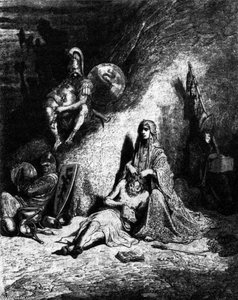
Semiramide, spidocchiatrice di straccioni - Paul Gustave Doré
Step into a world of profound shadows and whispered sorrows with Semiramide, spidocchiatrice di straccioni . In this 1854 masterpiece, Paul Gustave Doré invites us to witness a moment of raw, cinematic vulnerability. Through the meticulous precision of wood engraving, he breathes life into a monochromatic landscape where light and darkness engage in a dramatic, eternal dance. The scene is heavy with the atmosphere of Romanticism; we feel the rough texture of the rocky outcrops and the palpable weight of Semiramide’s grief as she kneels beside a fallen figure.
Doré’s mastery of chiaroscuro creates a theatrical depth that pulls the viewer into the narrative, using fine hatching to sculpt light across faces and fabric. While the work is rooted in historical tragedy, its soulful intensity offers a timeless anchor for the modern home. Hanging such a powerful piece provides more than mere decoration; it introduces a space for deep reflection and intellectual gravity, inviting a sense of quiet, storied elegance into your personal sanctuary.
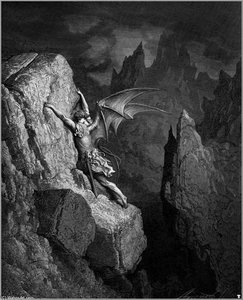
Satan's Flight Through Chaos - Paul Gustave Doré
While many remember Doré for his divine biblical scenes, there is a darker, more visceral pulse found in Satan's Flight Through Chaos . Created around 1868, this work captures the precise moment of Milton’s fallen angel descending into the abyss, a scene where light and shadow engage in a violent, eternal struggle. It is not merely an illustration but a masterclass in the Romantic sublime; through meticulous hatching and deep, velvety blacks, Doré transforms a wood engraving into a window onto pure, unadulterated turmoil.
The technical genius of this piece lies in its dynamic diagonal composition , which pulls the viewer’s gaze upward along jagged, unforgiving rock formations, mirroring the very agony of the descent. The stark contrast between the brilliant highlights on Satan's muscular form and the swallowing darkness of the landscape creates a sense of profound isolation. To possess such a work—or a high-quality reproduction of it—is to invite a sense of monumental drama into one's surroundings. It is an ideal centerpiece for a sophisticated study or modern home office, providing a powerful, contemplative atmosphere that inspires deep focus and intellectual ambition.
They heard, and were abashed, and up they sprung - Paul Gustave Doré
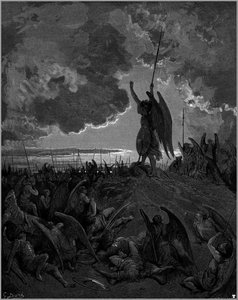 They heard, and were abashed, and up they sprung - Paul Gustave Doré
In the hauntingly beautiful engraving “They heard, and were abashed, and up they sprang,” Gustave Doré invites us into the very heart of spiritual upheaval. This masterpiece, drawn from the epic depths of Milton’s Paradise Lost , captures the visceral moment of divine judgment with a dramatic intensity that remains unparalleled among the top 25 artworks of Paul Gustave Doré . Through a masterful use of monochrome light and shadow, Doré renders the confrontation between Lucifer and the heavens not merely as a myth, but as a palpable, breathing tragedy.
The composition utilizes a striking pyramidal structure, where a towering figure of authority anchors a landscape of chaos. The dense cross-hatching and intricate etching create a textured, stormy atmosphere that mirrors the turbulent emotions of fear and awe. In today’s curated interiors, such works serve as profound focal points; their exploration of moral struggle and the interplay between light and darkness resonates deeply with our modern fascination with Romanticism and the sublime. It is a piece that does not just depict history—it embodies the eternal tension between defiance and submission.
The Agony In The Garden - Paul Gustave Doré
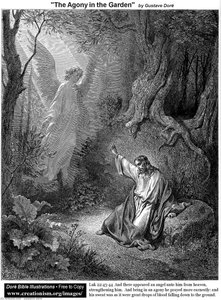 The Agony In The Garden - Paul Gustave Doré
In the quiet, shadowed corners of our collection, The Agony In The Garden by Paul Gustave Doré emerges not merely as an illustration, but as a profound descent into the human soul. To behold this masterpiece is to step into the heavy, nocturnal air of Gethsemane, where the boundaries between divine intervention and earthly despair blur into a singular, breathtaking moment of tension.
Doré, a true master of Romanticism, utilizes the intricate language of etching to weave a tapestry of light and profound darkness. Through meticulous hatching and cross-hatching on copper, he creates a world of tactile textures—the rough, tangled bark of ancient trees and the soft, luminous presence of an angel appearing through the gloom. The monochromatic palette, stripped of all color, forces our eyes to linger on the dramatic interplay of light illuminating Jesus’s kneeling form against an oppressive, velvety blackness. This work is a sensory experience of solitude and submission; it transforms your viewing space into a sanctuary of reflection, inviting you to find beauty within the most harrowing depths of faith.
Conclusion
As the light fades and we prepare to leave the quiet halls of this visual journey, one realizes that the works of Paul Gustave Doré are far more than mere relics of a bygone era or ink on aged paper. They are living, breathing echoes of the human spirit—shadows and lights that continue to dance across our modern consciousness. To gaze upon his mastery is to feel the pulse of ancient legends and the weight of profound emotion, reminding us that the themes he captured—the sublime, the melancholic, and the heroic—remain as vital today as they were in the bustling streets of nineteenth-century Paris.
These masterpieces do not belong solely to the archives of history; they possess a quiet power to transform our contemporary spaces, breathing soul and narrative into the very walls we call home. Whether through the dramatic tension of his biblical illustrations or the haunting depths of his literary visions, Doré invites us to pause, to reflect, and to find beauty in the interplay of darkness and illumination. It is our hope that these images stay with you long after the museum doors have closed, serving as a gentle reminder of the eternal connection between art and the human heart.
If you feel moved to bring a piece of this evocative legacy into your own sanctuary, we invite you to explore our full collection , where each hand-painted reproduction is crafted to preserve the profound magic of his original vision.