Introduction
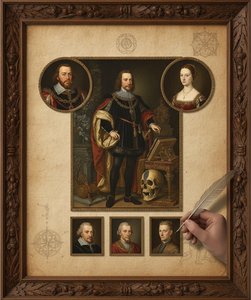
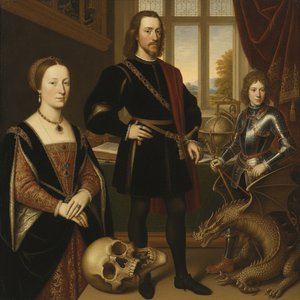
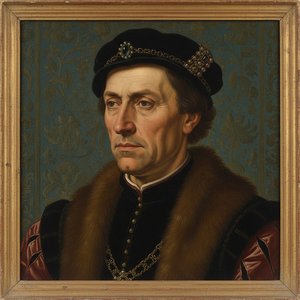
Step into a quiet corner of history, where the air feels heavy with the scent of aged oils and the weight of untold stories. To wander through the works of Hans Holbein the Younger is not merely to view portraits, but to encounter the very souls of the Renaissance. There is a profound, almost breathless intimacy in his gaze—a sense that if we were to blink, the subjects might exhale, adjust their heavy velvet robes, or whisper a secret from the Tudor court.
Born in the vibrant artistic atmosphere of Augsburg, Holbein carried with him the meticulous discipline of the Northern Renaissance, a tradition where every thread of lace and every glint of light on a gemstone was rendered with devotional precision. As he moved from the scholarly circles of Basel to the opulent, often perilous halls of King Henry VIII’s court, he became more than a painter; he became a visual chronicler of an era in flux. His brush did not just capture likeness; it captured presence . He possessed the rare, almost supernatural ability to render the texture of human existence—the cold sheen of a ring, the weary lines around an eye, and the quiet dignity of a scholar or the formidable power of a monarch.
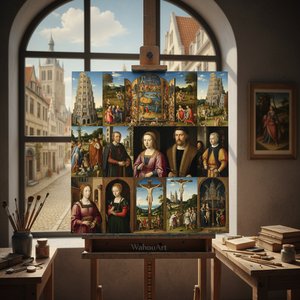
\In our modern, hurried world, these masterpieces remain deeply meaningful because they remind us of the beauty found in stillness and the importance of being truly seen. Holbein’s art invites us to slow down, to observe the subtle nuances of character that define our shared humanity. As we prepare to journey through this curated selection of his top 25 artworks , let us look beyond the pigment and the canvas. Let us prepare to meet the faces of the past, each one a window into a world of exquisite detail, profound intellect, and enduring grace.
Double Portrait of Jean de Dinteville and Georges de Selve (also known as The Ambassadors) - Hans Holbein the Younger
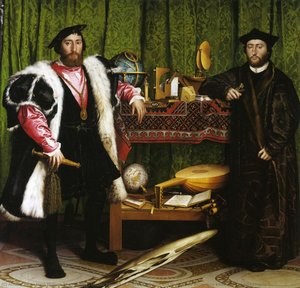 Double Portrait of Jean de Dinteville and Georges de Selve (also known as The Ambassadors) - Hans Holbein the Younger
To stand before Double Portrait of Jean de Dinteville and Georges de Selve (also known as The Ambassadors) by Hans Holbein the Younger is to step into a world where every shadow holds a secret and every texture whispers of power. In this 1533 masterpiece, Holbein captures the heavy, velvet stillness of the Tudor era, surrounding his subjects with an opulent array of scientific instruments, globes, and fine silks that shimmer under a soft, directional light. The painting is a breathtaking triumph of Northern Renaissance precision; one can almost feel the weight of the heavy furs and the cool smoothness of the celestial spheres.
Yet, beneath this display of worldly intellect lies a profound, haunting mystery. A single broken lute string hints at religious discord, while the famous anamorphic skull stretches across the foreground—a chilling memento mori reminding us of life's fragility. As one of the top 25 artworks of Hans Holbein the Younger, this piece remains an essential study in symbolism and human mortality. It is a painting that does not merely decorate a room but transforms it, inviting us to contemplate the eternal dance between earthly glory and the inevitable passage of time.
Portrait of Nikolaus Kratzer - Hans Holbein the Younger
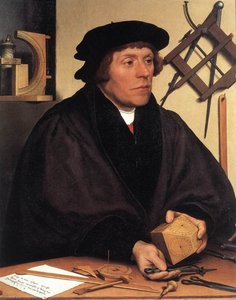 Portrait of Nikolaus Kratzer - Hans Holbein the Younger
To gaze upon the Portrait of Nikolaus Kratzer is to step quietly into a moment of profound intellectual devotion. In this 1528 masterpiece, Hans Holbein the Younger does not merely paint a man; he captures the very breath of Renaissance curiosity. There is something deeply moving about seeing Kratzer, the astronomer to King Henry VIII, lost in his world of geometry and celestial measurement. The way the light catches the edge of a polyhedral sundial or the precise curve of a compass invites us to share in his quiet, scholarly passion.
This work earns its place among the top 25 artworks of Hans Holbein the Younger through its breathtaking technical precision and its ability to transform scientific tools into symbols of human spirit. The rich, muted earth tones and the tactile reality of the wooden desk and heavy fabrics create a sensory experience that feels remarkably intimate even centuries later. At ArtsDot.com, we strive to honor this legacy of detail. Our handmade oil reproductions are meticulously painted on cotton canvas, ensuring that every subtle glaze and purposeful brushstroke—the very soul of Holbein’s realism—is preserved, allowing you to bring this window into the Renaissance into your own cherished space.
The Body of the Dead Christ in the Tomb - Hans Holbein the Younger
 The Body of the Dead Christ in the Tomb - Hans Holbein the Younger
To gaze upon The Body of the Dead Christ in the Tomb is to confront a moment of profound, breathless stillness. While Holbein is often celebrated for the vibrant splendor of the Tudor court, this early masterpiece reveals a much darker, more visceral side of his genius. There is a haunting, almost clinical precision in how he renders the pale, emaciated flesh against the somber, earthy tones of the wooden bier; it is an unflinching study of mortality that transcends mere religious iconography.
The technical mastery lies in the interplay of light and shadow, where the dramatic chiaroscuro accentuates every anatomical detail, from the tension in the limbs to the chilling realism of the open eyes. This work does not merely depict a scene; it demands an emotional reckoning. For the discerning collector, bringing such a powerful piece into a private study or home office provides more than just decoration. It introduces a sense of deep contemplation and intellectual gravity, fostering a sophisticated atmosphere where one can find the quiet focus required for profound thought and creative ambition.
Darmstadt Madonna - Hans Holbein the Younger
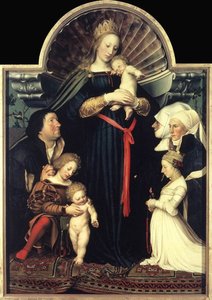 Darmstadt Madonna - Hans Holbein the Younger
Before he became the celebrated chronicler of the Tudor court, Hans Holbein the Younger captured a profound moment of personal devotion in the Darmstadt Madonna . Painted around 1526, this work is far more than a religious icon; it is a tender, complex tapestry of human life and memory. Within this pyramidal composition, Holbein weaves together the sacred and the secular, placing the Holy Family alongside the Basel official Jakob Meyer zum Hasen and his family, effectively blurring the line between divine grace and earthly lineage.
The technical brilliance of this masterpiece lies in its chiaroscuro and the meticulous rendering of textures—from the soft, luminous skin of the infant Jesus to the heavy, ornate drapery that anchors the scene. Holbein’s use of warm earth tones and directional light creates a sense of profound intimacy and solemnity. To possess a reproduction of such a piece is to invite a spirit of quiet contemplation and intellectual depth into one's surroundings; it provides an atmosphere of focused, sophisticated serenity, perfect for inspiring clarity within a modern home study or private library.
The Ambassadors - Hans Holbein the Younger
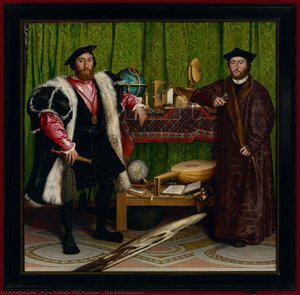 The Ambassadors - Hans Holbein the Younger
To stand before The Ambassadors is to enter a silent, profound dialogue with the Renaissance itself. In this 1533 masterpiece, Hans Holbein the Younger captures more than just the likeness of Jean de Dinteville and Georges de Selve; he weaves a tapestry of human ambition, scientific curiosity, and the haunting presence of mortality. The painting is a cornerstone of his legacy, renowned for its breathtaking hyper-realism—from the heavy, fur-trimmed textures of the black robes to the shimmering luster of the celestial globe.
As you wander through this visual symphony, your eyes are drawn to the intricate objects resting upon the two-tiered shelf: a lute with a broken string whispering of religious discord, and the famous anamorphic skull that stretches across the foreground. This brilliant use of perspective serves as a powerful memento mori , reminding us of the fleeting nature of life amidst worldly splendor. For the modern collector, such a work brings an unparalleled intellectual depth to a room, offering a sophisticated focal point that bridges the gap between historical majesty and contemporary contemplative design.
Edward, Prince of Wales - Hans Holbein the Younger
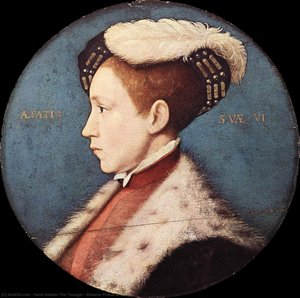 Edward, Prince of Wales - Hans Holbein the Younger
To stand before Edward, Prince of Wales is to witness the very heartbeat of the Tudor dynasty captured in a single, breathtaking moment. In this 1543 masterpiece, Hans Holbein the Younger does not merely paint a royal heir; he breathes life into the heavy silks and vibrant pigments of a vanishing era. The striking crimson of the Prince’s jacket commands the eye, a bold splash of authority that radiates against the crisp, luminous white of his collar.
Holbein’s Northern Renaissance mastery is felt in every meticulous fiber of the attire and the soft, realistic texture of the Prince's features. As you gaze upon the subtle interplay of light on his face, notice the delicate, naturalistic touch of birds scattered in the background—a poetic whisper of nature amidst royal grandeur. This work is more than a historical record; it is an invitation to surround yourself with the profound psychological depth and regal elegance that only a true master can provide. It transforms a mere wall into a window onto the soul of history.
Christina of Denmark, Ducchess of Milan - Hans Holbein the Younger
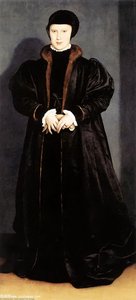 Christina of Denmark, Ducchess of Milan - Hans Holbein the Younger
In the quiet, somber depths of 1538’s Christina of Denmark, Duchess of Milan , one encounters more than a mere portrait; one meets a soul preserved in the amber of history. Holbein captures a profound intersection of personal grief and political majesty, presenting Christina not with the fragility of loss, but with an indomitable, steady strength. This work earns its place among the top 25 artworks of Hans Holbein the Younger through its unparalleled psychological depth and technical mastery of texture.
The painting is a masterclass in subtle storytelling, where the heavy, voluminous black mourning fabrics and the soft tactile presence of a fur collar ground the subject in a tangible reality. Holbein’s use of light—soft, diffused, and reminiscent of a gentle morning mist—draws the eye to her composed features, pulling her forward from the shadowy void. At ArtsDot.com, we believe such emotional resonance should be felt in every home. Our hand-painted oil reproductions meticulously recreate these visible brushstrokes and deep tonal ranges, allowing you to bring this timeless vision of dignity and Renaissance grace into your own private sanctuary.
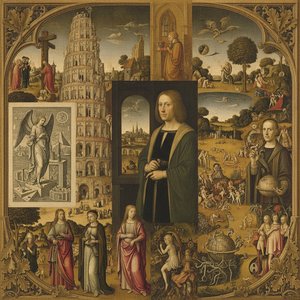
An Allegory of the Old and New Testaments - Hans Holbein the Younger
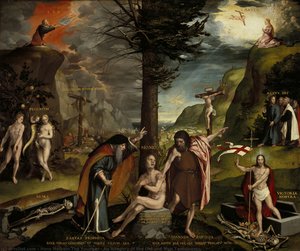 An Allegory of the Old and New Testaments - Hans Holbein the Younger
To gaze upon An Allegory of the Old and New Testaments is to step into a profound visual sermon, where every brushstroke by Hans Holbein the Younger whispers of human frailty and divine hope. This masterpiece earns its place in our Top 25 through its breathtaking ability to weave complex theological narratives into a single, breathing landscape. Within this composition, the viewer encounters the heavy weight of the Fall—the serpent coiled around the Tree of Knowledge—balanced against the luminous promise of redemption found in the figures of Christ and the Virgin Mary.
Holbein’s Northern Renaissance mastery is on full display here; his meticulous attention to the textures of skin, stone, and foliage creates a world so tactile it feels almost present in the room. The rich, earthy palette, punctuated by dramatic highlights, invites a deep, contemplative stillness. At ArtsDot.com, we believe such profound stories should not be confined to museum archives. By bringing this exquisite reproduction into your home or private sanctuary, you transform a mere wall into a window onto the eternal, making the spiritual depth of the Renaissance a living part of your daily atmosphere.
Jane Seymour, Queen of England - Hans Holbein the Younger
 Jane Seymour, Queen of England - Hans Holbein the Younger
In Jane Seymour, Queen of England , Hans Holbein the Younger achieves a breathtakingly soft illumination that seems to emanate from within the subject herself. Rather than employing the dramatic, heavy shadows of the Italian masters, Holbein utilizes a clear, even light that dances across the rich textures of her crimson gown and the delicate porcelain of her skin. This masterful command of light creates an almost photographic clarity, capturing the quiet dignity of a woman standing in the shadow of Anne Boleyn’s tragic end. It is this precise rendering of luminosity and fine detail that secures its place among the top 25 artworks of Hans Holbein the Younger .
To possess a hand-painted reproduction of this masterpiece is to invite a sense of historical gravity and refined elegance into your home. The way the light catches the simulated brushstrokes on the heavy fabric adds a tactile, luxurious depth to any contemporary wall, offering a window into the solemn majesty of the Tudor court. It is not merely a portrait; it is a luminous fragment of history, preserved through the artistry of the Northern Renaissance.
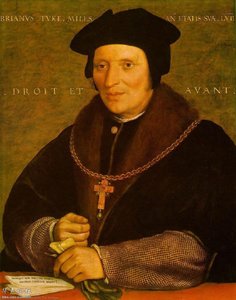
Sir Brian Tuke - Hans Holbein the Younger
In the portrait of Sir Brian Tuke , a profound and commanding deep black dominates the canvas, setting a mood of solemnity, authority, and quiet intellectual weight. This isn't merely a color; it is an anchor for the soul. Holbein’s mastery lies in how he breathes life into this darkness, using subtle light to reveal the luxurious texture of the fur collar and the heavy drape of the courtier's robe. This sophisticated interplay of shadow and light is precisely why this work earns its place among the top 25 artworks of Hans Holbein the Younger .
For the discerning collector, integrating such a piece into a modern interior offers a way to anchor a room with historical gravity. The somber, dignified palette of blacks and muted tones provides an exquisite contrast when paired with warm, ambient lighting or soft gold accents in a dining room. It creates an atmosphere of timeless elegance, allowing one to curate a space that feels both intellectually stimulating and deeply grounded in the rich tapestry of the Northern Renaissance.
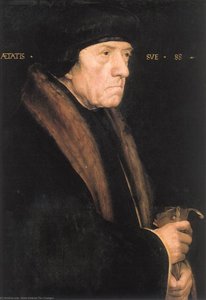
Thomas Cromwell - Hans Holbein the Younger
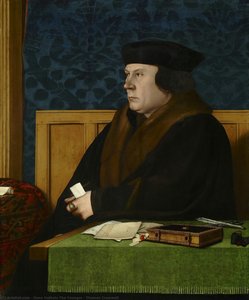 Thomas Cromwell - Hans Holbein the Younger
Step into the shadows of the Tudor court, where the air is heavy with the scent of old parchment and the weight of whispered secrets. In Thomas Cromwell , Hans Holbein the Younger invites us to meet the architect of an era through a gaze that is both unyielding and profoundly piercing. The painting breathes with a somber, quiet prestige; the deep, velvety blacks of Cromwell’s robes absorb the light, while the subtle glazes on his skin reveal a startling, lifelike warmth.
Holbein’s mastery of texture—the crisp edge of a book, the heavy drape of fabric, and the steady, watchful eye—creates an atmosphere of intense intellectual gravity. There is a magnificent stillness here, a moment of contemplation captured amidst political storm. Bringing such a masterpiece into your home offers more than mere decoration; it introduces a sense of historical depth and a focal point for quiet reflection. It is a piece that commands respect, inviting a sophisticated energy into any room, much like the enduring legacy of the Northern Renaissance itself.
Edward VI (1537–1553), When Duke of Cornwall - Hans Holbein the Younger
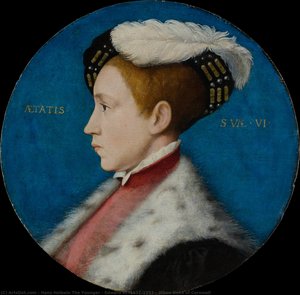 Edward VI (1537–1553), When Duke of Cornwall - Hans Holbein the Younger
In Edward VI (1537–1553), When Duke of Cornwall , Hans Holbein the Younger achieves a breathtaking structural harmony that secures its place among the top 25 artworks of Hans Holbein the Younger . The composition is anchored by the elegant geometry of the roundel format, a circular frame that evokes classical antiquity and focuses our gaze entirely upon the young sovereign. This circularity creates a sense of infinite, timeless perfection, pulling the viewer into a concentrated moment of royal dignity.
The balance within the piece is remarkably poised; the weight of the rich, crimson and white fabrics is perfectly offset by the luminous gold tones and the deep, contemplative blue of the background. There is a striking parallel here to modern minimalist design —the way Holbein strips away peripheral distraction to focus on essential form and symbolic clarity allows this Renaissance masterpiece to ground a contemporary, clean aesthetic in any collection. As you observe the subtle interplay of light on the scepter and crown, you feel the profound weight of Tudor history, rendered with a precision that remains as emotionally resonant today as it was in 1547.
Noli me tangere - Hans Holbein the Younger
 Noli me tangere - Hans Holbein the Younger
To stand before Noli me tangere is to witness a profound, breathless pause in the fabric of time. In this 1524 masterpiece, Hans Holbein the Younger captures the very heartbeat of the Resurrection—the precise, trembling moment when Mary Magdalene reaches for the divine, only to be met with the gentle command, "Touch me not." There is a sacred tension here, a delicate dance between the earthly and the eternal, rendered with a precision that feels almost supernatural.
This work earns its place among the top 25 artworks of Hans Holbein the Younger through its masterful use of light and shadow to convey deep spiritual transition. The way the morning sun begins to pierce the gloom of the tomb mirrors the dawn of hope itself. At ArtsDot, we believe such evocative narratives belong in the intimate sanctuaries of your home. Bringing this piece into your space is more than mere decoration; it is an invitation to contemplate the sublime every day. Whether as a focal point in a quiet study or a conversation piece in a refined living room, this painting transforms a wall into a window onto the miraculous.
Henry VIII and the Barber Surgeons - Hans Holbein the Younger
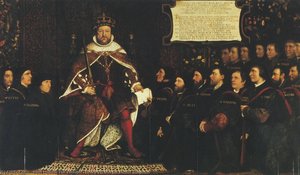 Henry VIII and the Barber Surgeons - Hans Holbein the Younger
To gaze upon Henry VIII and the Barber Surgeons by Hans Holbein the Younger is to step into a moment where royal majesty meets the clinical precision of the Renaissance. At ArtsDot.com, we believe in democratizing such profound beauty, ensuring these windows into history are never lost to the shadows of museums. This masterpiece earns its place among the top 25 artworks of Hans Holbein the Younger through its breathtaking psychological tension and unparalleled technical mastery.
Holbein captures more than just a monarch; he weaves a narrative of power, vulnerability, and the dawn of scientific observation. The luminous textures of the King’s heavy robes and the sharp, observant gazes of the surgeons create an atmosphere of palpable weight and historical significance. It is a work of immense symbolic depth, reflecting the anxieties of a Tudor era caught between tradition and discovery. Just as this painting once commanded the halls of the English court, its commanding presence can be brought into your own home or private gallery through our high-fidelity, hand-painted oil reproductions, allowing you to live surrounded by the transformative soul of the Northern Renaissance.
Passion - the passion (detail) - Hans Holbein the Younger
 Passion - the passion (detail) - Hans Holbein the Younger
To gaze upon the detail of Passion - the passion (detail) by Hans Holbein the Younger is to step into a moment where time itself seems to fracture under the weight of profound sorrow. This fragment of his 1525 masterpiece does not merely depict a biblical event; it captures the very breath of human suffering and the raw, visceral intensity of the Northern Renaissance. Its inclusion in our Top 25 is essential because it showcases Holbein’s unparalleled ability to use light and shadow—a masterful chiaroscuro —to pull the viewer into a sacred, heavy atmosphere where every wrinkle in fabric and every flicker of grief is palpable.
At ArtsDot.com, we believe that such profound emotional depth should not be confined to museum archives. We bring this transformative energy into your personal sanctuary, allowing the dramatic textures and spiritual gravity of Holbein’s precision to breathe life into your home. Owning a hand-painted reproduction of this work is more than a design choice; it is an invitation to surround yourself with the eternal, turning a quiet corner of your room into a profound space for reflection and historical connection.
oberried altarpiece (detail) - Hans Holbein the Younger
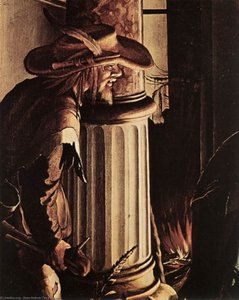 oberried altarpiece (detail) - Hans Holbein the Younger
In the Oberried Altarpiece (detail) , we encounter a profound fragment of the Northern Renaissance that transcends its religious origins to touch upon the universal human struggle between earthly temptation and spiritual steadfastness. As one of the most significant works in our collection of the top 25 artworks of Hans Holbein the Younger, this piece showcases his unparalleled ability to weave psychological depth into every meticulous brushstroke. The figure, adorned with a striking horned hat—a potent symbol of vanity or worldly ambition—gazes into the unknown, inviting us to reflect on our own fleeting desires and the search for permanence.
Holbein’s mastery is evident in the tactile precision of the textures, from the cold stone of the pillar to the flickering warmth of the distant hearth. This detail serves as a masterclass in symbolic storytelling, where every object, from a simple bowl to a sharp knife, whispers of mortality and devotion. For the discerning collector, integrating such a profound piece into a modern space creates a timeless dialogue, bringing a sense of historical weight and contemplative beauty to any curated environment.
untitled (799) - Hans Holbein the Younger
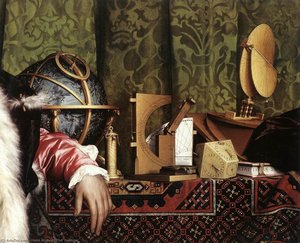 untitled (799) - Hans Holbein the Younger
To gaze upon Untitled (799) by Hans Holbein the Younger is to step into a quiet moment of profound contemplation. There is a heavy, beautiful stillness in this work, as if we have caught a gentleman lost in thought amidst the symbols of a changing world. The rich, crimson weight of his robe and the soft glow of light upon the terrestrial globes evoke a sense of intellectual hunger and the vastness of human discovery during the Northern Renaissance.
This masterpiece earns its place among the top 25 artworks of Hans Holbein the Younger through its breathtaking psychological depth and the meticulous way it weaves together symbols of time, geography, and authority. Holbein does not merely paint a man; he paints the very essence of ambition. At ArtsDot.com, we strive to honor this legacy of precision. Our hand-painted oil reproductions capture every subtle gradation of light and the tactile texture of the original's fine details, allowing you to invite this timeless atmosphere of wisdom and wonder into your own private sanctuary.
Principles of a schoolmaster, teaching scene for children - Hans Holbein the Younger
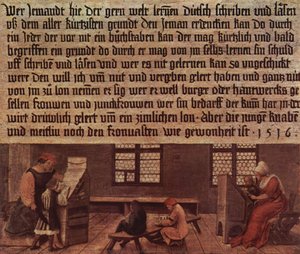 Principles of a schoolmaster, teaching scene for children - Hans Holbein the Younger
In Principles of a Schoolmaster, Teaching Scene for Children , we are invited to step through a luminous portal into the very heart of Renaissance humanism. Painted in 1516, this exquisite tempera on wood is far more than a mere classroom depiction; it is a tender, breathing narrative of intellectual awakening. As you gaze upon the scene, you can almost feel the quiet gravity of the room—the soft light catching the edge of a wooden lectern and the focused stillness of a young boy lost in his studies.
Holbein masterfully orchestrates a tableau of guidance and growth. Through delicate brushwork, he captures the gentle authority of the schoolmaster and the patient presence of a tutor, creating an atmosphere where knowledge feels like a sacred gift. The meticulous rendering of textures—from the heavy weight of period fabrics to the grain of the instructional stands—transforms this small-scale work into a profound window into the soul of 16th-century education. To possess such a piece is to surround oneself with the quiet, enduring dignity of history's greatest pursuit: the cultivation of the mind.
Benedikt von Hertenstein, oil on paper mounted - Hans Holbein the Younger
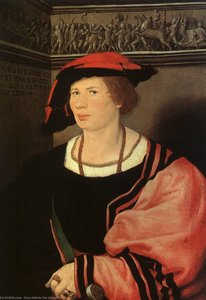 Benedikt von Hertenstein, oil on paper mounted - Hans Holbein the Younger
To gaze upon Benedikt von Hertenstein is to step into a quiet, whispered moment from 1517, where the boundaries between history and soul seem to dissolve. In this exquisite oil on paper, Hans Holbein the Younger captures more than just a likeness; he preserves a sense of profound, dignified mystery. The portrait possesses an arresting psychological acuity, pulling the viewer into the subject's commanding gaze, which remains as piercing today as it was during the Northern Renaissance.
The visual language here is one of tactile opulence and dramatic light. Holbein’s mastery of chiaroscuro sculpts Hertenstein’s form from the shadows, illuminating the sumptuous textures of velvet and silk with a luminous, almost breathing quality. The delicate medium of oil on paper allows for a soft, ethereal glow that highlights the intricate details of his feathered hat and noble attire. In our modern era of fleeting digital images, this masterpiece stands as a vital cultural touchstone, reminding us of the enduring power of slow, meticulous observation and the timeless elegance of human presence captured in permanent, painterly grace.
erasmus - Hans Holbein the Younger
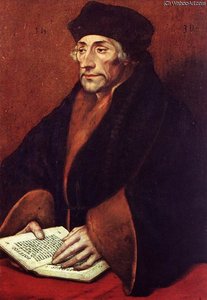 erasmus - Hans Holbein the Younger
In the Portrait of Erasmus , Hans Holbein the Younger offers us more than a mere likeness; he invites us into a quiet, sacred moment of intellectual devotion. This masterpiece stands as a cornerstone in our collection of the top 25 artworks of Hans Holbein the Younger because it captures the very heartbeat of the Northern Renaissance—the profound dignity of the human mind at work. The painting breathes with a somber, scholarly warmth, where the rich textures of velvet and aged leather meet the soft, directional light that illuminates Erasmus’s furrowed brow.
Holbein’s mastery of detail—from the delicate quill in hand to the weight of the open book—creates an atmosphere of contemplative prestige that remains timeless. For the modern collector, this work brings a sense of grounded wisdom and historical depth to a room. Its palette of deep ochres, earthy browns, and muted reds provides a sophisticated anchor for contemporary interiors, offering a window into a world where every brushstroke celebrates the enduring power of thought and the quiet beauty of a life dedicated to truth.
Erasmus of Rotterdam - oil on wood - Hans Holbein the Younger
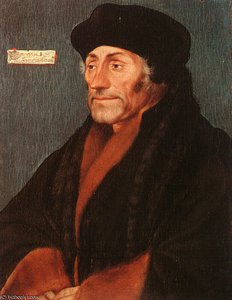 Erasmus of Rotterdam - oil on wood - Hans Holbein the Younger
In the quiet intensity of Erasmus of Rotterdam , we encounter more than just a likeness; we enter the very mind of the Northern Renaissance. The lines in this masterpiece aren’t merely drawn; they are choreographed to guide your gaze through a landscape of intellect and soul. This is not simply a composition; it is a dance frozen in time , where the weight of scholarly thought meets the delicate precision of Holbein’s brush.
Holbein captures the scholar with an almost surgical accuracy, rendering the heavy textures of his red robe and the subtle, contemplative wrinkles of a face shaped by wisdom. The deep, atmospheric blue background provides a serene stage, allowing the subject's piercing gaze to bridge the centuries. As one of the top 25 artworks of Hans Holbein the Younger , this piece invites you to consider: what if your walls could breathe rhythm ? What if your living room could hold that same profound balance between historical gravity and breathtaking, lifelike beauty?
self portrait - Hans Holbein the Younger
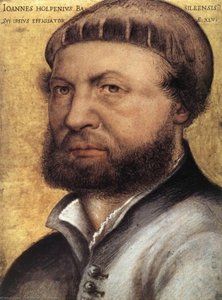 self portrait - Hans Holbein the Younger
To stand before a Self-Portrait by Hans Holbein the Younger is to meet the gaze of history itself. There is an arresting, quiet intensity in his eyes—a look that transcends the centuries to engage us in a profound, silent dialogue. Painted around 1530, this work serves as a cornerstone in our collection of the top 2ical artworks of Hans Holbein the Younger because it captures the very essence of the Northern Renaissance spirit: an unflinching devotion to truth and human dignity.
The painting breathes with a remarkable tactile realism; one can almost feel the crispness of his white shirt and the meticulous texture of his neatly trimmed beard. Through masterful use of light and subtle gradations, Holbein employs a soft, luminous quality that defines the contours of his face against the decorative, symbolic backdrop of his era. This is not merely a likeness, but a psychological study of an artist at the height of his intellectual powers. Bringing such a piece into a home does more than decorate a wall; it invites a sense of scholarly grace and timeless contemplation into your personal sanctuary.
De Vos van Steenwijk - Hans Holbein the Younger
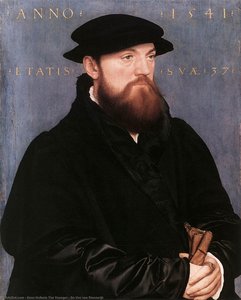 De Vos van Steenwijk - Hans Holbein the Younger
To stand before De Vos van Steenwijk is to feel the weight of a silent, dignified presence reaching across five centuries. There is a profound stillness in this encounter, as if the bustling world of the 16th-century Northern Renaissance has paused just to allow us a moment of shared introspection with this man of status. Holbein does not merely present a face; he captures a soul anchored by resolve.
This masterpiece earns its place among the top 25 artworks of Hans Holbein the Younger through its breathtaking command of texture and light. The deep, velvety blues of the background create a celestial stage for the subject’s black attire, where every fold of fabric and every silvered strand of his meticulously rendered beard feels almost tactile. It is a masterclass in Northern Renaissance realism, using subtle shadows to sculpt a three-dimensional life from a flat surface. In our modern, often frenetic lives, bringing such a work into one's home offers more than decoration; it provides a window into a timeless sense of gravity and grace, inviting a much-needed moment of quiet contemplation and enduring strength into our daily surroundings.
virgin and child with the family of burgomaster - Hans Holbein the Younger
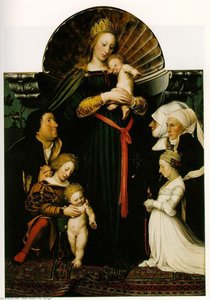 virgin and child with the family of burgomaster - Hans Holbein the Younger
To step before a masterpiece is to feel the pulse of history beneath the pigment. In Virgin and Child with the Family of Burgomaster by Hans Holbein the Younger, we are invited into a sacred, domestic intimacy that feels remarkably alive. This work stands among the top 25 artworks of Hans Holbein the Younger because it captures a profound intersection of the divine and the earthly. Within this richly adorned interior, the serene Madonna and Child are woven into the lives of Burgomaster Wilhelm Vorperg’s family, creating a tapestry of lineage and devotion.
Holbein’s brushwork achieves a breathtaking tactile reality; one can almost feel the weight of heavy velvet drapery and the cool, polished surfaces of the wooden furniture. Through a masterful use of light and shadow, he sculpts each face with psychological depth, capturing the warmth of togetherness and the quiet dignity of the Tudor era's humanist ideals. This painting does more than document a family; it breathes a sense of eternal presence into a room, reminding us how true art can transform a modern space into a sanctuary of reflection and timeless emotion.
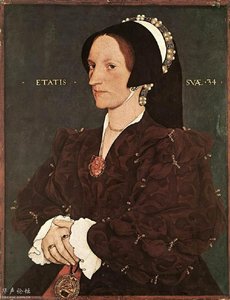
Lady Lee (Margaret Wyatt, born about 1509) - Hans Holbein the Younger
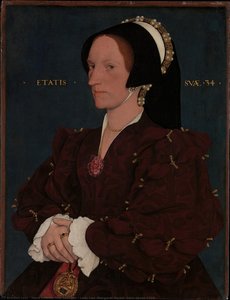 Lady Lee (Margaret Wyatt, born about 1509) - Hans Holbein the Younger
In the quiet, commanding presence of Lady Lee (Margaret Wyatt) , we encounter an unwavering gaze that seems to pierce through the centuries, inviting us into the intimate heart of the Tudor court. This portrait, a profound highlight among the top 25 artworks of Hans Holbein the Younger , captures more than just the likeness of a noblewoman; it captures a soul possessed of immense psychological weight and aristocratic poise. There is a haunting stillness in her expression, a mixture of piercing awareness and serene dignity that serves as a universal mirror to the human experience.
The artistry lies in the breathtaking interplay of light and shadow upon the midnight black of her gown, where every fold of heavy fabric and every delicate thread of her crisp white collar is rendered with meticulous precision. For those seeking to curate a personal sanctuary, bringing this piece into your home offers a transformative power. The painting’s deep tonal range and historical gravity can turn a quiet corner of your room into a space for profound reflection, surrounding you with the luminous, somber elegance of the Northern Renaissance.
Conclusion
As the light fades and we prepare to step away from these silent, watchful faces, one realizes that Hans Holbein the Younger’s masterpieces do not belong solely to the halls of history or the quiet corridors of museums. They are living presences, breathing with a vitality that transcends the centuries. To look into the eyes of his subjects is to encounter a profound human truth—a gaze that remains as piercing and intimate today as it was in the Tudor court. His ability to capture the weight of a velvet sleeve, the subtle glint of a ring, and the unmistakable flicker of a soul creates a bridge across time, inviting us to feel the same awe and connection that moved those who first stood before his easel.
These works are not mere relics of the Northern Renaissance; they are enduring whispers of beauty and psychological depth that continue to shape our modern aesthetic and inspire the very essence of creativity. Whether through a carefully placed portrait in a quiet study or a grand statement in a contemporary hall, Holbein’s legacy allows us to bring this timeless elegance into our own lives, surrounding ourselves with the dignity and grace of the masters. We invite you to continue this journey of discovery and find your own connection to his extraordinary vision by exploring our full collection . May the precision and passion of these works linger in your heart, much like the soft, golden glow of a setting sun.