The Eternal Stone: An Introduction to Marble's Role in Art History
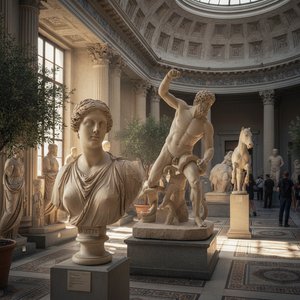
To touch marble is to commune with the very foundations of human civilization. For millennia, this metamorphic rock has served as the preferred medium for those seeking to immortalize the ephemeral moments of existence. Unlike the transient nature of wood or the fragility of clay, marble possesses a unique luminosity—a subtle translucency that allows light to penetrate its surface, mimicking the soft glow of living skin. This quality, known as the "inner light," has captivated artists from the ancient Mediterranean to the height of the Renaissance, transforming cold, geological matter into something profoundly soulful.
< and p>The history of marble is not merely a chronicle of stone, but a narrative of human aspiration. From the monumental triumphs of antiquity to the intricate religious devotion of the Middle Ages, marble has been the silent witness to our greatest cultural shifts. It carries within its veins the weight of history, offering a sense of permanence that defies the passage of centuries. When we gaze upon a masterwork carved from Carrara or Pentelic marble, we are not just observing a sculpture; we are engaging with a legacy of enduring beauty that has shaped the aesthetic consciousness of the world.The Renaissance Reborn: Mastery and Grandeur in Classical Marble Sculpture
As the shadows of the Middle Ages receded, the Renaissance emerged as a glorious rebirth of classical ideals, placing marble at the center of a new artistic revolution. This era was defined by a profound reverence for the proportions and anatomical precision of Greco-Roman antiquity. Sculptors became alchemists of stone, seeking to breathe life into the heavy blocks of marble through an unprecedented understanding of mathematics and human biology. The works of this period do not merely represent figures; they embody the very essence of Renaissance grandeur.
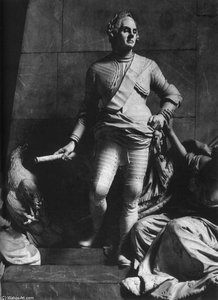
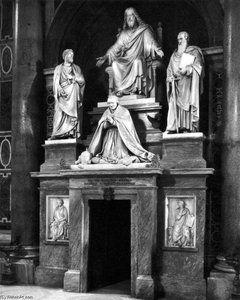
Consider the monumental achievements found within the great Italian centers. The era saw the rise of masters like Giulio Romano, whose work on the Tomb of Pietro Strozzi demonstrated a sophisticated command over classical sculpture and intricate detail, blending funerary solemnity with architectural complexity. Similarly, the Venetian tradition flourished through artists such as Antonio Bregno, whose monumental marble works established a legacy of structural elegance. These sculptors utilized the medium to create a dialogue between space and form, ensuring that every chisel mark contributed to a larger symphony of Renaissance splendor.
Capturing the Human Form: The Delicate Intersection of Flesh and Stone
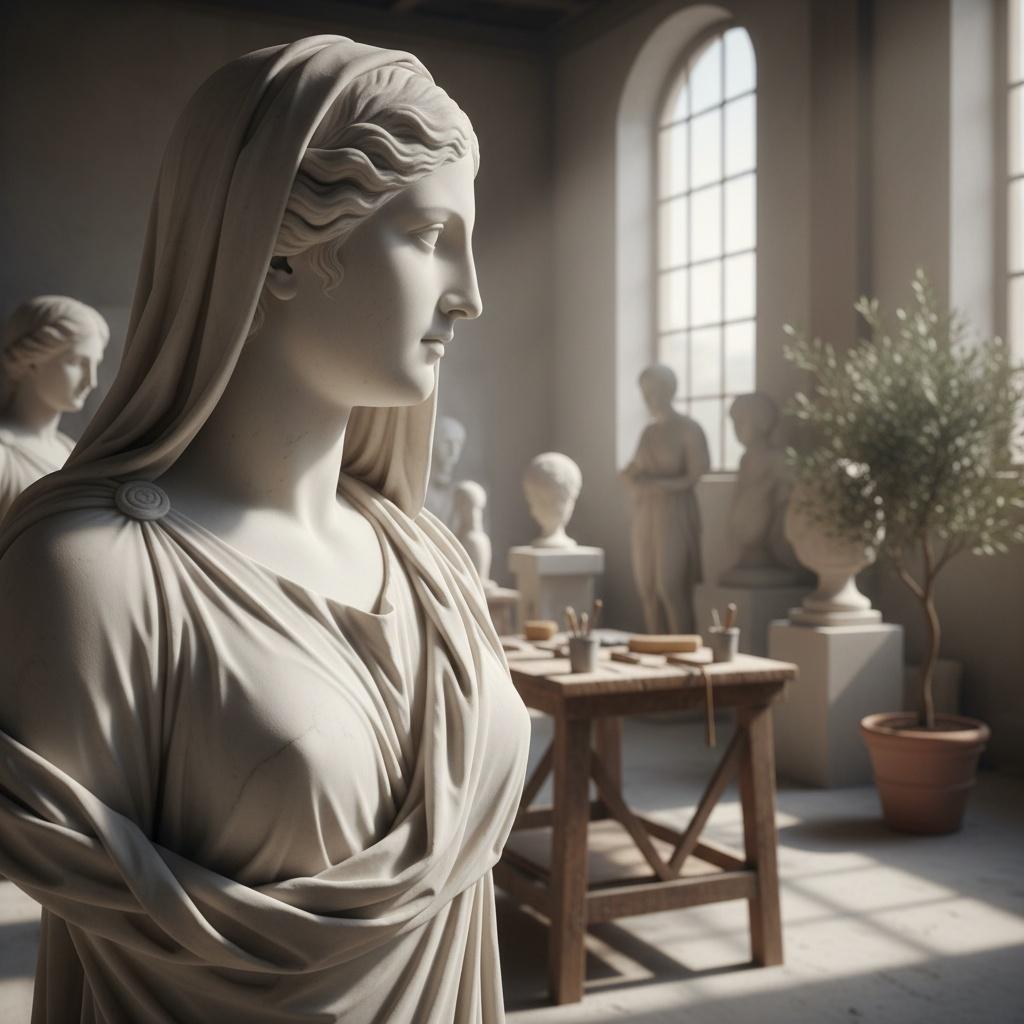
Perhaps the most miraculous feat achievable in marble is the illusion of softness. The true mastery of a sculptor lies in their ability to manipulate the rigid, crystalline structure of the stone to suggest the yielding texture of flesh, the drape of fine silk, or the delicate curve of a limb. This pursuit of mimesis—the imitation of nature—reaches its zenith when the artist successfully obscures the medium itself, leaving the viewer breathless at the sight of stone that appears to pulse with warmth.
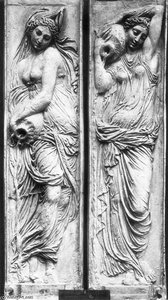
Jean-Baptiste Carpeaux’s Flora serves as a breathtaking testament to this capability. In this captivating marble statue, the artist celebrates the beauty of the human form with such vitality that the subject seems poised to move. The way light dances across the polished surfaces evokes the softness of skin, bridging the gap between the inanimate and the animate. This delicate intersection of flesh and stone is where the sculptor’s true genius resides, transforming a cold mineral into a celebration of life, breath, and human vulnerability.
Monuments of Power: Architectural Marvels and Neoclassical Grandeur
Beyond the intimate study of the human figure, marble has historically been employed to project authority, stability, and divine right. In the realm of architecture and public monuments, marble serves as a language of permanence. The scale of these works is designed to overwhelm and inspire, creating environments that command respect and evoke a sense of awe. This is particularly evident in the Neoclassical movement, where the grandeur of the past was resurrected to adorn the facades of great institutions and palaces.
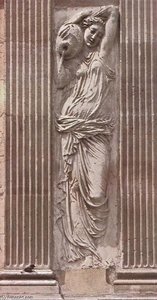
Jacopo Sansovino’s Neptune exemplifies this monumental approach. As a figure of immense power set within an ornate architectural context, it showcases how marble can embody timeless strength. Such works are not merely decorations; they are anchors of identity, providing a sense of continuity and classical beauty to the urban landscape. Whether integrated into a cathedral's facade or standing as a solitary sentinel in a public square, marble sculptures of this magnitude remind us of the enduring power of classical ideals and the architectural majesty that defines our most significant spaces.
The Sculptor’s Alchemy: Techniques, Textures, and the Pursuit of Perfection
The creation of a marble masterpiece is an arduous journey of technical precision and creative intuition. It begins with the selection of the block—a process requiring an expert eye to identify veins that will enhance rather than distract from the composition. From there, the artist must navigate a complex hierarchy of tools, moving from the heavy point chisel to the fine rasp, and finally to the delicate abrasive powders that achieve a mirror-like polish. This sculptural alchemy is a test of patience, as a single errant strike can compromise months of labor.
Modern masters, such as Davide Dormino, continue this tradition by blending old-fashioned techniques with contemporary vision. The ability to manipulate texture—creating the contrast between highly polished surfaces and rough, "non-finito" areas—is essential for directing the viewer's eye and creating depth. This mastery of texture allows the artist to play with light and shadow, ensuring that the sculpture remains dynamic from every angle. It is through this rigorous pursuit of perfection that marble transcends its physical limitations to become a living medium.
Curating Timelessness: Integrating Marble Art into the Modern Interior
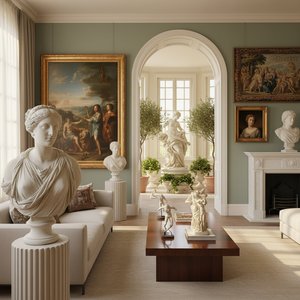
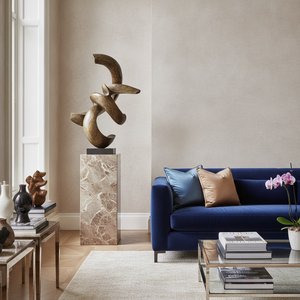
In the contemporary era, the presence of marble art in a home or professional space offers an unparalleled sense of sophistication. While modern design often leans toward minimalism, the introduction of classical motifs provides a necessary textural counterpoint. A well-placed reproduction or a curated sculpture can act as a focal point, grounding a room with its historical weight and aesthetic elegance. The key to successful integration lies in balance—allowing the grandeur of the art to speak without overwhelming the surrounding architecture.
For the discerning collector, incorporating these elements is an exercise in curation. Whether through large-scale wall pieces that mimic the impact of frescoes or smaller, intimate busts that invite close inspection, marble art brings a sense of curated history to any environment. It is about creating a space that feels both current and timeless, where the echoes of the Renaissance and Neoclassicism can harmonize with modern luxury. By embracing the enduring beauty of marble, one does not merely decorate a room; one invests in a legacy of artistic excellence.
At ArtsDot.com, we are dedicated to preserving this legacy of human creativity. From meticulously handcrafted oil reproductions that capture the tactile depth of historical masterpieces to bespoke commissions that bring your personal visions to life, our mission is to make the grandeur of art history accessible to a global audience. Whether you seek the textured impasto of a master or the refined elegance of a classical subject, ArtsDot provides the bridge between the museum and your home.