




The Sublime and the Sensational: Defining the Romantic Spirit
To understand the essence of Romanticism is to step away from the rigid constraints of reason and enter a realm where the heart dictates the narrative. Emerging as a profound reaction against the clinical order of the Enlightenment and the structured symmetry of Neoclassicism, Romanticism sought to capture the sublime—that overwhelming sensation of awe mixed with terror when confronted by the infinite. It was an era that prioritized individual intuition, the intensity of human feeling, and the untamed power of the natural world. For the true art enthusiast, this movement represents a departure from mere representation toward a deeper, more visceral truth.
The Romantic spirit is characterized by a fascination with the irrational, the exotic, and the dramatic. It is found in the turbulent skies of a storm-tossed sea and the agonizing tension of a historical tragedy. This period did not merely seek to depict beauty; it sought to evoke emotion in its most raw and unadulterated forms. By embracing the shadows and the chaotic, Romantic artists invited viewers to experience the profound vulnerability of the human condition against the backdrop of an unpredictable universe.
The Mastery of Chaos: Delacroix and the Drama of Motion
At the very heart of this emotional revolution stood Eugène Delacroix, a titan of French Romanticism whose brushwork breathed life into the concept of movement. Unlike his contemporaries who favored clean lines, Delacroix utilized color and texture to create a sense of kinetic energy that feels almost palpable on the canvas. In masterpieces such as The Death of Sardanapalus, one witnesses a deliberate descent into chaos. The composition is a whirlwind of destruction and opulence, where every stroke contributes to a narrative of tragic excess and overwhelming sensory input.
Delacroix’s ability to manipulate light and pigment allowed him to depict biblical and historical scenes with a newfound psychological depth. Consider his Christ on the Sea of Galilee; here, the turbulent waves are not merely water, but symbols of the spiritual struggle and the terrifying unpredictability of existence. Through his masterful use of vibrant, often clashing colors, he moved beyond the static nature of classical portraiture to capture the very pulse of life itself. His work serves as a testament to the idea that art should not just be seen, but felt through the rhythmic dance of light and shadow.
Nature’s Untamed Majesty: The Landscape as an Emotional Mirror
In the Romantic era, the landscape ceased to be a mere backdrop for human drama and instead became a protagonist in its own right. The natural world was viewed as a mirror reflecting the internal psyche of man—a vast, breathing entity capable of both nurturing peace and devastating fury. This concept of the landscape as emotion allowed artists to explore themes of solitude, infinity, and the divine. A sunset was no longer just a transition of light, but a poignant meditation on mortality and the fleeting nature of time.
The study of atmospheric phenomena became a central pursuit for these masters. In works like Delacroix’s Study of the Sky at Sunset, we see an intimate engagement with the ephemeral qualities of the atmosphere. The use of pastel techniques and soft, evocative transitions captures the fleeting glow of dusk, inviting the viewer into a state of quiet contemplation. These landscapes serve as a bridge between the physical world and the spiritual realm, reminding us that within the vastness of nature, we find the most profound echoes of our own souls.
Light, Shadow, and Soul: Technical Innovations in Romantic Expression
The technical evolution during the Romantic period was driven by a desire to break free from the "finished" look of academic art. Artists began to experiment with impasto—the thick, textured application of paint—to create a three-dimensional quality that catches the light and adds physical weight to the subject matter. This tactile approach allowed for a more expressive use of shadow, or chiaroscuro, where deep, velvety blacks contrast sharply with brilliant highlights to direct the viewer's emotional focus.
This era also saw a renewed interest in the chemistry of color. The introduction of new pigments allowed for a broader and more intense palette, enabling artists to render the exoticism of distant lands and the dramatic shifts of weather with unprecedented accuracy. By layering oils and manipulating the drying process, Romantic painters achieved a luminous depth that suggests a world existing far beyond the edges of the frame. It is this technical mastery of light and texture that gives Romantic works their enduring, "living" quality, ensuring they continue to resonate with modern sensibilities.
The Legacy of Emotion: Integrating Romanticism into Modern Interiors
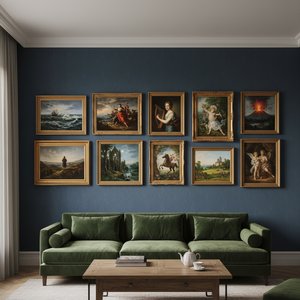
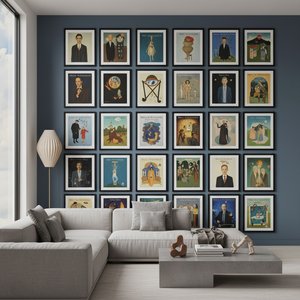
Today, the influence of Romanticism persists far beyond the museum walls, finding a sophisticated home in contemporary interior design. The movement’s emphasis on drama and focal points makes it an ideal choice for collectors looking to infuse their spaces with character and narrative depth. Whether through a large-scale multi-panel reproduction that spans a grand staircase or a singular, intense oil painting that anchors a study, Romantic art provides a sense of timelessness and intellectual weight.
Integrating these pieces requires an appreciation for the balance between historical grandeur and modern aesthetics. A well-placed Romantic landscape can soften the sharp lines of minimalist architecture, while a dramatic portrait can serve as a conversation piece that commands attention. By bringing the sublime into our personal environments, we do more than decorate; we curate an atmosphere of reflection and passion, ensuring that the powerful emotional legacy of the Romantic masters continues to inspire generations to come.
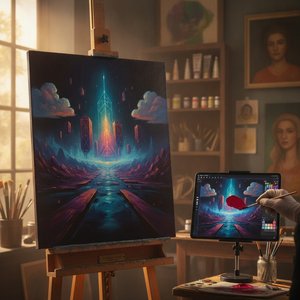
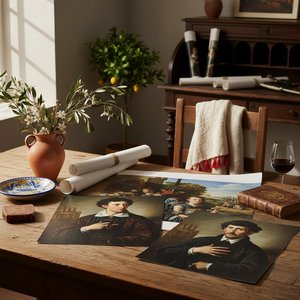
For those seeking to bring this era of unparalleled emotion into their own collections, ArtsDot.com offers a bridge to the past. From meticulously handcrafted oil reproductions that capture every tactile brushstroke to museum-quality Giclée prints, we specialize in preserving the soul of the Old Masters. Whether you wish to commission a custom masterpiece from a personal photograph or explore our vast library of historical treasures, ArtsDot provides the expertise and craftsmanship necessary to transform your space into a gallery of timeless emotion.