

The Dawn of Inner Exploration: Expressionism and the Subjective Self
Expressionism is a modernist movement, initially in poetry and painting, originating in Northern Europe around the beginning of the 20th century. Its typical trait is to present the world solely from a subjective perspective, distorting it radically ...
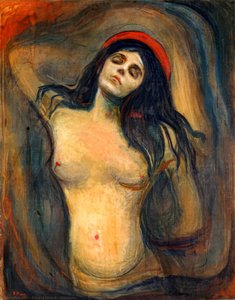
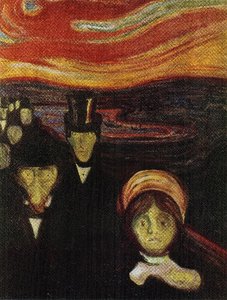
The early decades of the 20th century witnessed a seismic shift in artistic priorities, a turning away from the meticulous depiction of external reality towards an exploration of the internal landscape. This wasn’t merely a stylistic change; it was a fundamental re-evaluation of art's purpose – no longer to mirror the world *as it appeared*, but to convey the world *as it felt*. This burgeoning movement, known as Expressionism, arose from a confluence of factors: rapid industrialization, societal upheaval, and a growing sense of alienation in the modern age. Artists sought to express not objective truths, but subjective experiences – anxieties, fears, and the often-turbulent emotions simmering beneath the surface of polite society. Figures like Edvard Munch became pivotal, pioneering a visual language that prioritized emotional resonance above all else.
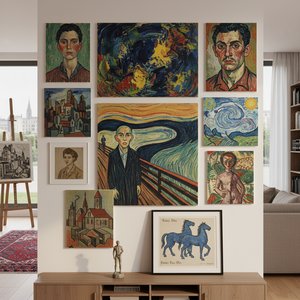
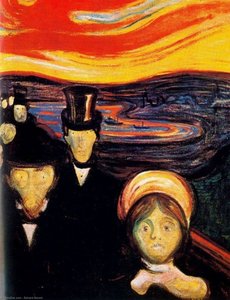
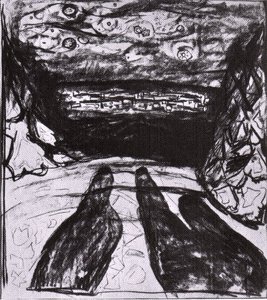
Munch’s work, particularly pieces such as “Anxiety” and “Men Bathing,” serves as a potent example. The distorted figures, swirling lines, and unsettling color palettes aren't attempts at realistic representation; they are visceral embodiments of psychological states. “Men Bathing”, for instance, isn’t simply a depiction of nude figures by the water; it’s an exploration of vulnerability, isolation, and perhaps even nascent homoerotic desire – themes rarely addressed with such frankness in earlier art. This willingness to confront uncomfortable truths, to delve into the darker recesses of the human psyche, was revolutionary. The Munch Museum in Oslo remains a vital resource for understanding this period, housing an extensive collection that showcases not only his iconic works but also the evolution of his intensely personal style.
Anxiety, Alienation, and the Modern Condition in Early 20th-Century Art
 Starry Night
The Munch Museum in Oslo houses the largest collection of Munch’s artworks, showcasing iconic pieces like *The Scream* alongside contemporary exhibitions. Explore his legacy at Bjørvika's stunning new building overlooking the fjord.
Expressionism wasn’t confined to Munch alone. Across Germany, artists grappled with similar themes, albeit through distinct visual vocabularies. Die Brücke (The Bridge), formed in Dresden in 1905, represented a collective rejection of academic tradition and a desire to forge a new artistic path. Artists like Kirchner, Heckel, and Schmidt-Rottluff employed bold colors, angular forms, and jarring compositions to reflect the anxieties of urban life. Their paintings often depict crowded streets, alienated figures, and a sense of psychological unease – mirroring the fragmentation and disorientation experienced in rapidly changing cities.
The feeling of alienation was further amplified by the looming shadow of World War I. Artists began to question established norms, challenging societal conventions and exploring themes of mortality, despair, and the loss of innocence. This period saw a rise in intensely personal narratives, often imbued with symbolism and psychological depth. The raw emotion inherent in Expressionist works resonated deeply with a generation grappling with unprecedented trauma and uncertainty. It was art born not from observation, but from *experience* – a direct outpouring of inner turmoil onto canvas.
Color as Emotion: The Psychological Impact of Palette and Hue
 The Emotional Palette: How Color Influences Mood & Meaning in Art
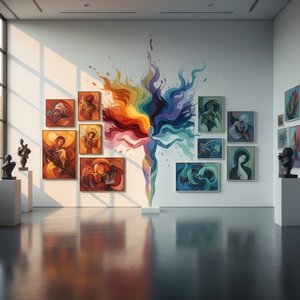
Explore the powerful connection between color & emotion in art history. Discover how master artists used color to evoke feelings and learn to select artwork that enhances your space.
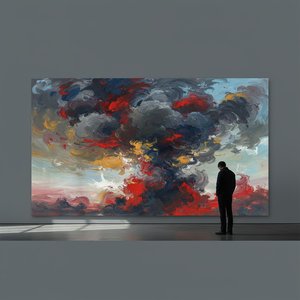
Central to the power of Expressionism is its masterful use of color. Far from being merely decorative, color became a potent tool for conveying emotional states. Artists deliberately distorted naturalistic palettes, employing jarring combinations and unconventional hues to evoke specific feelings in the viewer. Red often symbolized passion, anger, or violence; blue conveyed melancholy, isolation, or spirituality; yellow represented madness, hope, or enlightenment – though interpretations were rarely straightforward.
Consider how Van Gogh utilized color in “Starry Night”. The swirling blues and yellows aren’t simply a representation of the night sky; they are an expression of his inner emotional landscape. Similarly, the intense reds and oranges used by Kirchner often convey a sense of anxiety and agitation. Understanding the psychological impact of color is crucial to appreciating Expressionist art. It's not enough to simply *see* the colors; one must also *feel* their emotional weight. The exploration of this connection between color and mood continues to be a fascinating area of study, revealing how master artists intuitively understood the power of hue to evoke profound responses.
Surrealism and the Unconscious Mind: Dreams, Symbols, and Hidden Realities
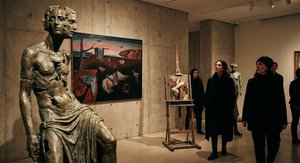
While Expressionism focused on directly expressing emotional experience, Surrealism took a different approach – seeking to unlock the hidden realms of the unconscious mind. Emerging in the aftermath of World War I, Surrealism drew heavily from the theories of Sigmund Freud, exploring dreams, symbols, and irrationality as sources of artistic inspiration. Artists like Salvador Dalí and René Magritte created dreamlike landscapes populated with bizarre imagery and unsettling juxtapositions.
Though distinct from Expressionism in its methodology, Surrealism shared a common interest in challenging conventional perceptions of reality. Both movements sought to break free from the constraints of logic and reason, exploring the darker, more mysterious aspects of human consciousness. The use of symbolism became paramount, with artists employing recurring motifs to represent hidden desires, fears, and anxieties. The exploration of these subconscious themes often resulted in works that were both captivating and unsettling, forcing viewers to confront their own inner demons.
Beyond Representation: Abstract Expressionism and the Raw Power of Feeling
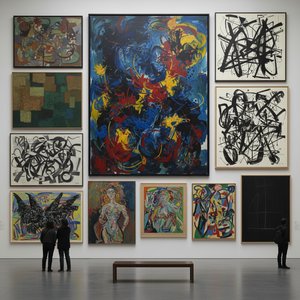
Following World War II, a new wave of American artists emerged – known as Abstract Expressionists. Artists like Jackson Pollock, Mark Rothko, and Willem de Kooning took abstraction to its logical extreme, abandoning representational forms altogether in favor of pure emotional expression. Pollock’s drip paintings, for example, weren't attempts to depict anything specific; they were direct recordings of his physical and emotional state during the creative process.
Rothko’s color field paintings, with their large expanses of luminous hues, aimed to evoke a sense of transcendence and spiritual contemplation. Abstract Expressionism represented a culmination of the trends that had begun with Expressionism – a complete rejection of objective reality in favor of subjective experience. It was art stripped bare, reduced to its most essential elements: color, form, and gesture. This movement demonstrated the raw power of feeling, proving that profound emotional impact could be achieved even without recognizable imagery.
Collecting with Insight: Identifying Psychological Depth in Contemporary Art
Today, the legacy of Expressionism continues to resonate in contemporary art. Many artists are still exploring themes of anxiety, alienation, and the human condition – often employing techniques and visual vocabularies inspired by their predecessors. When collecting art, it’s important to look beyond surface aesthetics and consider the underlying psychological depth of a work. Does the artwork evoke an emotional response? Does it challenge your perceptions or offer new insights into the human experience?
Identifying artists who are genuinely engaged with these themes requires careful research and critical thinking. Look for works that demonstrate originality, technical skill, and a willingness to confront uncomfortable truths. At ArtsDot.com, we offer an extensive collection of Expressionist masterpieces and contemporary art inspired by this powerful movement. Our team of experts can provide personalized guidance, helping you discover pieces that resonate with your personal aesthetic and investment goals. We believe that art should not only be beautiful but also meaningful – a reflection of the human spirit and a catalyst for emotional connection. Explore our curated selection today and begin your journey into the captivating world of psychological art.