


Introduction: The Illusion of Depth – Unveiling Atmospheric Perspective
The allure of a distant vista, the subtle hazing of mountains against the sky—these are not merely visual phenomena but carefully constructed illusions that have captivated artists for millennia. At its heart, atmospheric perspective, also known as aerial perspective, is the art of representing depth on a two-dimensional surface by mimicking the effects of atmosphere on objects receding into space. It’s a technique rooted in observation, informed by science, and profoundly capable of evoking emotion. More than simply rendering distance, it's about conveying a sense of air, light, and the very breath of the landscape itself. For centuries, artists have sought to unlock its secrets, striving to translate the tangible world onto canvas with increasing realism and poetic power.
A Historical Glimpse: From Pompeian Frescoes to Renaissance Masters
Renaissance art (1350 – 1620) is the painting, sculpture, and decorative arts of the period of European history known as the Renaissance, which emerged as a distinct style in Italy in about AD 1400, in parallel with developments which occurred in phi...
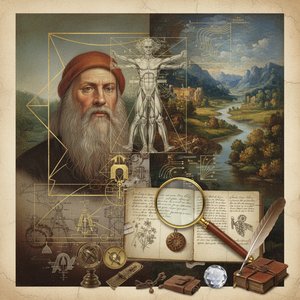
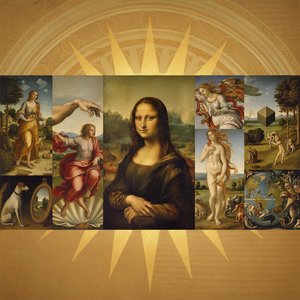
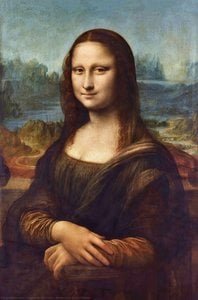
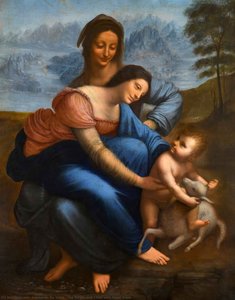
The story of atmospheric perspective isn’t a sudden invention but rather an evolution of understanding. Remarkably, evidence of its early application appears in the remarkably preserved Pompeian frescoes dating back as early as 30 BCE. The “Garden Room Fresco” from the Villa of Livia showcases a nascent grasp of how distant elements appear paler and less defined, creating a rudimentary sense of depth within the architectural space. However, it was during the Renaissance that this technique truly blossomed. Leonardo da Vinci, ever the scientist-artist, meticulously documented his observations in his *Treatise on Painting*, coining the term “aerial perspective” and outlining its principles with unprecedented precision. He understood that color diminishes with distance, becoming weaker and shifting towards blue due to the scattering of light particles in the atmosphere. His works—The Annunciation, Mona Lisa, and The Last Supper—stand as testaments to his mastery, demonstrating a subtle yet profound understanding of how to create believable spatial recession. While Leonardo championed the technique, not all contemporaries fully embraced it; Raphael, for instance, favored the softer sfumato effect but employed atmospheric perspective with less overt emphasis. The Flemish painters of the 15th century also independently explored these effects, laying the groundwork for its widespread adoption throughout Europe.
The Science Behind the Haze: Understanding Rayleigh Scattering and Light
Aerial perspective, or atmospheric perspective, is the effect the atmosphere has on the appearance of an object as viewed from a distance. As the distance between an object and a viewer increases, the contrast between the object and its background de...
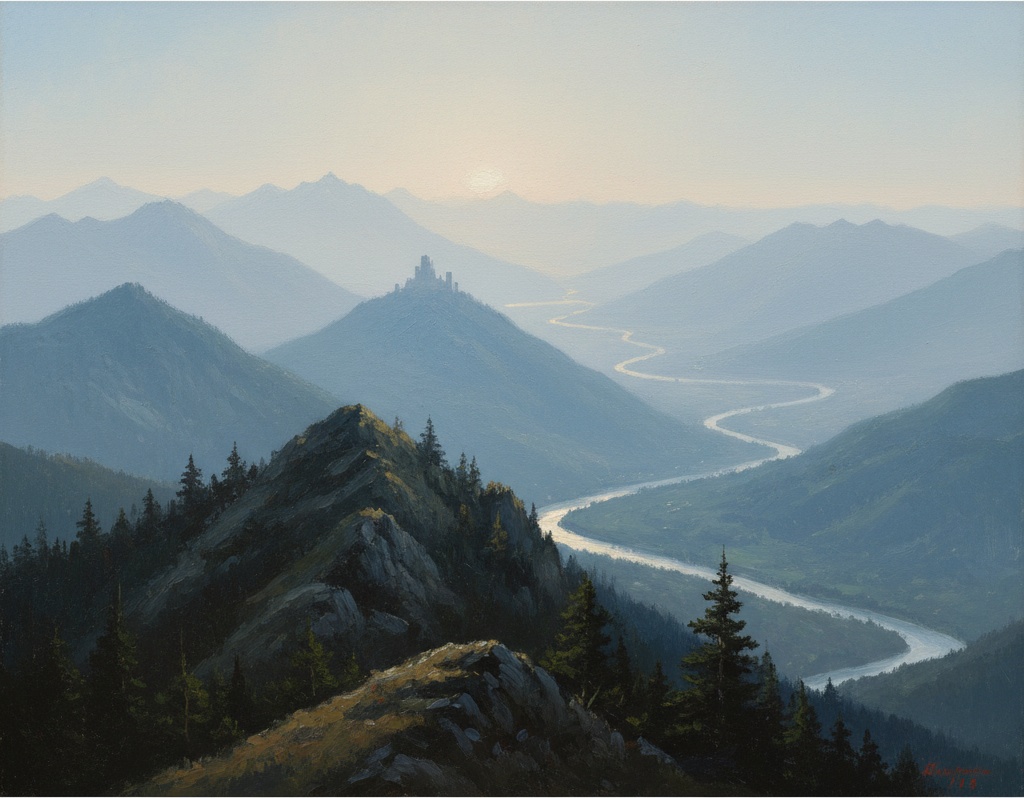
To truly appreciate atmospheric perspective is to understand the underlying scientific principles at play. The phenomenon responsible for this effect is known as Rayleigh scattering—the scattering of electromagnetic radiation (light) by particles of a much smaller wavelength. In simpler terms, when sunlight enters the Earth’s atmosphere, it collides with tiny air molecules, dust particles, and water vapor. This collision causes the light to scatter in different directions. Blue light, having a shorter wavelength, is scattered more effectively than other colors, which explains why distant objects appear bluish. As distance increases, more blue light is scattered into our eyes from the atmosphere itself, washing over the object and altering its perceived color. Simultaneously, these atmospheric particles reduce contrast; details become blurred, edges soften, and tonal values lighten. Imagine looking at a mountain range on a clear day versus a hazy one—the difference in clarity and color saturation vividly illustrates this principle. The density of these particles directly impacts the effect; more moisture or pollution leads to greater scattering and a more pronounced atmospheric haze.
Key Techniques for Achieving Atmospheric Perspective in Your Paintings
Translating this scientific understanding into artistic practice requires careful consideration of several key techniques. First, value is paramount. Distant objects should be rendered with lighter tonal values than those closer to the viewer. This creates a sense of recession and pushes elements back into space. Second, color saturation must be reduced as distance increases. Vibrant hues in the foreground gradually give way to muted tones in the background. Third, hue shifts are crucial. As objects recede, their colors should subtly shift towards cooler tones—blues and violets being particularly effective. Finally, pay attention to edge quality. Sharp, defined edges characterize foreground elements, while distant forms should have softer, more blurred outlines. It’s not simply about painting everything paler and bluer; it's a nuanced process of modulating color, value, and detail to create a convincing illusion of depth. Consider layering thin washes of diluted blue or gray over distant objects to simulate the atmospheric haze. Observe how light interacts with different surfaces—a sunlit mountain will exhibit different atmospheric effects than one shrouded in shadow.
Emotional Resonance: How Atmosphere Shapes Mood and Narrative
Beyond its technical applications, atmospheric perspective possesses a remarkable ability to shape mood and narrative within a painting. A hazy atmosphere can evoke feelings of mystery, tranquility, or even melancholy. Think of J.M.W. Turner’s evocative landscapes—often shrouded in mist and dramatic light—which convey a sense of the sublime and the power of nature. Conversely, a clear, crisp atmosphere can create a feeling of clarity, optimism, and vibrancy. The choice of atmospheric conditions is not merely aesthetic; it's a powerful tool for communicating emotional content. A distant, barely visible city veiled in fog might suggest longing or isolation, while a brightly lit landscape with sharp details could evoke feelings of joy and abundance. Artists can manipulate the degree of atmospheric perspective to draw the viewer’s eye to specific focal points, creating a sense of depth and guiding their gaze through the composition.
Beyond Landscapes: Applying Atmospheric Perspective to Diverse Subjects
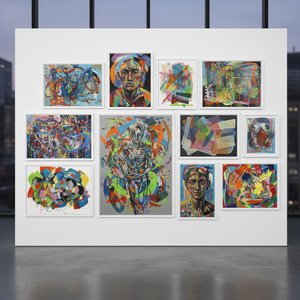
While often associated with landscapes, the principles of atmospheric perspective are applicable to a wide range of subjects. Consider still life paintings—distant objects within the arrangement can be rendered with lighter values and reduced saturation to create depth. In portraiture, subtle atmospheric effects can soften edges and create a sense of intimacy. Even in abstract compositions, modulating color and value can suggest spatial recession and add visual complexity. The key is to understand that atmospheric perspective isn’t limited to replicating natural phenomena; it's a versatile tool for creating the illusion of depth and enhancing the overall impact of your artwork. At ArtsDot.com, we offer a vast collection of masterpieces showcasing this technique, allowing you to study the works of renowned artists and inspire your own creative endeavors. Whether you’re seeking custom reproductions or simply exploring the world of art history, we invite you to discover the power of atmospheric perspective.