The Tactile Language of Emotion: Defining Impasto in Post-Impressionism
To encounter the works of Vincent van Gogh is not merely to view a landscape, but to witness a physical struggle rendered in pigment. At the heart of this visceral experience lies impasto, a technique where paint is applied in thick, heavy layers, often directly from the tube or with a palette knife, creating a surface that transcends the two-dimensionally flat plane. While the Impressionists sought to capture the fleeting dance of light upon a surface, Van Gogh and his Post-Impressionist contemporaries sought something far more permanent and profound: the weight of human feeling. In the realm of fine art, impasto serves as a bridge between the visual and the tactile, inviting the viewer to sense the very movement of the artist's hand.
This method of application transforms the canvas into a relief sculpture of color. When we observe the rhythmic undulations of paint in his more turbulent periods, we are seeing more than just a depiction of nature; we are observing an architectural construction of emotion. The shadows are not merely darker hues, but physical depressions in the medium, while the highlights are raised ridges that catch the ambient light of the room. This interplay between light and shadow, facilitated by the thickness of the oil, ensures that the artwork breathes and changes as the observer moves around it, much like a living entity.
Ultimately, defining impasto requires us to look beyond the subject matter and focus on the medium itself. It is a rejection of the polished, invisible brushwork of the Academy in favor of an unapologetic honesty. By leaving the traces of the tool—the bristles, the scrapes, and the globs of unblended pigment—Van Gogh allows the viewer to participate in the moment of creation, making the emotional resonance of the work impossible to ignore.
Sculpting with Pigment: The Technical Mastery Behind Van Gogh's Relief
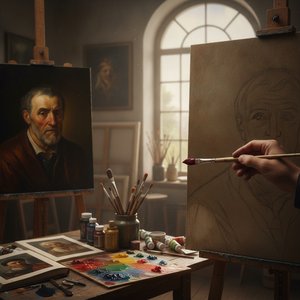
The technical execution of Van Gogh’s impasto is a feat of both physical stamina and chemical understanding. To achieve such profound relief without the paint collapsing or losing its structural integrity, the artist had to master the viscosity of his oils. This was not a delicate application; it was an additive process that required a deep knowledge of how pigments interact with binders like linseed or safflower oil. Each stroke was a deliberate decision to build mass, creating a topographical map of color that could withstand the drying process without losing its expressive character.
In masterpieces such as Farmhouses Among Trees, one can observe how the artist uses muted tones and textured layers to ground the composition in a sense of rural permanence. The paint is not merely spread; it is sculpted. This layering allows for a unique phenomenon where colors do not fully blend on the canvas, but instead sit side-by-side in distinct ridges. This technique, often referred to as broken color, creates an optical vibrancy that a flat application could never achieve. The eye must work harder to synthesize these thick ribbons of pigment, a process that mirrors the complexity of the emotions being portrayed.
Furthermore, the physical depth of the paint provides a structural dimension to the light. In works like The White Orchard, the impasto allows the white blossoms to appear as though they are emerging from the canvas, catching actual highlights from the gallery lights. This technical mastery ensures that the artwork possesses an inherent luminosity, as the raised edges of the paint create micro-shadows that add a sense of rhythmic complexity and depth to even the most serene landscapes.
A Symphony of Movement: How Texture Animates the Wheat Fields and Cypresses
There is a kinetic energy inherent in Van Gogh’s textured landscapes that suggests nature is in a state of constant, swirling flux. In Wheat Field with Cypresses at the Haute Galline Near Eygalieres, the impasto does not merely represent the wind; it is the wind. The thick, directional strokes follow the flow of the air through the wheat and the upward surge of the cypress trees, creating a visual rhythm that is almost musical in its intensity. The texture acts as a conductor, guiding the viewer's gaze through a choreographed movement of light and earth.
This animation of the landscape is most evident when observing the way the paint captures the turbulence of the sky and the vitality of the flora. In The Little Stream, the water does not sit still; it ripples with the physical weight of the brushstrokes, creating a sense of flowing energy that feels remarkably modern. The impasto allows for a certain "flicker" effect, where the eye jumps from one textured ridge to another, simulating the shimmering quality of light on moving water or swaying grass.
By utilizing such heavy texture, Van Gogh removes the barrier between the observer and the natural world. We are not looking at a static image of a wheat field; we are experiencing the vibration of the earth itself. The physical presence of the paint lends an undeniable weight to the landscape, making the ephemeral beauty of a summer afternoon feel as monumental and enduring as stone.
Beyond the Surface: The Psychological Resonance of Visible Brushwork
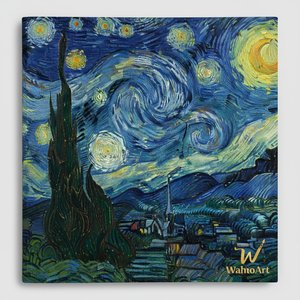
To the discerning collector, the true value of Van Gogh’s impasto lies in its psychological depth. There is an intimacy in the visible brushstroke that suggests a direct line to the artist's psyche. Each heavy application of paint serves as a trace of a moment of intense focus or profound agitation. When we see the thick, swirling patterns in his most famous works, we are witnessing the externalization of internal states—the turbulence of the mind rendered into the turbulence of the canvas.
っとThis visibility of process creates an emotional transparency. Unlike the smooth, finished surfaces of classical portraiture, which often mask the artist's hand to present a perfected reality, Van Gogh’s work celebrates the struggle. The ridges and valleys of the paint reflect the highs and lows of his turbulent life. In works like Vase with Zinnias and Other Flowers, the vibrant, textured petals convey a sense of bursting vitality, yet the heavy application reminds us of the labor and the intensity required to capture such beauty.
This psychological resonance is what allows his work to remain so potent across centuries. The texture provides a tactile connection to the human condition; we recognize the effort, the passion, and even the desperation within the layers of oil. It is an art of presence, where the physical substance of the painting serves as a permanent vessel for the fleeting emotions of its creator.
The Legacy of the Stroke: From Van Gogh’s Intensity to Modern Expressionism
The impact of Van Gogh’s impasto technique reverberated far beyond his lifetime, laying the foundational stones for the Expressionist movement. His ability to use texture as a primary vehicle for emotion liberated subsequent generations of artists from the constraints of mere representation. The bold, sculptural approach to paint paved the way for artists who sought to explore the limits of medium and meaning, influencing everything from the Fauvist explosion of color to the raw, gestural energy of Abstract Expressionism.
Today, we see his legacy in any work that prioritates the physical presence of the artist's hand. The concept of the "eloquent brushstroke"—where the texture itself conveys intent—is a direct descendant of Van Gogh’s innovations. His work taught us that the way paint is applied can be just as communicative as the subject being painted. This shift in focus from what is seen to how it is felt remains one of the most significant evolative leaps in art history.
For those who seek to surround themselves with the profound beauty of this era, ArtsDot.com offers an unparalleled collection of museum-quality, hand-painted oil reproductions. Our master artists, trained in the prestigious traditions of fine arts academies, specialize in capturing the very essence of Van Gogh’s impasto. Each piece is meticulously crafted on 100% cotton canvas, ensuring that the visible brushstrokes and tactile depth of the original are preserved for your collection. Whether you are looking to commission a custom "remix" of a personal memory in the style of a master or seeking a large-scale architectural mural to transform a space, ArtsDot provides an authentic, sophisticated experience backed by a 100% satisfaction guarantee.