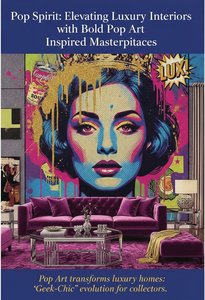

The Renaissance of Pop: From Subculture to High-End Curation
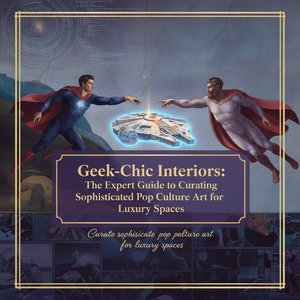
 Geek-Chic Interiors: The Definitive Guide to Curating Sophisticated Pop Culture Art for Luxury Spaces
The Evolution of Geek-Chic: From Subculture to High-End Curation Mastering Geek-Chic: The Art of Curating Sophisticated Interiors with Pop Culture Icons The Evolution of Geek-Chic: From Subculture to High-End Interior Design Geek-Chic Interiors: The ...
There was once a time when the artifacts of our most cherished narratives—the vibrant, saturated panels of comic books, the bold aesthetics of mid-century animation, and the striking graphics of mass media—were relegated to the periphery of serious design. These objects were often viewed as mere ephemera: colorful, perhaps, but ultimately transient and lacking the gravitas required for a refined domestic sanctuary. They were seen as the playful relics of childhood, far removed from the curated elegance of a sophisticated adult residence. However, we are currently witnessing a profound cultural metamorphosis within the world of high-end interior design.
The concept of Geek-Chic has emerged not merely as a flight of fancy or a nostalgic whim, but as a sophisticated movement that bridges the gap between passionate fandom and high-end interior curation. This evolution represents a significant shift in how we perceive identity within our domestic sanctuaries; it is no longer about the mere display of memorabilia, but about the celebration of visual literacy and the elevation of contemporary mythologies into the realm of fine art. The modern collector does not simply display a collection; they compose an environment that honors the graphic power of our shared cultural history, transforming what was once considered "low" culture into a cornerstone of prestige.
The Psychology of Color: Using Bold Palettes for Dopamine Decor
 Tactile Maximalism: The Expert Guide to Styling Bold Pop Art for Dopamine Decor Interiors
The Psychology of Dopamine Decor: Why Vibrant Art Boosts Mood Tactile Maximalism: A Designer's Guide to Styling Bold Pop Art for Dopamine Decor Interiors The Psychology of Dopamine Decor: Curating Joy Through Color and Form In the contemporary landsc...
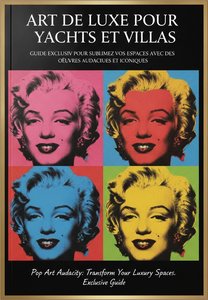
In the contemporary landscape of high-end hospitality and luxury residential design, a profound psychological shift is occurring. We are moving away from the sterile, monochromatic minimalism that has held the design world captive for decades. In its place, a new movement known as Dopamine Decor is rising—a practice centered on curating joy through color and form. This approach recognizes that the vibrant, saturated hues characteristic of Pop Art can serve as more than mere decoration; they are tools to boost mood and invigorative the spirit within the walls we inhabit.
When we introduce a primary palette of reds, yellows, and blues into a room, we are not simply adding pigment; we are injecting energy. The use of bold, unapologetic color allows a space to breathe with life, creating an atmosphere that is both stimulating and emotionally resonant. By strategically utilizing these high-chroma elements, a designer can create focal points that command attention while fostering a sense of optimism. It is a rebellion against the muted tones of the past, offering instead a way to inhabit a home that feels deeply connected to the pulse of modern existence.
Mastering the Aesthetic: Balancing Iconic Imagery with Sophisticated Design
 25 Iconic Roy Lichtenstein Masterpieces That Defined Pop Art
Introduction To step into the world of Roy Lichtenstein is to enter a vibrant, pulsating dialogue between high culture and the everyday pulse of the street. Imagine walking through a gallery where the boundaries between a museum masterpiece and a Sun...
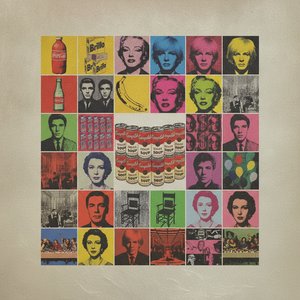
The true challenge in designing a sophisticated Pop Art interior lies in the delicate art of selection. To maintain an air of refinement, one must look beyond the literal and toward the iconic. The goal is to find works that possess a timeless graphic quality—pieces that resonate with the bold lines and saturated hues characteristic of the movement without descending into clutter. The modern decorator avoids the chaotic energy of mass-produced trinkets, replacing them with thoughtfully selected pieces that echo the graphic power of pop icons.
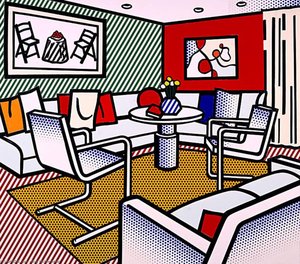
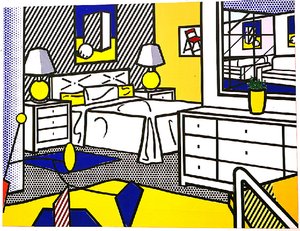
Consider the work of masters like Roy Lichtenstein, whose paintings offer a deceptively simple yet profoundly layered exploration of the domestic landscape. In works such as Interior with Mobile, we see how the use of the signature Ben-Day dot technique can transform an ordinary bedroom into a potent commentary on consumerism and nostalgia. By integrating such pieces, a designer achieves a balance between the familiar and the extraordinary. The key is to treat Pop Art not as an intrusion, but as a curated element that complements more traditional textures—such as heavy patterned rugs or polished wood—creating a dialogue between mid-century boldness and classical permanence.
Textural Depth: The Allure of Hand-Painted Pop Art in Modern Spaces
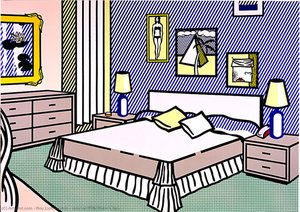 Interior With Water Lilies
A Bedroom Reverie: Roy Lichtenstein's "Interior With Water Lilies" Roy Lichtenstein’s “Interior With Water Lilies,” painted in 1991, offers a deceptively simple yet profoundly layered exploration of domesticity and the burgeoning influence of Pop Art...
While the visual language of Pop Art is often associated with the flat, mechanical precision of commercial printing, there is a profound luxury found in the tactile dimension of hand-painted reproductions. There is a significant distinction between a digital print and an oil painting executed on 100% cotton canvas. A true masterpiece possesses a visible brushstroke and a deeper tonal range that no computer printer can replicate. This physical depth—the way light catches the ridges of impasto or the subtle variations in a hand-applied glaze—adds a layer of sophistication that elevates a room from "decorated" to "curated."
When an artist meticulously renders textures, such as the smooth linen of bedsheets or the reflective surface of a mirror, through the medium of oil, they create a sense of realism and stylized representation that is uniquely captivating. This tactile richness provides a necessary counterpoint to the graphic nature of Pop Art. The presence of real paint, with its organic imperfections and heavy pigments, ensures that the artwork remains a centerpiece of substance rather than mere surface decoration. It is this interplay of the mechanical aesthetic and the human touch that defines the pinnacle of modern luxury.
Curating a Legacy: Integrating Pop Culture Icons into Timeless Interiors
 The guest drawing room interior
A Portal to Victorian Grandeur Step into a world of refined elegance with The guest drawing room interior , a breathtaking visual journey that transports the viewer directly into the heart of a bygone era. This exquisite depiction captures the very e...
Integrating Pop Art into a permanent collection requires an eye for longevity. The most successful interiors are those that treat contemporary mythologies as part of a larger historical continuum. By placing a vibrant, graphic canvas alongside more traditional elements—perhaps a Victorian-era parlor setting or a classical landscape—the designer creates a sense of "period shifting." This allows the home to tell a story that spans centuries, where the energy of the 1960s can coexist harmoniously with the grandeur of the 19th century.
This approach turns a residence into a living museum. It is about finding pieces that possess a "timeless graphic quality"—works that will remain relevant even as trends shift. Whether it is through the use of large-format murals that recreate historical ceilings or the strategic placement of multi-panel group sets across a wide staircase, the integration must feel intentional. When done correctly, Pop Art does not disrupt the classical soul of a home; rather, it provides the necessary spark to keep tradition from becoming stagnant, ensuring the space feels both anchored in history and vibrantly alive.
The Collector’s Eye: Selecting Statement Pieces for Architectural Grandeur
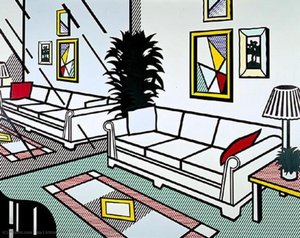
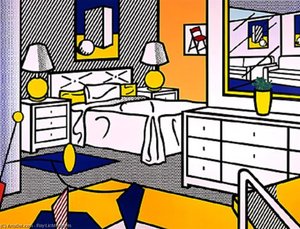 Interior with mobile
A Study in Domesticity: Roy Lichtenstein's "Interior with Mobile" Roy Lichtenstein’s 1992 painting, “Interior with Mobile,” offers a deceptively simple yet profoundly layered exploration of the American domestic landscape – a subject central to his P...
For the discerning collector or the professional designer, selecting art is an act of architectural engineering. A single, large-scale Pop Art piece can serve as the soul of a room, much like a magnificent central chandelier in a formal drawing room. The selection process must consider the scale of the architecture, the existing color palette, and the desired emotional impact. One might choose a work that offers a "bedroom reverie," with muted blues and greens to create serenity, or a more aggressive, primary-colored canvas to define a high-energy social space.
Ultimately, the curation of Pop Art for luxury spaces is about finding the intersection between personal passion and professional excellence. It requires an understanding of how bold lines and saturated hues interact with light, shadow, and physical space. As we continue to see the boundaries between "high" and "low" culture dissolve, the opportunity for collectors to create truly unique, multi-dimensional environments has never been greater. Through careful selection and a commitment to authenticity, Pop Art becomes more than just a style; it becomes a profound expression of a life well-lived and a space beautifully imagined.
About ArtsDot.com
ArtsDot.com is the global flagship for premium art services, specializing in hand-painted oil reproductions, bespoke commissions, and expert art consultation. From transforming personal memories into masterpieces via our "Buy from Photo" service to providing large-scale murals for luxury hospitality, we bring museum-grade excellence to your doorstep. Our artists, holding degrees from prestigious Fine Arts academies, ensure every brushstroke meets the highest standards of craftsmanship. Discover your next statement piece and elevate your interior with the timeless power of art.