The Science of Permanence: Understanding Pigments, Binders, and Material Integrity
 The Chemistry of Permanence: Why Fine Art Survives the Test of Time
The Alchemy of Pigment: The Molecular Foundation of Color Mastering the Brush: The Timeless Secrets of Old Master Oil Painting Techniques The Alchemy of Pigment: Understanding the Chemistry and Longevity of Oil Media To understand the enduring brilli...
To gaze upon a classical masterpiece is to witness more than mere aesthetic triumph; it is to observe a profound chemical achievement. The enduring brilliance of the Old Masters relies upon a delicate alchemy where pigment meets binder in a dance of molecular stability. At the heart of this permanence lies the medium itself—the much-celebrated oil paint. While we often associate its glory with the European Renaissance, the history of this medium is a testament to human ingenuity stretching back as far as the 7th century in the Bamiyan caves of Afghanistan. Here, early practitioners utilized drying oils like linseed to bind mineral pigments, creating a foundation for murals that have defied the erosion of centuries.
The true revolution, however, occurred when artists such as Jan van Eyck perfected the technique of glazing. By meticulously layering translucent glazes of oil over a prepared surface, these masters achieved an unprecedented luminosity and depth. This process is not merely about color; it is about the structural integrity of the paint film. The chemistry of permanence involves understanding how pigments—the soul of color—interact with drying oils to create a durable, flexible matrix. When we discuss preservation, we are discussing the protection of this molecular bond. Modern conservation science, as exemplified by experts like Pablo García Lumbreras, utilizes advanced tools such as X-ray fluorescence and Raman spectroscopy to analyze these very components, ensuring that our interventions respect the original chemical architecture of the work.
Environmental Stewardship: Controlling Light, Humidity, and Atmospheric Pollutants
 Conservation and restoration of cultural property
The conservation and restoration of cultural property focuses on protection and care of cultural property (tangible cultural heritage), including artworks, architecture, archaeology, and museum collections. Conservation activities include preventive ...
The greatest enemies of fine art are often the most invisible. A masterpiece exists in a state of constant, silent negotiation with its environment. Light, while essential for our appreciation of color and texture, acts as a relentless catalyst for degradation. Ultraviolet radiation can break down the molecular chains within organic binders and cause irreversible fading in sensitive pigments. This is why the curation of light—balancing visibility with protection—is the cornerstone of any serious collection. Beyond the spectrum of light, the atmosphere itself poses a significant threat through fluctuations in relative humidity and temperature.
Fluctuating moisture levels induce mechanical stress upon the artwork's supports, whether they be wood panels or canvas. As wood expands and contracts with humidity, it can lead to warping or even structural cracking. Similarly, canvas undergoes subtle shifts that may cause the brittle paint layers to fracture, a phenomenon known as craquelure. Furthermore, atmospheric pollutants and dust act as abrasive agents and chemical reactants, slowly altering the surface chemistry of the work. True stewardship requires a controlled microclimate, where stable humidity and filtered air create a sanctuary for the artwork, shielding it from the corrosive touch of the modern world and ensuring that the vibrancy of the artist's original intent remains untarnished by time.
The Art of Handling: Professional Protocols for Moving and Installing Masterpieces
 Conservation and restoration of paintings
The conservation and restoration of paintings is carried out by professional painting conservators. Paintings cover a wide range of various mediums, materials, and their supports (i.e. the painted surface made from fabric, paper, wood panel, fabricat...
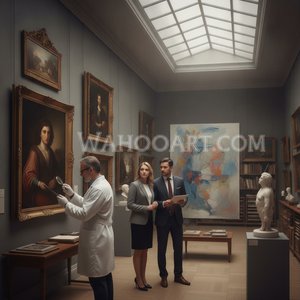
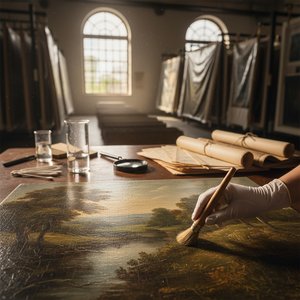
The physical movement of an artwork is perhaps its most vulnerable moment. To the untrained eye, moving a painting may seem a simple logistical task, but to the professional conservator, it is a high-stakes operation requiring rigorous protocols. The handling of fine art demands a reverence for the object's physical boundaries and structural fragility. Every touch must be intentional; the oils from human skin are surprisingly acidic and can leave permanent traces on even the most resilient surfaces. Consequently, the use of nitrile gloves or clean, lint-free cotton is not merely a suggestion but a fundamental requirement of professional practice.
Proper installation involves much more than finding a suitable wall. It requires an assessment of the weight distribution, the stability of the hanging hardware, and the impact of the surrounding architecture. When transporting works, particularly large-format pieces or heavy sculptures, the use of specialized crates and vibration-dampening materials is essential to mitigate the shocks of transit. Whether it is a delicate watercolor on paper or a monumental oil on canvas, the protocol remains the same: minimize movement, control contact, and ensure that the artwork's journey from one space to another is as seamless and undisturbed as possible. This level of care ensures that the physical integrity of the piece remains intact, preserving the artist's hand for future generations.
Preventative Conservation: Strategic Framing, Mounting, and Archival Storage Solutions
Prevention is the most sophisticated form of preservation. Rather than reacting to damage, the elite collector focuses on creating a defensive perimeter around their collection through strategic framing and archival storage. A frame is far more than an aesthetic border; it is a structural component designed to provide stability and protection. High-quality, museum-grade framing utilizes acid-free matting to create a vital air gap between the artwork and the glazing, preventing moisture entrapulation and the dreaded "acid burn" that can occur when paper or canvas touches glass.
For works not on permanent display, archival storage becomes the primary line of defense. This involves the use of chemically inert materials, such as acid-free boxes, buffered tissue paper, and polyester sleeves, to prevent any interaction between the artwork and its container. For larger collections, specialized shelving and climate-controlled vaults are necessary to maintain a consistent environment. The goal is to create a state of stasis, where the artwork is isolated from the external pressures of light, dust, and chemical degradation. By investing in these preventative measures, one ensures that the cost of future restoration is minimized and the longevity of the collection is maximized.
Restoration vs. Conservation: Navigating the Ethics of Intervention and Reversibility
Conservation and restoration of paintings - Wikipedia--- title: Conservation and restoration of paintings - Wikipedia url: https://en.wikipedia.org/wiki/Conservation_and_restoration_of_paintings hostname: wikipedia.org sitename: Wikimedia Foundation, Inc. date: 2016-04-15 --- # Conservation and restora...
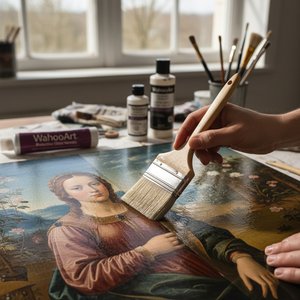
In the realm of fine art, a critical distinction must be made between conservation and restoration—a distinction that defines the ethical boundaries of our profession. Conservation is the science of preservation; it focuses on stabilization, prevention, and the maintenance of the object's original state. The primary goal of a conservator is to extend the lifespan of the artwork through non-invasive means, ensuring that any intervention made is entirely reversible. This principle of reversibility is paramount; should future technologies offer better solutions, today's work must not hinder them.
Restoration, conversely, often involves more active interventions intended to return a work to a perceived "original" appearance. While sometimes necessary to repair significant damage, restoration carries the inherent risk of altering the artist's original vision or introducing materials that may cause long-term harm. The ethical challenge lies in finding the balance between aesthetic continuity and historical integrity. A truly masterful intervention is one that is invisible, where the hand of the restorer disappears, leaving only the brilliance of the artist. This delicate equilibrium requires a profound respect for the history embedded within the layers of paint and a commitment to the scholarly rigor that defines the highest standards of art stewardship.
ArtsDot.com: Preserving the Legacy of the Masters
At ArtsDot.com, we understand that fine art is not merely an acquisition; it is a legacy. As a global leader in the reproduction and celebration of the Old Masters, our mission is to bring the grandeur of history into the modern home with unparalleled authenticity. Our artists, many of whom hold degrees from prestigious Fine Arts academies, specialize in recreating the very techniques we have discussed—from the luminous glazes of the Flemish masters to the textured impasto of the Impressionists. Every hand-painted oil reproduction we produce is a labor of passion, executed on 100% cotton canvas and finished with protective Damar varnish to ensure its endurance. Whether you are seeking a bespoke commission, a custom "remix" of a historical masterpiece, or professional art consultation for a large-scale architectural project, ArtsDot.com provides the expertise and craftsmanship required to protect and celebrate your passion for fine art.





 Conservation and restoration of books, manuscripts, documents and ephemera