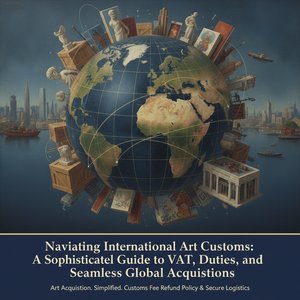




The Nuances of Global Art Acquisition: Understanding International Trade Regulations
To the discerning collector, the acquisition of a masterpiece is far more than a mere transaction; it is an emotional and intellectual journey that transcends borders. Whether one is seeking the dramatic chiaroscuro of a Baroque oil painting or commissioning a contemporary portrait that captures a fleeting moment of family history, the movement of fine art across international lines introduces a layer of complexity that requires both patience and profound expertise. The global art market operates within a delicate web of cultural heritage laws and trade regulations designed to protect the sanctity of national treasures while facilitating the flow of beauty. For the elite collector, understanding these nuances is the first step in ensuring that a new acquisition arrives not just as a physical object, and but as a preserved legacy.
Navigating this landscape requires an appreciation for the distinction between movable fine art and protected cultural property. Every nation maintains its own set of protocols regarding the export of works deemed to be of significant historical importance. When acquiring hand-painted reproductions or high-end collectibles, the focus shifts from heritage protection to the logistical precision of international trade. It is within this sphere that the collector must balance their passion for aesthetic excellence with a rigorous adherence to the legal frameworks that govern global commerce, ensuring that every brushstroke and every canvas remains untarnished by the complications of border disputes or regulatory scrutiny.
Navigating the Complexity of VAT and Import Duties for Fine Art
As an artwork crosses a sovereign threshold, it enters the realm of fiscal scrutiny. Value Added Tax (VAT) and import duties represent perhaps the most significant variable in the total cost of acquisition. These levies are not merely administrative burdens but are complex instruments of national economic policy. For the collector operating in Europe, the intricacies of VAT can vary wildly between jurisdictions, often depending on whether the work is classified as a primary creation or a secondary market purchase. The financial implications of these duties must be meticulously calculated long before the artist lays the first stroke of oil on the canvas.
The challenge lies in the classification of the medium itself. A high-quality Giclée print may be subject to different tariff codes than a heavy, impasto-laden oil painting on 100% cotton canvas. For those acquiring works in regions such as Brazil or Mexico, the necessity of providing specific tax identification, such as a CPF or local tax ID, is paramount to avoiding costly delays at customs. The sophisticated collector views these costs not as unforeseen expenses, but as integral components of the acquisition strategy, managed through transparent documentation and professional foresight.
Mitigating Risk: Documentation, Customs Declarations, and Compliance Strategies
The true hallmark of a professional acquisition is the seamlessness of its arrival. This seamlessness is built upon a foundation of impeccable documentation. Every shipment must be accompanied by an accurate declaration of value, material composition, and origin. Incongruities in paperwork are the primary cause of art being detained in customs warehouses, where fluctuating temperatures and humidity can pose a silent threat to the longevity of delicate pigments and varnishes. A robust compliance strategy involves preparing specialized declarations—such as the Reproduction Declaration required for entries into Italy—to clearly communicate the nature of the work to customs officials.
Risk mitigation also extends to the logistical details of the shipping address. The avoidance of PO Boxes in favor of verified physical addresses ensures that the chain of custody remains unbroken and traceable. By treating the customs declaration as a formal extension of the artwork’s provenance, the collector protects the integrity of the piece. This level of meticulousness ensures that the transition from the artist's studio to the collector's gallery is marked by the same precision found in the artist's own technique, leaving no room for the uncertainty that often plagues less disciplined international commerce.
Seamless Logistics: Ensuring Museum-Grade Transit and Secure Delivery
Once the regulatory hurdles are cleared, the focus shifts to the physical journey of the artwork. The transit of fine art demands a standard of care far exceeding that of standard logistics. For large-format works, such as architectural murals or expansive multi-panel sets, the engineering of packaging is critical. We rely on industrial-grade 3mm tubes for rolled art and reinforced, double-walled boxing for framed masterpieces to prevent any structural warping or impact damage. The goal is to create a micro-environment that shields the artwork from the rigors of global transit, whether it travels via the rapid networks of DHL Express or FedEx.
This logistical excellence is complemented by real-time transparency. A sophisticated order management system provides the collector with continuous updates through SMS and email, allowing for the monitoring of a piece's progress across continents. This visibility transforms the period of waiting from one of anxiety into one of anticipation. When the artwork finally arrives, it should be a moment of pure aesthetic revelation, free from the indignities of transit-related damage or mishandling, reflecting a standard of service that matches the museum-quality excellence of the art itself.
The Gold Standard of Assurance: ArtsDot’s Comprehensive Refund and Satisfaction Policy
In the rarefied world of fine art acquisition, trust is the most valuable currency. At ArtsDot.com, we recognize that the distance between a digital image and a physical masterpiece can create a sense of vulnerability for the collector. To bridge this gap, we have established a gold standard of assurance that begins with our 100% satisfaction guarantee. Our process is designed to eliminate uncertainty through pre-shipment approval; before any frame is closed or any varnish is applied, the collector is presented with a high-resolution photograph of the completed work. This allows for any necessary adjustments to be made, ensuring the final product aligns perfectly with the initial vision.
Our commitment to excellence is further solidified by our unprecedented approach to international costs and potential disputes. We stand behind our global service by offering a full refund of any customs or VAT fees charged upon delivery, provided the receipt is presented to our team. Furthermore, our 30-day return policy for rolled art and our dedicated protocols for addressing shipping damage—offering remakes, resends, or full refunds—ensure that your investment is protected under all circumstances. This level of accountability is what allows ArtsDot.com to serve as a trusted partner to the world's most discerning collectors, turning the complex process of international acquisition into an experience of absolute certainty and enduring beauty.