


The Postwar Canvas: Economic Prosperity and the Rise of Consumerism
To understand the seismic shift brought about by Pop Art, one must first look to the landscape of the post-World War II era, a period defined by an unprecedented surge in economic vitality and the expansion of the middle class. As the shadows of global conflict receded, they were replaced by the vibrant, neon glow of a burgeoning consumer culture. In America, the rapid development of suburban landscapes and the accessibility of mass-produced goods created a new social fabric—one woven with the threads of convenience, abundance, and a shared visual language. This was an era where television supplanted radio as the hearth of the home, and rock and roll provided the rhythmic heartbeat of a generation navigating newfound freedoms.
This period of prosperity was not merely about material wealth; it was about the democratization of experience. The availability of inexpensive, mass-produced commodities meant that the objects of daily life—from the humble soup can to the glossy magazine cover—became universal touchstones. For the burgeoning art movement that would follow, this environment provided a rich, untapped reservoir of subject matter. The tension between the traditional sanctity of fine art and the encroaching tide of commercialism set the stage for a revolution, as artists began to recognize that the true pulse of modern life resided not in the ethereal or the abstract, but in the tangible, the repetitive, and the profoundly ordinary.
Breaking the Fourth Wall: From Fine Art to Mass Media Imagery
The emergence of Pop Art represented a radical departure from the introspective, often hermetic nature of Abstract Expressionism. Where previous movements sought refuge in the subconscious and the deeply personal, Pop artists chose to break the fourth wall, inviting the external world—the loud, the bright, and the commercial—directly into the gallery space. They turned their gaze toward the media-saturated landscape, finding profound meaning in the very imagery that society often dismissed as ephemeral or low-culture. By utilizing the aesthetics of advertising, comic books, and film, these artists challenged the long-held boundaries between high art and popular culture.
This movement functioned as a mirror, reflecting the mass media messaging that shaped public perception. The artists did not merely depict consumer goods; they adopted the very techniques used to sell them. Through the use of bold outlines, saturated palettes, and flattened perspectives, they mimicked the visual rhetoric of the printing press and the television screen. This engagement with mass media was both a critique and an embrace, a way to interrogate the power of imagery in a world where reality was increasingly mediated by screens and print. In doing so, they redefined the role of the artist from a solitary creator of unique visions to a sophisticated interpreter of the collective visual consciousness.
Icons of the Everyday: Analyzing Warhol, Lichtenstein, and Boshier
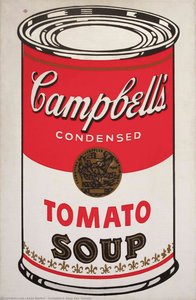
At the heart of this revolution stood figures whose names have become synonymous with the movement itself. Andy Warhol, perhaps the most enigmatic of the group, transformed the mundane into the monumental. His work, characterized by a fascination with repetition and the cult of celebrity, utilized the silkscreen process to strip away the artist's hand, much like the industrial processes of the factory. In his iconic depictions of Marilyn Monroe or Campbell’s Soup Cans, Warhol explored themes of anonymity, fame, and the commodification of the human image, creating a visual rhythm that echoed the assembly line.
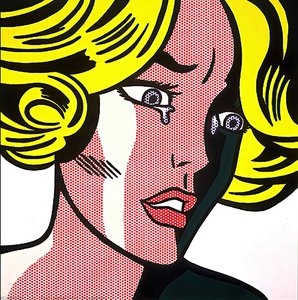
In contrast to Warhol’s cool detachment, Roy Lichtenstein sought to elevate the graphic language of the comic strip to the status of high art. His meticulous recreation of Ben-Day dots and dramatic, melodramatic narratives forced the viewer to confront the stylized emotions of mass-produced pulp fiction. By magnifying the mechanical textures of print media, Lichtenstein imbued the "low" medium with a formal complexity that demanded serious aesthetic consideration. Meanwhile, figures like Derek Boshier brought a distinctively British perspective to the movement, blending social commentary with pop culture motifs to tackle the complexities of identity and social order in an increasingly interconnected world. Together, these artists utilized the icons of their era to construct a new, vibrant mythology.
The Aesthetic of Repetition: Deconstructing the Grid and the Dot
The visual vocabulary of Pop Art is fundamentally rooted in the mechanics of reproduction. The movement moved away from the singular, gestural brushstroke toward an aesthetic defined by the grid, the dot, and the serial image. This fascination with repetition served a dual purpose: it mirrored the mass production of the era and simultaneously deconstructed the concept of the "original" masterpiece. When an image is repeated across a canvas, as seen in Warhol’s untitled photographic grids, the focus shifts from the subject itself to the pattern, the rhythm, and the psychological effect of accumulation.
This structural approach is perhaps most famously realized in Lichtenstein’s use of the dot. By magnifying the smallest unit of commercial printing, he transformed a technical necessity into a profound stylistic element. This emphasis on the mechanical texture of art challenged the traditional value placed on the artist's unique touch, suggesting instead that beauty could be found in the precision of the pattern and the clarity of the line. The grid and the dot became more than just techniques; they were symbols of a new age—an age where the boundaries between the hand-made and the machine-made were irrevocably blurred, creating a modern aesthetic that was as much about structure as it was about subject.
The Enduring Legacy: Pop Art’s Influence on Contemporary Interior Curation
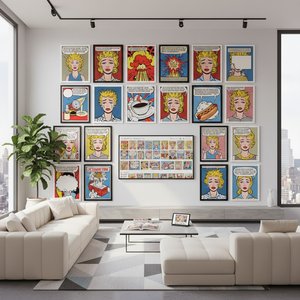
Decades after its initial rebellion, the influence of Pop Art remains a cornerstone of sophisticated contemporary interior design. The movement’s ability to inject energy, color, and narrative into a space makes it an essential tool for the modern collector and designer alike. Today, we see the echoes of Pop in the curation of bold, statement-making spaces that utilize vibrant palettes and graphic elements to create focal points. The movement taught us that art does not need to be somber or distant to be profound; it can be playful, provocative, and deeply integrated with the surrounding environment.
For the discerning homeowner, incorporating Pop Art elements—whether through a large-scale reproduction of a Lichtenstein masterpiece or a custom-painted piece inspired by Warhol’s vibrant tones—allows for a dynamic interplay between historical reverence and modern edge. The movement's legacy lives on in the way we use art to define character within an architectural space, using the bold geometry and saturated hues of the 1960s to breathe life into contemporary minimalism or mid-century modern aesthetics. It remains a testament to the power of art to transform the everyday into something extraordinary.
Redefining Value: The Intersection of Popular Culture and Fine Art Collecting
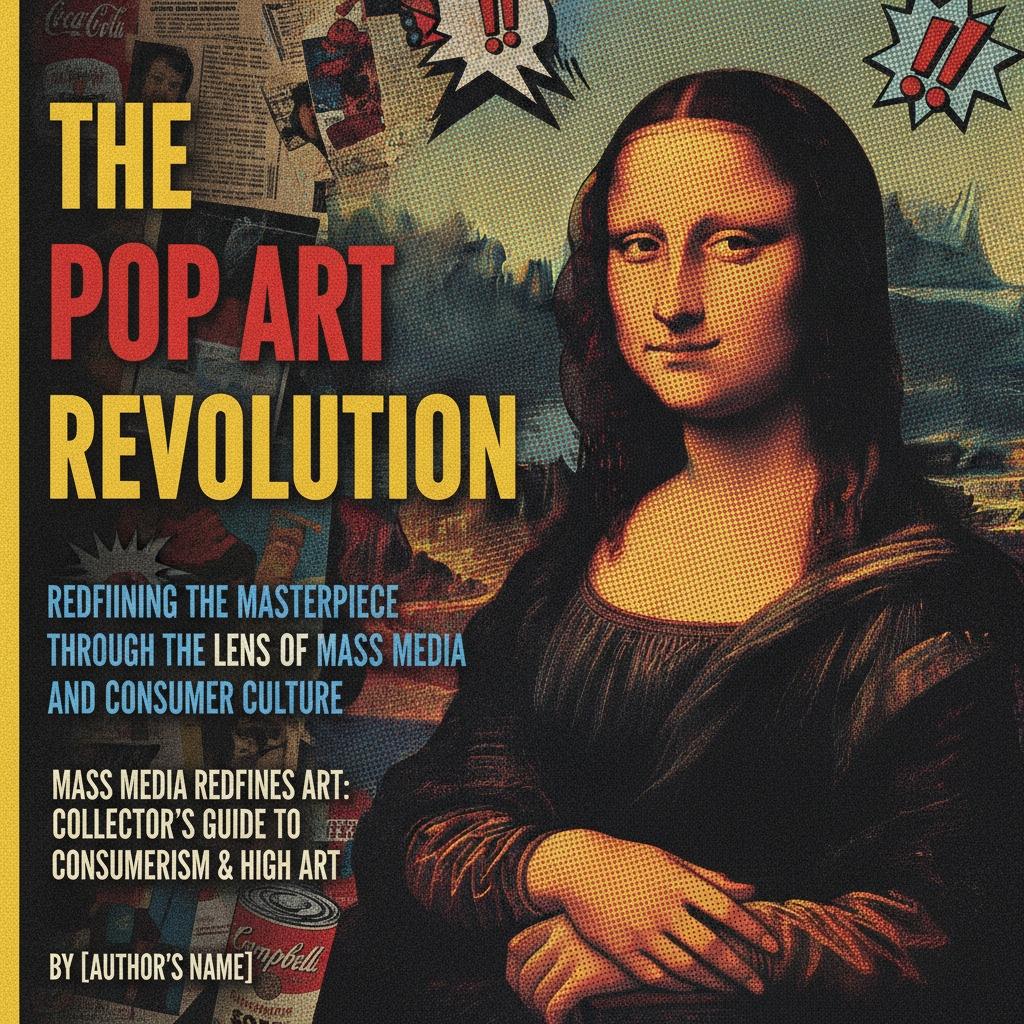
The ultimate achievement of Pop Art was its successful redefinition of artistic value. By elevating the ephemeral objects of consumerism to the status of collectible fine art, the movement expanded the horizons of what a collector might pursue. It bridged the gap between the museum and the marketplace, proving that the imagery of popular culture possesses a lasting resonance and a profound capacity for critical inquiry. For the modern collector, this means that the boundaries of a collection are no longer limited by traditional hierarchies of subject matter.
Collecting Pop Art is an engagement with history itself—a way to preserve the visual pulse of the twentieth century. As we continue to navigate an era of unprecedented digital saturation and media proliferation, the lessons of Pop Art remain more relevant than ever. The movement invites us to find beauty in the ubiquitous, to critique the commercial, and to celebrate the vibrant energy of our shared cultural landscape. In the hands of a dedicated collector, these works serve as enduring monuments to a time when art dared to look at the world exactly as it was: colorful, loud, and beautifully complex.
ArtsDot.com stands at the intersection of this rich history and modern accessibility. As a global leader in fine art reproductions, we specialize in bringing the profound impact of movements like Pop Art into the most prestigious homes and professional spaces worldwide. From hand-painted oil recreations that capture the tactile depth of a Warhol to custom commissions that reimagine personal memories through a Pop Art lens, our mission is to preserve human creativity for a modern audience. Whether you are an established collector or an interior designer seeking museum-quality pieces for a large-scale project, ArtsDot provides the craftsmanship, authenticity, and expertise required to curate a truly extraordinary collection.