The Trinity of High Renaissance: Defining an Era of Humanism
To understand the zenith of Western civilization, one must look toward the brief, luminous window of the High Renaissance, a period where the shadows of the Middle Ages finally retreated before the dawn of humanistic inquiry. This was not merely an era of aesthetic refinement, but a profound philosophical shift that repositioned man at the center of the cosmos. The art produced during this epoch served as the visual language for this new reality, blending the mathematical precision of perspective with a newfound reverence for the anatomical and emotional truth of the human condition. It was a time when the divine and the earthly were no longer disparate realms, but intertwined through the medium of light, shadow, and proportion.
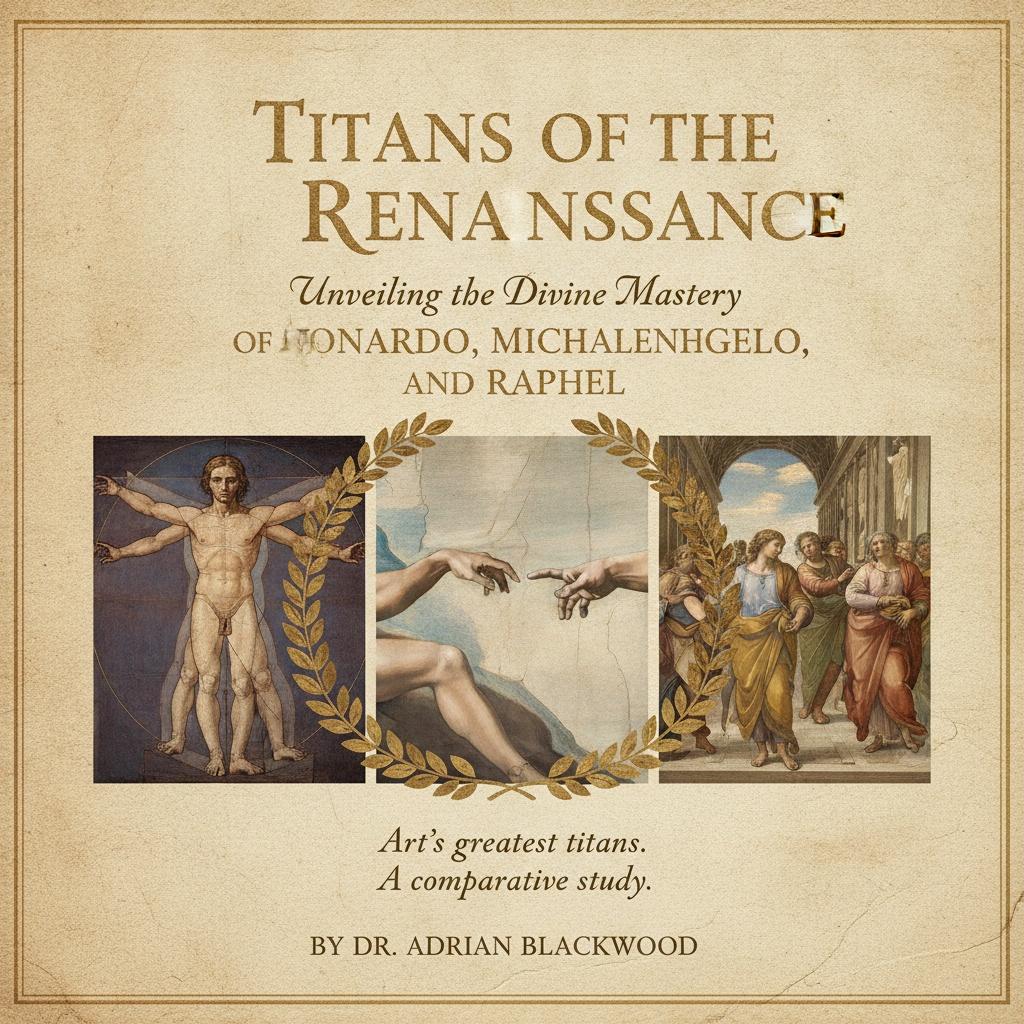
At the heart of this transformation lay a triumvirate of geniuses whose individual visions would define the very concept of mastery. While they shared the common pursuit of bellezza—that elusive, transcendent beauty—their methodologies were as distinct as their temperaments. The era was characterized by an unprecedented convergence of scientific observation and spiritual aspiration, creating a legacy that continues to inform the discerning eye of the modern collector. To study these masters is to witness the birth of the modern aesthetic consciousness, where every brushstroke and chisel mark serves as a testament to the limitless potential of human intellect and creativity.
Leonardo da Vinci: The Enigma of Sfumato and Scientific Observation
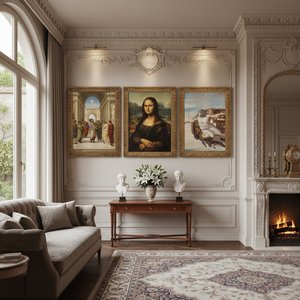
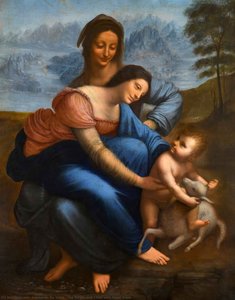
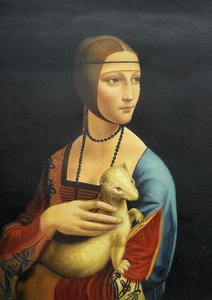
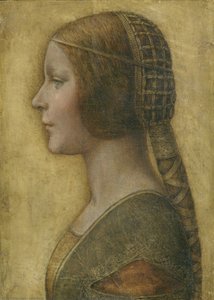
Leonardo da Vinci remains the quintessential Renaissance man, an intellect so vast that his art was inseparable from his scientific investigations. For Leonardo, the canvas was a laboratory. He did not merely paint figures; he interrogated the very atmosphere that surrounded them. His most profound contribution to the painterly lexicon, sfumato, revolutionized the depiction of depth and volume. By eliminating harsh outlines and allowing tones to merge like smoke—as seen in the hauntingly soft transitions of his most famous portraits—he captured the ephemeral quality of light and the subtle mystery of the human soul.
His approach was rooted in an obsessive study of optics, anatomy, and geology. Leonardo understood that to depict a smile or a gaze, one must first understand the musculature beneath the skin and the way light refracts through the moisture of the eye. This marriage of empirical data and poetic intuition allowed him to create works that possess a psychological depth previously unknown to art history. His compositions often utilize a pyramidal structure, providing a sense of stability and eternal calm, yet within that stability lies a restless, searching energy. To encounter a Leonardo is to enter a world where the boundaries between the physical and the metaphysical are perpetually blurred.
Michelangelo Buonarroti: The Divine Struggle of Form and Spirit
If Leonardo sought the atmosphere, Michelangelo Buonarroti sought the bone. A sculptor by vocation and a poet by nature, Michelangelo viewed the medium of marble not as something to be shaped, but as something to be liberated. His work is characterized by an intense, muscular dynamism that reflects his personal struggle with the weight of mortality and the grandeur of the divine. In his hands, the human form becomes a vessel for profound spiritual tension; every sinew and strained muscle in works like the David or the frescoes of the Sistine Chapel ceiling speaks to the heroic struggle of the human spirit against its own limitations.
Michelangelo’s aesthetic is one of monumental scale and anatomical exaggeration, used purposefully to evoke emotion rather than mere realism. He possessed an unparalleled ability to convey terribilità—a sense of awe-inspiring power and emotional intensity that can overwhelm the viewer. His figures are often caught in moments of extreme physical or psychological torsion, a technique known as contrapposto taken to its most dramatic conclusion. For the collector of profound, emotive works, Michelangelo represents the pinnacle of expressive force, where the very stone seems to pulse with the breath of life and the agony of existence.
Raphael Sanzio: The Perfection of Harmony and Grace
In stark contrast to the enigmatic shadows of Leonardo and the turbulent energy of Michelangelo, Raphael Sanzio achieved what many consider to be the ultimate realization of Renaissance ideals: perfect equilibrium. Raphael possessed a unique ability to synthesize the innovations of his predecessors into a style defined by clarity, grace, and an almost celestial harmony. His compositions are masterclasses in balance, where every figure and architectural element is placed with such mathematical and aesthetic precision that the eye finds rest in a state of pure, unadulterability joy.
Raphael’s work, such as his celebrated Madonnas or the expansive School of Athens, embodies the concept of sprezzatura—a certain effortless elegance. While his technical skill was immense, it never felt labored; rather, his art seems to flow with a natural, rhythmic grace. He mastered the use of color and light to create scenes that are both vibrant and serene, avoiding the darkness of Leonardo or the muscular tension of Michelangelo in favor of a luminous, idealized reality. To study Raphael is to experience the profound peace found in perfect proportion, making his work the cornerstone of classical beauty.
A Comparative Analysis: Divergent Paths to Aesthetic Transcendence
When we place these three titans in dialogue, we observe a fascinating spectrum of artistic intent. Leonardo represents the intellectual inquiry, using art to decode the mysteries of the natural world through subtle gradation and atmospheric depth. Michelangelo embodies the spiritual struggle, utilizing the raw power of form and anatomy to explore the tension between the flesh and the divine. Raphael, conversely, represents the aesthetic ideal, refining the complexities of his contemporaries into a cohesive language of harmony and grace.
Their divergence lies in their relationship with reality. Leonardo seeks to understand it; Michelangelo seeks to transcend it; Raphael seeks to perfect it. Yet, despite these different trajectories, they are united by a shared commitment to the dignity of man and the pursuit of excellence. For the connoisseur, the fascination lies not in choosing one over the other, but in appreciating how these three distinct paths converged to create the most significant era in the history of Western art. Each master offers a different window into the human experience—one through the lens of science, one through the lens of spirit, and one through the lens of beauty.
The Enduring Legacy: How the Titans Shaped the Modern Collector's Eye
The influence of the High Renaissance continues to reverberate through the halls of every great museum and the private galleries of the world’s most esteemed collectors. The principles established by Leonardo, Michelangelo, and Raphael—compositional balance, anatomical integrity, and the emotive use of light—remain the foundational pillars of classical training. Even in the contemporary era, the pursuit of "masterpiece" quality is measured against the standards set during this Golden Age.
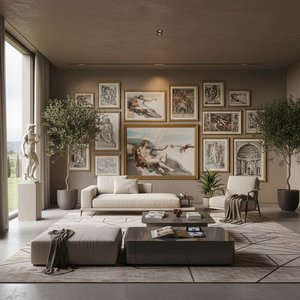
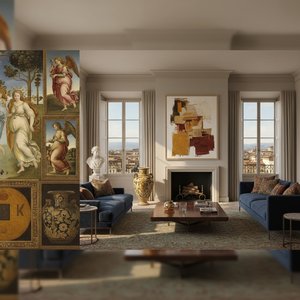
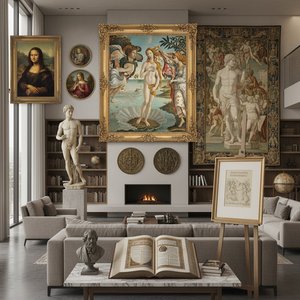
For those who seek to surround themselves with art that possesses historical weight and aesthetic permanence, the works of these masters offer an incomparable legacy. At ArtsDot.com, we honor this heritage by providing museum-quality, hand-painted oil reproductions that capture the very essence of these titans. Our master artists, trained in the rigorous traditions of fine arts academies, utilize authentic techniques—from the delicate sfumato of Leonardo to the bold textures reminiscent of Michelangelo—to ensure that every commission is a profound tribute to the masters. Whether you are seeking a large-scale mural to transform an architectural space or a bespoke portrait reimagined in a classical style, ArtsDot.com provides the expertise and craftsmanship required to bring the timeless grandeur of the Renaissance into the modern home.