


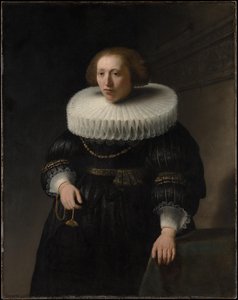

The Art of Permanence: Why Custom Portraits Transcend Trends
In an era defined by the ephemeral nature of digital imagery, where moments are captured in fleeting pixels and lost to the infinite scroll of social media, there exists a profound longing for something enduring. The true collector understands that while photography captures a likeness, only fine art captures an essence. Custom portraits stand as a defiant rebellion against the transient; they are anchors in the turbulent sea of modern life. Unlike the mass-produced prints that populate contemporary spaces, a hand-painted oil portrait possesses a physical weight and a temporal depth that transcends seasonal decor trends. It is not merely an object of beauty, but a vessel of permanence.
The allure of the custom portrait lies in its ability to exist outside the lifecycle of fashion. While interior design movements may shift from minimalism to maximalism, the classical dignity of a well-executed oil painting remains constant. This stability is rooted in the very medium itself—the slow layering of pigments, the deliberate application of brushstrokes, and the structural integrity of canvas and oil. To commission a portrait is to invest in an asset that does not depreciate in cultural relevance, but rather gains gravity as it ages, becoming a cornerstone of a curated environment.
Capturing the Soul: The Emotional Depth of Bespoke Portraiture
Beyond the technical mastery of the artist lies the true purpose of portraiture: the pursuit of the human soul. A photograph is a literal record, but a bespoke painting is an interpretive journey. When an artist approaches a commission, they are not merely replicating features; they are translating character, temperament, and spirit onto canvas. This process requires an intimate understanding of light and shadow—the chiaroscical interplay that can reveal the wisdom in a wrinkle or the spark of vitality in an eye. It is this depth that allows a portrait to breathe with life long after the sitter has left the studio.
The emotional resonance of such works is unparalleled. There is a unique intimacy found in the texture of an impasto stroke or the subtle glaze used to render the softness of skin. These tactile elements invite the viewer into a silent dialogue with the subject. For the collector, owning such a piece means possessing a window into a specific moment of human existence, rendered with a level of reverence that no lens can replicate. It is the difference between seeing a face and feeling a presence.
From Memory to Masterpiece: The Alchemy of Transforming Photos into Oil Paintings
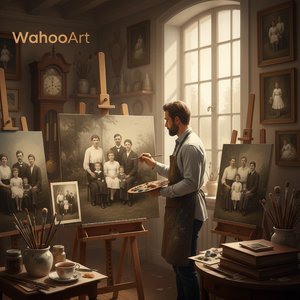
The journey from a contemporary photograph to a museum-grade masterpiece is a process of artistic alchemy. It begins with the raw material of memory—a cherished wedding portrait, a milestone celebration, or even a quiet moment captured on a smartphone. Through the skilled hands of academy-trained artists, these digital fragments undergo a profound metamorphosis. The artist deconstructs the photograph, looking past the flat light of modern technology to find the underlying composition and classical potential.
This transformation involves much more than simple imitation. It is an intentional reconstruction where the artist may employ "period shifts," perhaps reimagining a modern subject through the dramatic, light-drenched lens of the Baroque era or the soft, impressionistic textures of the late 19th century. Through meticulous layering on 100% cotton canvas, the artist introduces depth, tonal range, and a physical dimension that a print simply cannot achieve. The result is a work that honors the original memory while elevating it to the status of fine art, bridging the gap between the personal and the historical.
Curating a Legacy: Integrating Fine Art into Architectural Grandeur
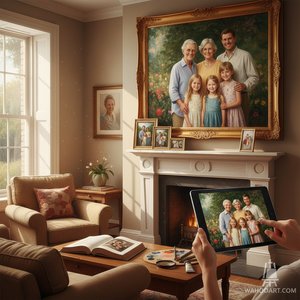
For the discerning collector, art does not exist in isolation; it is an integral component of the architectural narrative. A custom portrait serves as a focal point that can define the character of an entire room, whether it be a grand library, a sweeping staircase, or a formal dining hall. The integration of fine art into a space requires a sophisticated understanding of scale, color, and composition. Large-format works, such as multi-panel group paintings or even bespoke ceiling frescoes, can transform a standard interior into a curated gallery of personal history.
The modern collector often seeks to harmonize these classical elements with contemporary architectural trends. This might involve the use of "multi-panel" layouts that span wide walls, creating a sense of movement and modern rhythm, or selecting specific color palettes that complement the existing textures of stone, wood, and fabric within the home. When executed with precision, the placement of custom art becomes an act of architectural curation, where the painting and the space exist in a symbiotic relationship of elegance and prestige.
The Collector's Standard: Ensuring Longevity through Material Excellence
A true heirloom must be built to withstand the passage of centuries. For the serious collector, the chemistry of art is as important as its aesthetics. The longevity of a painting is predicated on the quality of its fundamental components. This includes the use of flexible gesso to prevent cracking, the selection of specific oils—such as safflower for whites to prevent the dreaded yellowing of age—and the application of a protective Damar varnish to shield the surface from atmospheric pollutants.
True excellence is found in the details that are often invisible to the untrained eye. It is found in the tension of properly braced stretcher bars designed to prevent warping, and in the use of archival-grade materials that ensure the pigments remain vibrant for generations. To invest in a custom oil reproduction is to participate in a tradition of material science, ensuring that the masterpiece remains as striking for one's descendants as it was on the day it left the artist's easel. This commitment to durability is what separates a mere decoration from a lasting legacy.
Preserving Lineage: The Role of Custom Art in Multi-Generational Storytelling
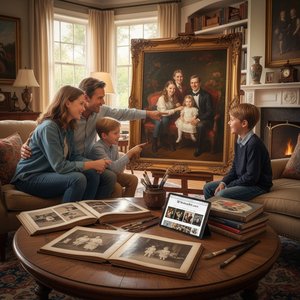
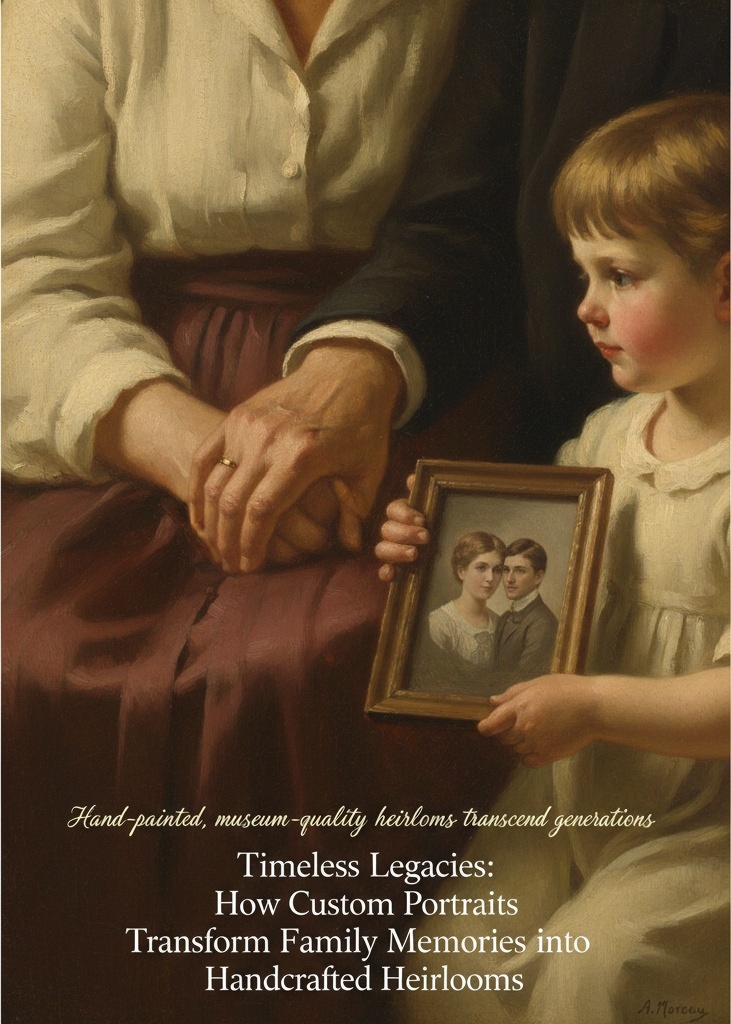
Ultimately, the greatest value of a custom portrait lies in its role as a storyteller for generations yet unborn. We live in an age of rapid succession, but art offers a way to slow time. A family's history is often told through stories and traditions, but a collection of portraits provides a visual lineage—a tangible connection to ancestors that can be touched, seen, and felt. These paintings become the silent witnesses to a family's evolution, capturing the faces of those who shaped its identity.
As these works are passed down, they carry with them the weight of history and the warmth of memory. They serve as educational tools for children, teaching them about their roots through the dignified gaze of their forebears. In this way, custom portraiture is perhaps the most profound form of legacy building available to us. It is an act of love and foresight, ensuring that even as the world changes beyond recognition, the essence of one's family remains eternally preserved in the timeless medium of oil on canvas.
ArtsDot.com stands at the intersection of this historical tradition and modern accessibility. Since 2004, we have dedicated ourselves to making the grandeur of the Old Masters accessible to a global audience of collectors. Through our specialized services—from transforming personal photos into bespoke oil masterpieces to providing expert art consultations for grand architectural projects—we ensure that every commission is handled with academic excellence and a commitment to museum-grade quality. Whether you are seeking to commemorate a milestone or curate a multi-generational legacy, ArtsDot provides the artistry and the expertise to turn your most cherished memories into your family's greatest heirlooms.