
The Genesis of a New Vision: Breaking from Tradition and the Rise of Modernist Thought
 Modernism
Modernism was an early 20th-century movement in literature, visual arts, performing arts, and music that emphasized experimentation, abstraction, and subjective experience. Philosophy, politics, architecture, and social issues were all aspects of thi...
To understand the seismic shift of American Modernism, one must first contemplate the profound disillusionment that permeated the early twentieth century. As the world grappled with the rapid industrialization, urbanization, and the harrowing shadows of global conflict, the established artistic conventions of the nineteenth century—rooted in realism and romanticized landscapes—beg indeed felt increasingly inadequate to capture the fractured reality of a modernizing society. Modernism emerged not merely as a stylistic choice, but as a philosophical necessity; it was a self-conscious rejection of tradition, driven by an urgent desire to redefine how human beings interact with a world characterized by growing alienation and technological upheaval.
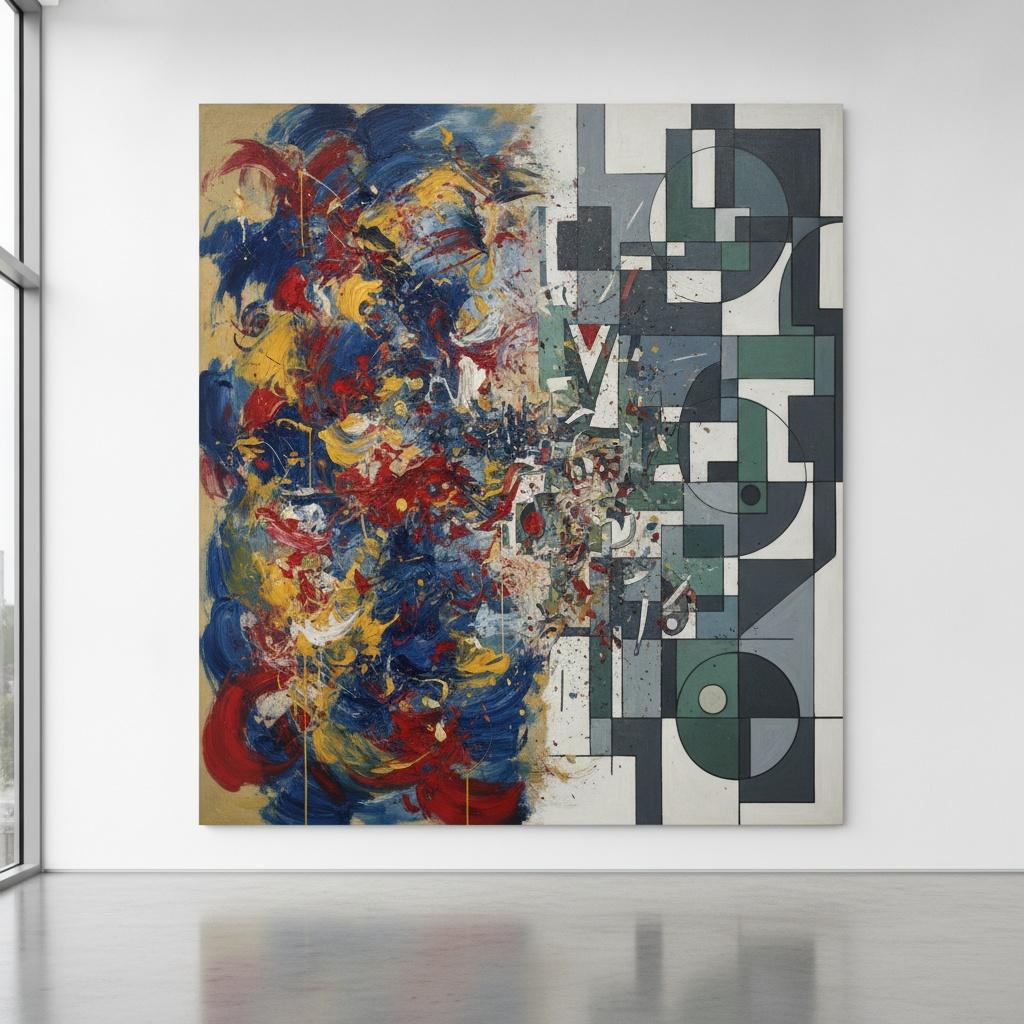
This era of experimentation sought to strip away the superficial layers of representation to uncover deeper, more subjective truths. Influenced by the radical shifts in science, psychology, and politics, artists began to move away from the mimesis of nature toward a language of abstraction and symbolism. This movement was characterized by a profound fascination with the essence of form, color, and texture, reflecting a world that was no longer certain of its moral or social foundations. It was an era where the canvas became a site of intellectual inquiry, challenging the viewer to find meaning within the non-representational and the purely experiential.
Geometric Precision: The Mathematical Elegance of Abstract Composition
 Geometric Abstraction's 10 Defining Masterpieces | Art for Your Home - ArtsDot
Introduction Imagine a world stripped bare to its essential forms – lines, colors, and shapes resonating with an almost mathematical purity. This is the realm of Geometric Abstraction, a movement that dared to abandon representational art in favor of...
Within this broader modernist upheaval, a specific and captivating discipline emerged through the pursuit of geometric abstraction. This movement dared to abandon the narrative entirely, opting instead for a visual vocabulary rooted in the mathematical purity of lines, shapes, and structures. For the discerning collector, there is an undeniable sophistication in works that utilize geometric precision to evoke a sense of universal order. These compositions do not seek to depict a scene, but rather to resonate with an almost architectural rhythm, where every angle and intersection serves a structural purpose.
Consider the dynamic interplay found in works such as Vaclav Vytlacil’s 1937 triptych, where bold lines and textured geometric shapes create a sense of movement within a controlled, monochromatic space. Such pieces exemplify how abstraction can achieve a profound aesthetic balance without the need for figurative anchors. This pursuit of clarity—a world stripped to its essential forms—offered a sanctuary of logic amidst the chaos of the era. The elegance of this style lies in its ability to communicate complex emotional and intellectual states through the simple, yet powerful, application of geometry, inviting a meditative engagement with the fundamental building blocks of visual reality.
The Visceral Canvas: Abstract Expressionism and the Post-War Emotional Landscape
 Abstract Expressionism's 10 Defining Masterpieces |
Introduction To gaze upon these ten canvases is to step into a realm where emotion reigns supreme, where the very act of painting became a visceral outpouring of the human spirit. The Abstract Expressionist movement, born in the aftermath of World Wa...
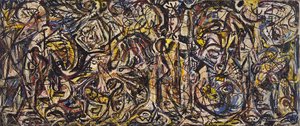
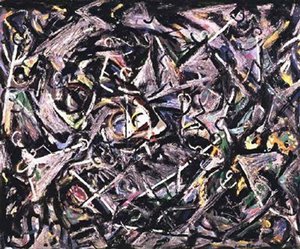
If geometric abstraction offered order, then Abstract Expressionism provided the raw, unbridled soul of the American mid-century. Emerging from the profound trauma of World War II, this movement represented a seismic rupture from all previous traditions. The collective psyche of the post-war era was scarred by unprecedented uncertainty, prompting artists to reject representational painting in favor of a visceral outpouring of the human spirit. In the studios of New York, the act of painting became an event—a physical manifestation of intense emotional labor where the canvas served as an arena for action.
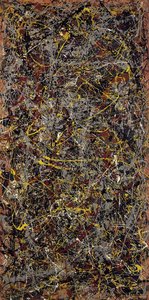
The movement, often referred to as the New York School, prioritized spontaneity and the exploration of the subconscious. Artists such as Jackson Pollock revolutionized the medium through his "drip" technique, transforming the canvas into a dynamic record of motion and energy. Simultaneously, figures like Mark Rothko explored the profound depths of color field painting, using expansive, luminous planes to evoke existential questions and spiritual resonance. This was art stripped of all narrative constraints, focusing instead on the raw honesty of gesture and the emotive power of color. To gaze upon these masterpieces is to step into a realm where emotion reigns supreme, offering a window into the anxieties, passions, and profound individual freedoms that defined the American experience in the wake of global catastrophe.
New York as the Global Epicenter: The Shift from Paris to the New York School
Abstract expressionism in the United States emerged as a distinct art movement in the aftermath of World War II and gained mainstream acceptance in the 1950s, a shift from the American social realism of the 1930s influenced by the Great Depression an...
The ascent of American Modernism also signaled a monumental geopolitical shift within the art world. For centuries, Paris had reigned as the undisputed capital of artistic innovation; however, the mid-twentieth century witnessed the mantle of influence passing across the Atlantic to New York City. This transition was fueled by a confluence of factors, including the influx of European émigré artists fleeing political turmoil and a uniquely American spirit of individualism that thrived in the burgeoning urban landscape of Manhattan.
This new epicenter allowed for a cross-pollination of ideas, where the radical visual vocabularies of European avant-garde schools—such as Cubism, Surrealism, and the Bauhaus—met the raw energy of American social realism and the emerging Abstract Expressionist movement. The result was a uniquely American modernist identity that was both globally informed and fiercely independent. This era established New York not just as a center for commerce, but as the heart of the Western art world, fostering a legacy of innovation that would continue to shape the trajectory of contemporary art for decades to come.
Legacy and Longevity: Curating American Modernism for the Contemporary Collector
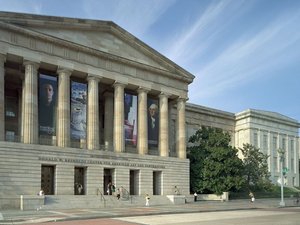 Smithsonian American Art Museum
A Chronicle of American Identity: The Smithsonian American Art Museum Nestled within the venerable Old Patent Office Building in Washington, D.C., the Smithsonian American Art Museum is more than simply a repository for artistic treasures; it’s a pro...
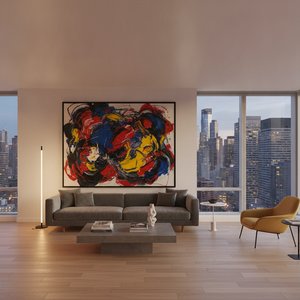
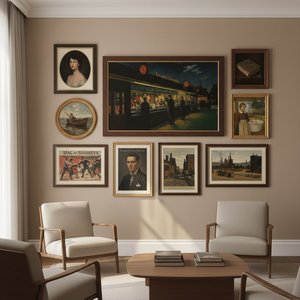
For the elite collector, the acquisition of American Modernist works is an investment in the very fabric of cultural history. These pieces are more than mere decorations; they are profound chronicles of identity, resilience, and the evolution of human thought. Whether one is drawn to the structured elegance of geometric abstraction or the emotive depth of the New York School, these works offer a timeless aesthetic that transcends fleeting trends. They provide a sophisticated dialogue within a space, anchoring modern interiors with a sense of historical weight and intellectual rigor.
Curating such a collection requires an appreciation for both the technical mastery of the artists and the historical context that birthed their visions. As we continue to rediscover the brilliance of these mid-century masters, the opportunity to integrate their legacy into contemporary living remains unparalleled. At ArtsDot.com, we celebrate this enduring heritage by offering exquisite, hand-painted oil reproductions that capture the authentic texture, brushwork, and soul of these transformative era-defining works. We invite connoisseurs to explore our vast library and preserve the profound beauty of American Modernism within their own private galleries.