The Choreography of Social Grace: Introduction to the Painted Soirée
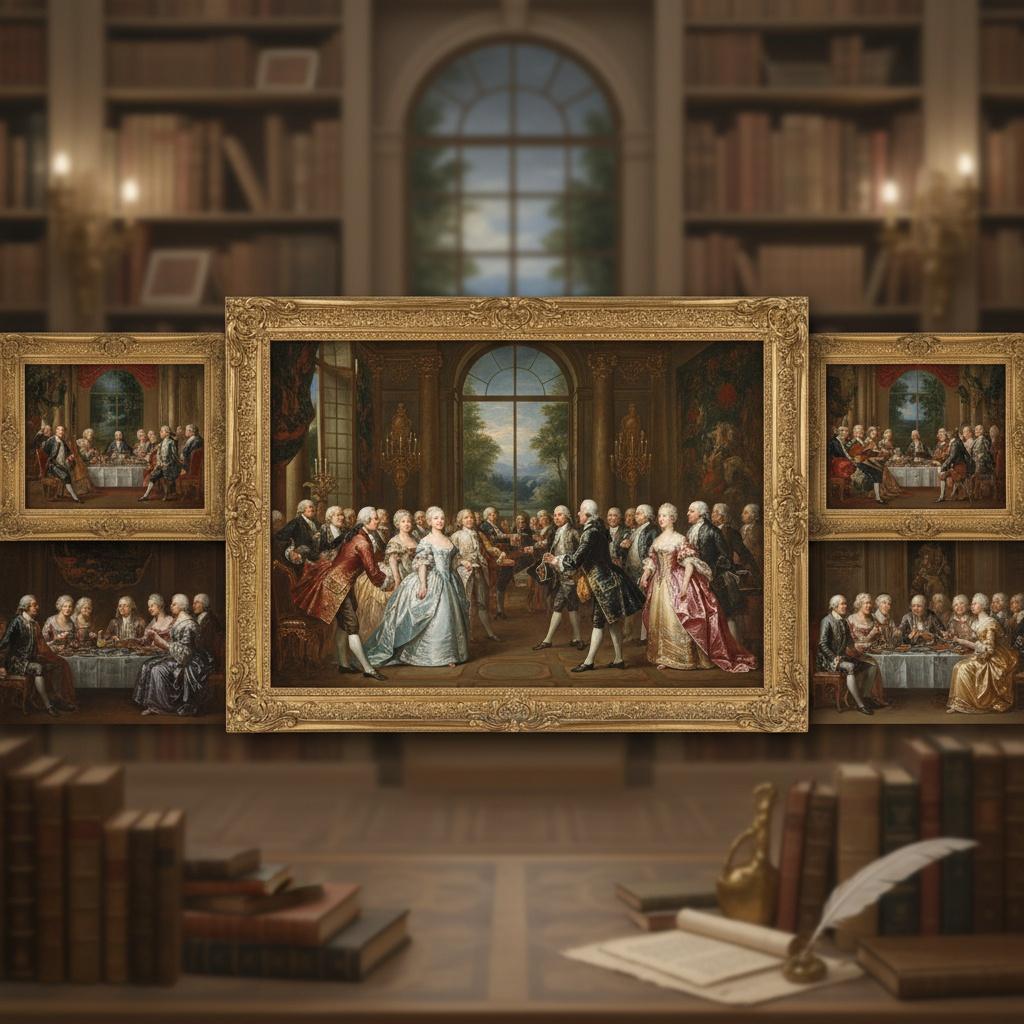
To step into a masterpiece depicting a formal gathering is to enter a world where every gesture is deliberate and every glance carries weight. These paintings are far more than mere records of social events; they are meticulously choreographed performances captured in oil and pigment. Throughout art history, the depiction of the soirée or the grand ball has served as a profound medium for exploring the complexities of human interaction. There is an inherent tension in these works—a delicate balance between the public display of etiquette and the private whispers of emotion. As we observe the figures arranged within these gilded frames, we are not merely spectators to a party, but witnesses to a highly ritualized dance of social positioning and cultural refinement.
The allure of the painted gathering lies in its ability to freeze time at the height of splendor. Whether it is the quiet dignity of a 19th-century Dutch salon or the dizzying whirl of an Impressionist ballroom, these works invite us to contemplate the ephemeral nature of beauty and social prestige. The artist acts as both director and historian, selecting which moments of grace to immortalize and which shadows of scandal to obscure. In doing so, they create a window into eras long passed, allowing the modern viewer to feel the rustle of silk, the warmth of candlelight, and the palpable energy of a room filled with the era's most influential souls.
A Study in Status: Decoding Symbolism and Attire in Group Portraits
In the realm of formal portraiture, clothing is never merely decorative; it is a language of power. When examining works such as Hendricus Engelbertus Reijntjens’ The Elegant Gathering, one must look closely at the textures of lace, the sheen of satin, and the precise drape of velvet. Each fabric choice serves as a signifier of wealth and station. The meticulous realism employed by masters allows us to discern the subtle hierarchy within a crowd. A high collar or an intricately embroidered cuff does not just denote fashion; it announces the wearer's proximity to influence. These details are the building blocks of social identity, rendered with such precision that the viewer can almost sense the weight of the jewels and the stiffness of the formal attire.
Beyond the textiles, the very arrangement of figures within a group portrait functions as a map of social order. The placement of a central figure, often slightly elevated or bathed in a more direct light, establishes a focal point of authority. We see this reflected in the structured compositions of works like Elizabeth Adela Stanhope Forbes’ By Order Of The Court, where the atmosphere is rich with the weight of tradition and the gravity of social expectation. Every object within the frame—a silver tea service, a delicate porcelain cup, or an ornate piece of furniture—acts as a secondary character, reinforcing the themes of prosperity and established lineage. To study these paintings is to learn how to read the silent vocabulary of prestige.
Light, Shadow, and Spectacle: The Impressionistic Ballroom and Atmospheric Depth
As art transitioned from the rigid structures of Neoclassicism toward the more fluid realms of Impressionism, the focus of the formal gathering shifted from the individual's status to the collective atmosphere. The mastery of light became the primary protagonist. In Sir William Russell Flint’s Matinee entr'acte – An Essay in Portraiture, we witness a stunning evolution where the boundaries between figures begin to blur into a sea of movement and light. Here, the technique is not about defining every thread of lace, but about capturing the shimmering essence of a bustling ballroom. The use of broken brushstrokes and a vibrant palette creates a sense of kinetic energy, mimicking the way light dances off moving bodies and swirling gowns.
This era introduced a new kind of depth—not just physical, but emotional and sensory. The interplay of light and shadow, or chiaroscuro, allows the artist to create a sense of mystery and scale. In these more modern interpretations, the "spectacle" is found in the atmosphere itself. The air feels thick with music and conversation; the shadows hold the secrets of the periphery. By prioritizing the impression of a moment over the literal documentation of a face, artists were able to evoke the true feeling of a grand event: the dizzying, intoxicating sensation of being lost within a crowd of splendor.
The Intimacy of the Crowd: Capturing Individual Emotion within Collective Elegance
Despite the grandeur and the scale of these compositions, the most profound moments often occur in the margins. The true genius of a master painter lies in their ability to weave individual narratives into the larger tapestry of the group. Within a sea of formal elegance, one might find a fleeting moment of melancholy in a lady's downward gaze, or a spark of shared mischief between two companions tucked into a corner. These micro-narratives prevent the painting from becoming a static museum piece; they breathe life and humanity into the social spectacle.
This duality—the public mask versus the private truth—is what gives these works their enduring psychological depth. An artist might use a subtle tilt of the head or a slight tension in a hand to suggest a hidden longing or a brewing conflict. It is this layer of intimacy that allows the viewer to connect with characters who lived centuries ago. We recognize our own complexities reflected in their poised yet vulnerable expressions, finding a shared human experience within the highly stylized confines of an aristocratic gathering.
From Canvas to Contemporary Space: Preserving the Grandeur of Historical Gatherings
The legacy of these magnificent depictions continues to resonate in the modern era, serving as inspiration for contemporary interior design and art collecting. Bringing a reproduction of such historical grandeur into a home is an act of preserving cultural memory. Whether through a large-scale multi-panel installation that spans a staircase or a singular, focused portrait that anchors a study, these works provide a sense of timelessness and architectural weight to any space.
At ArtsDot.com, we believe that the beauty of the Old Masters should not be confined to museum halls. Our mission is to make this level of sophistication accessible to collectors worldwide. Through our meticulous process of hand-painted oil reproductions, we ensure that the tactile soul of these gatherings—the visible brushstrokes, the depth of color, and the physical texture of the paint—is preserved for a new generation. By commissioning a reproduction or exploring our curated collection, you are not just decorating a wall; you are inviting the elegance, history, and enduring grace of the world's greatest social spectacles into your personal sanctuary.