The Impressionist Revolution: Monet’s Pursuit of the Fleeting Moment
To understand the profound impact of Claude Monet is to understand a fundamental shift in the human perception of reality. Before the dawn of Impressionism, the art world was anchored by the rigid dictates of the Academy, where subjects were expected to be noble, historical, or mythological, rendered with invisible brushstrokes and somber, controlled palettes. Monet, however, sought something far more elusive than historical permanence. He became a pioneer of the ephemeral, a painter who did not merely depict a landscape but attempted to capture the very breath of the atmosphere as it passed through a scene.
This revolution was not born from a desire to distort reality, but from an intense devotion to observing it. Monet understood that the world is never static; a meadow at dawn is fundamentally different from that same meadow under the harsh glare of midday or the soft, violet hues of twilight. By breaking away from traditional outlines and focusing on the vibration of color, he invited the viewer to experience the sensation of sight itself. His work invites us to step into a world where boundaries dissolve, leaving only the pure, unadulterated impression of a moment caught in time.
Chasing the Sun: How Light and Color Define the Monet Aesthetic
At the heart of Monet’s genius lies his obsession with light—the true protagonist of his canvases. For Monet, light was not merely an illumination that revealed objects; it was a transformative force that redefined them. He mastered the art of optical mixing, applying small, broken strokes of pure color side-by-side, allowing the viewer's eye to blend them from a distance. This technique creates a shimmering, luminous effect that mimics the way sunlight dances upon water or filters through a canopy of leaves.
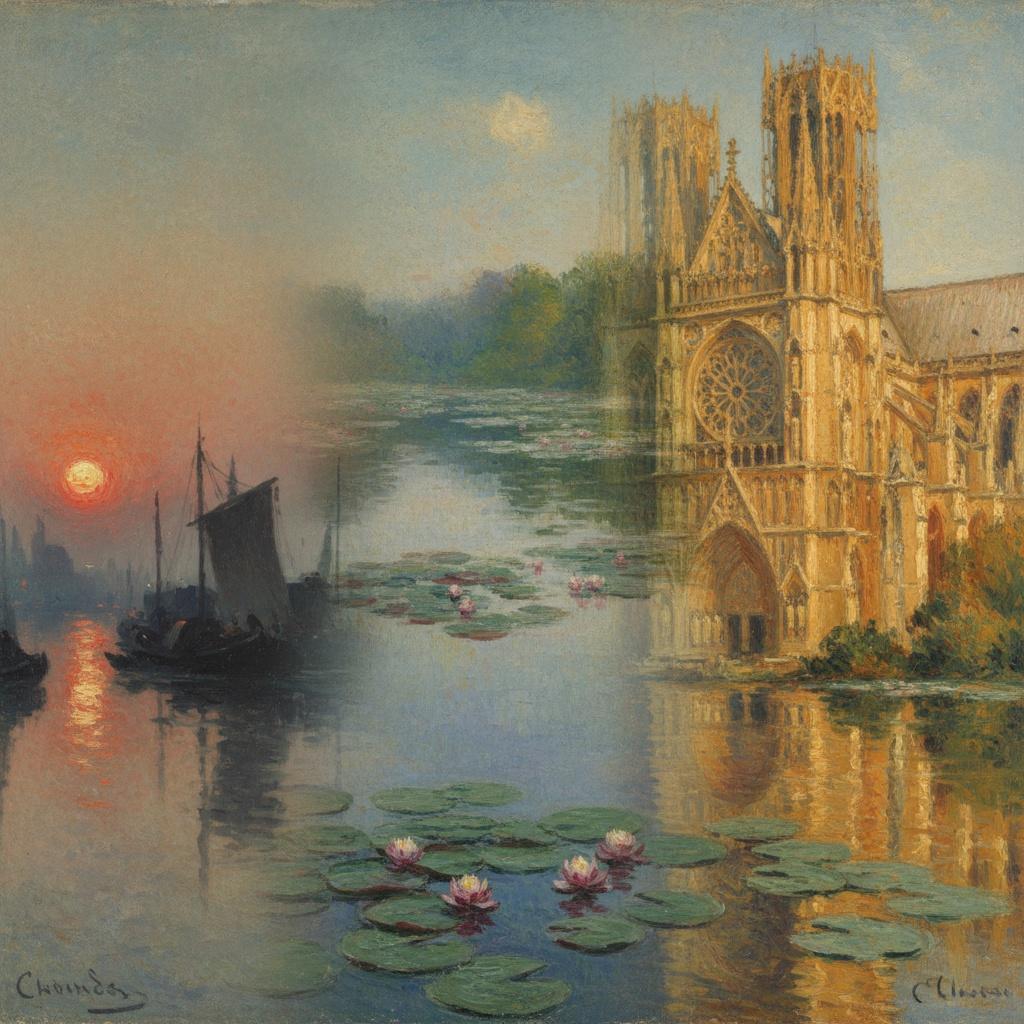
His palette was an exploration of the spectrum, moving far beyond the traditional use of black and brown for shadows. Instead, Monet discovered that shadows are composed of reflected light and complementary colors—deep blues, soft purples, and muted greens. In works such as his studies of haystacks or cathedrals, one can witness the sun’s progression through a single day, as he meticulously documented how the warmth of gold transitions into the cool, ethereal tones of dusk. This pursuit of light turned the canvas into a living, breathing entity, pulsating with the energy of the natural world.
A Visual Journey Through Masterpieces: From Lavacourt to Water Lilies
Tracing the evolution of Monet’s oeuvre is akin to walking through a garden of shifting seasons. In his earlier works, such as the serene landscapes of Lavacourt, we see the foundation of his Impressionist identity. These pieces capture the tranquil essence of the Seine near Paris, where the interplay between the river and the sky establishes a sense of profound peace. There is a rhythmic movement in these compositions, a gentle flow that mirrors the wandering paths of the infantry guards along the riverbanks, blending human presence with the vastness of nature.
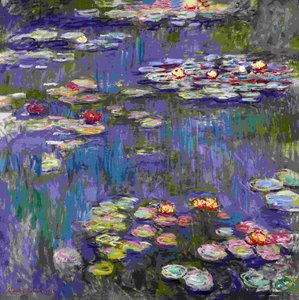
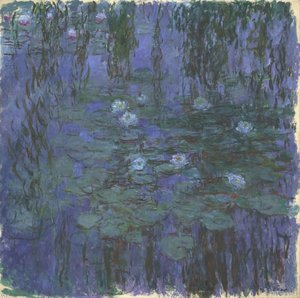
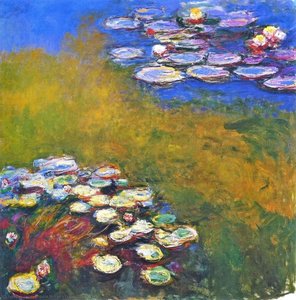
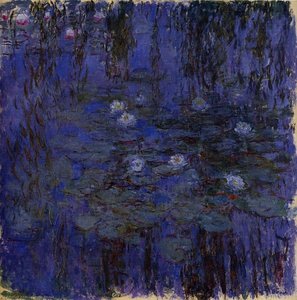
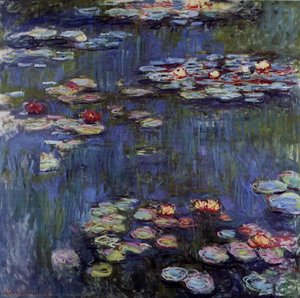
As his career matured, Monet’s focus shifted inward, toward the intimate sanctuary of his gardens at Giverny. The legendary Water Lilies series represents the pinnacle of this journey. Here, the horizon line often disappears entirely, leaving the viewer suspended in a dreamscape of floating flora and reflective surfaces. The subject matter becomes secondary to the experience of color and depth; the water is no longer just a surface but a mirror reflecting the infinite sky. Even in his more floral studies, such as Chrysanthemums, one can sense this late-career mastery, where the botanical detail is enveloped in an atmospheric haze that celebrates the sheer vitality of life.
The Alchemy of Texture: Analyzing Brushwork and Atmospheric Depth
Beyond the brilliance of his color, Monet’s work possesses a tactile, almost sculptural quality. His use of impasto—the thick, heavy application of paint—adds a three-dimensional dimension to the canvas. When observing his masterpieces closely, one realizes that the texture is as vital as the pigment. The ridges left by the brush catch the light in the room, creating actual shadows on the painting’s surface that change depending on the viewer's position.
< p>This physical depth works in tandem with his atmospheric perspective to create a sense of immense space. By layering translucent glazes over thicker strokes, he achieved a sense of moisture and air, making the atmosphere feel heavy with humidity or crisp with morning frost. This alchemy of texture and light allows the viewer to feel the breeze through the reeds or the warmth of the sun on a stone path, bridging the gap between the painted image and the sensory experience of the real world.Bringing the Masterpiece Home: Preserving the Legacy of Impressionism
The enduring allure of Monet lies in his ability to evoke emotion through the medium of light. His works do more than decorate a space; they transform the very atmosphere of a home, offering windows into a world of eternal beauty and tranquility. For the modern collector, appreciating this legacy means recognizing the importance of quality and authenticity in how these images are preserved.
Whether through the meticulous detail of a high-quality Giclée print or the breathtaking texture of a hand-painted oil reproduction, the goal remains the same: to honor the spirit of the original. To bring Monet into one's private collection is to invite a sense of timelessness and grace into the contemporary environment, ensuring that the dance of light and color continues to inspire generations to come.
At ArtsDot.com, we are dedicated to preserving this artistic heritage. Our studio specializes in creating museum-quality reproductions, from exquisite oil paintings that capture every tactile brushstroke to fine art prints designed for longevity. We believe that the magic of the Old Masters should be accessible to all, providing a bridge between the historical grandeur of Impressionism and the modern aesthetic of the discerning collector.