The Theater of War: Introduction to the Grandeur of Battle Painting
To stand before a great battle painting is to witness more than mere historical documentation; it is to enter a theater of human extremity. These canvases do not simply record the movements of infantry or the trajectory of cannon fire; they capture the very essence of conflict—the collision of courage and catastrophe, the roar of steel, and the heavy silence that follows the storm. For the historian and the art lover alike, these works serve as windows into eras long passed, offering a visceral connection to the moments that reshified borders and redefined nations.
The power of such works lies in their ability to transcend the clinical facts of warfare. While a textbook might provide dates, troop counts, and strategic outcomes, the painter provides the atmosphere. Through the deliberate use of light, shadow, and composition, artists transform the chaos of the battlefield into a structured narrative of human experience. We see not just the victory, but the cost; not just the triumph, but the profound vulnerability of the human spirit when caught in the gears of history.
Romanticism and Ruin: The Dramatic Intensity of the Napoleonic Era
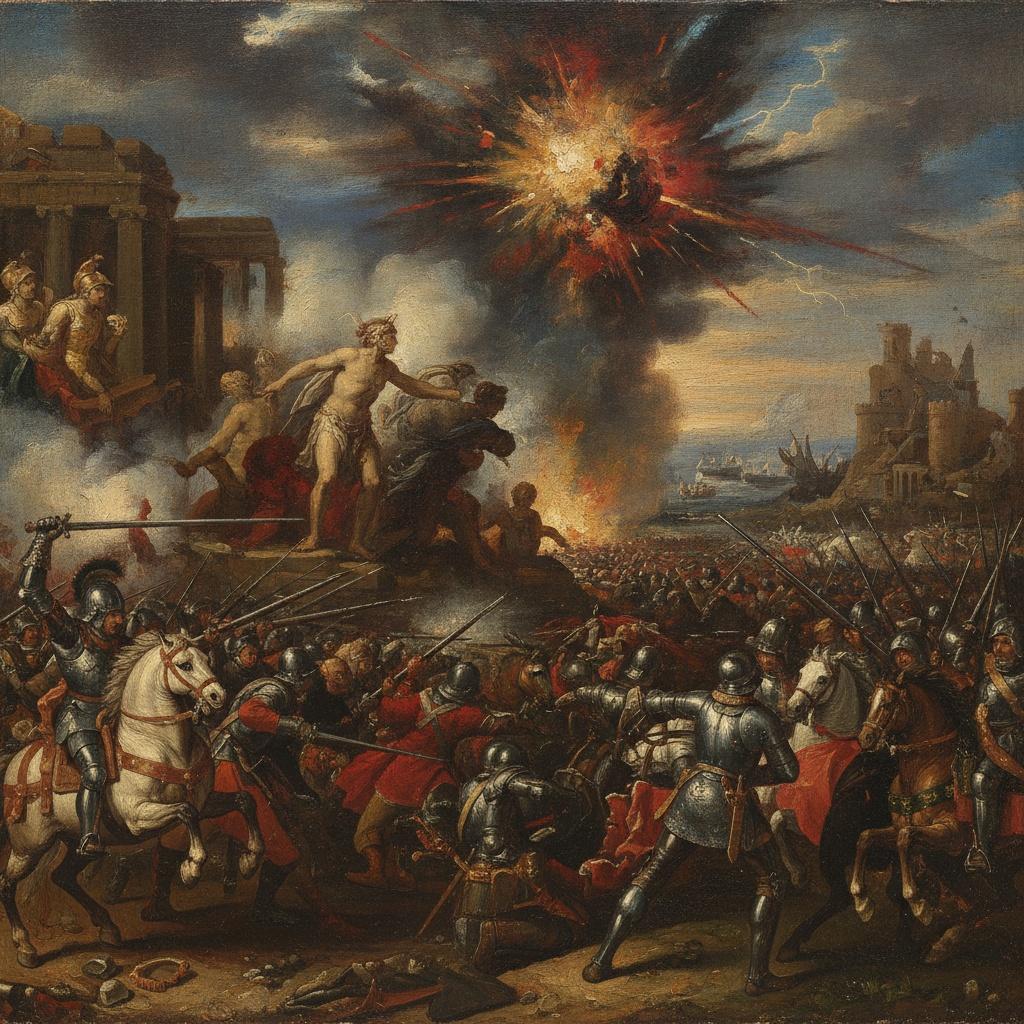
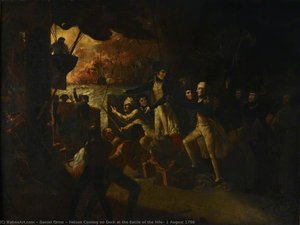
As we move into the late 18th and early 19th centuries, the art world underwent a seismic shift toward Romanticism, a movement that found its most potent expression in the smoke-filled naval engagements of the Napoleonic Wars. This era demanded an art of high drama, where the elements themselves seemed to participate in the struggle. A quintessential example is George Arnald’s The Destruction of L’Orient at the Battle of the Nile. In this breathtaking depiction of the 1798 naval battle, the viewer is not merely observing a ship in distress; they are immersed in a swirling vortex of fire and maritime devastation.
Arnald utilizes the Romantic style to emphasize the sublime—that terrifying beauty found in nature’s overwhelming power. The flickering orange light of the exploding vessel against the dark, turbulent waters creates a chiaroscuro effect that heightens the sense of impending doom. In these works, the destruction of a single ship becomes a metaphor for the fragility of empires. The brushstrokes are often energetic and fluid, mirroring the unpredictable movement of the sea and the sudden, violent bursts of gunpowder, ensuring that the viewer feels the heat of the flames and the spray of the salt air.
Heroism and Tragedy: Capturing the Fallen in Renaissance and Baroque Masterpieces
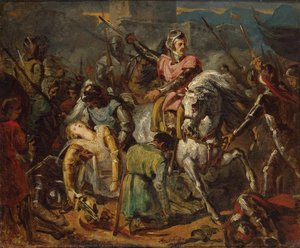
Before the sweeping landscapes of Romanticism took hold, the traditions of the Renaissance and Baroque periods focused heavily on the individual—the singular hero or the tragic martyr. These paintings often centered on a pivotal moment of death or sacrifice, using the human form to communicate profound theological and political truths. Ary Scheffer’s Death of Gaston de Foix in the Battle of Ravenna serves as a haunting bridge between these eras, evoking the tragedy of the Renaissance through a lens of Romantic intensity.
In such masterpieces, the composition is often built around a central, fallen figure, drawing the eye to the physical manifestation of loss. The use of swirling brushstrokes and dramatic lighting does not just highlight the wound or the expiring breath; it elevates the soldier's death to a level of mythic significance. These works remind us that behind every grand strategic movement in history lies a human story of individual bravery and sudden, irreversible end. The artistry lies in the ability to find grace within the grotesque, turning a scene of carnage into a meditation on mortality and honor.
National Identity on Canvas: Realism and the Spirit of Historical Conflict
As art evolved toward Realism, the focus shifted from the mythic hero to the collective identity of a people. War paintings became essential tools for forging national consciousness, depicting battles that were foundational to a country's heritage. John Hassall’s Bannockburn is a masterful example of this tradition, capturing the weight of Scottish history through a lens of profound realism. Here, the painting serves as a monument to endurance and the struggle for sovereignty.
These works often eschew the purely theatrical in favor of a more grounded, gritty depiction of conflict. The emphasis is placed on the textures of armor, the mud of the terrain, and the weary faces of the combatants. By focusing on the tangible reality of the battlefield, artists like Hassall allow the viewer to connect with the historical event as a lived experience rather than a distant legend. This style of painting fosters a deep sense of heritage, turning the canvas into a repository of collective memory and national pride.
The Artist's Eye: Techniques Used to Convey Chaos, Motion, and Emotion
The technical mastery required to depict a battle is immense, as the artist must balance the need for legible storytelling with the inherent disorder of war. To achieve this, painters employ several sophisticated techniques. One of the most vital is the management of compositional focal points; even in a scene crowded with hundreds of figures, the eye must be guided through the chaos toward moments of emotional significance.
Artists also utilize impasto—the thick, textured application of paint—to create physical depth and movement. In scenes of heavy cavalry charges or artillery fire, these raised textures can mimic the spray of earth or the impact of a strike. Furthermore, the strategic use of color temperature plays a crucial role; warm, aggressive reds and oranges are often pitted against cold, receding blues and greys to create a sense of atmospheric tension. Through the careful manipulation of light and pigment, the artist breathes life into the stillness of the canvas, making the frozen moment feel as though it is still unfolding before our eyes.
Preserving the Legacy: Bringing Historical Grandeur into the Modern Home
In an age dominated by digital imagery, there remains an irreplaceable value in the physical presence of a hand-painted masterpiece. To possess a reproduction of such historical weight is to invite a conversation with the past into one's contemporary space. Whether it is a large-scale mural that transforms a hall or a meticulously detailed oil on canvas that anchors a study, these works provide a sense of permanence and intellectual depth to modern interiors.
At ArtsDot.com, we believe that the grandeur of art history should be accessible to all. Our mission is to preserve the soul of these epic narratives through authentic, hand-painted reproductions. Each piece is a labor of passion, executed by master artists who specialize in the very genres—maritime, battle, and historical realism—that define these legendary works. By bringing these powerful scenes into your home, you are not just decorating a wall; you are participating in the ongoing legacy of human creativity and the eternal celebration of history's most profound moments.