The Impressionist Vision: Claude Monet and the Language of Light
To step into the world of Claude Monet is to abandon the rigid boundaries of form and embrace the ephemeral dance of light upon a surface. The Impressionist movement, of which Monet was the preeminent architect, sought not to replicate the physical world with photographic precision, but to capture the impression—the fleeting sensation of a moment caught between a breath and a heartbeat. In his pursuit of this atmospheric truth, Monet turned his gaze toward the water, finding in its undulating surface a canvas capable of reflecting the infinite complexities of the sky.
The mastery of Monet lies in his ability to translate the intangible into the tangible through a revolutionary use of color and brushwork. Rather than relying on traditional black pigments for shadows, he utilized deep violets, blues, and emerald greens, allowing the colors to vibrate against one another. This technique creates a sense of luminosity that feels as though the light is emanating from within the canvas itself. For the true art enthusiast, observing these works is an exercise in perception, a lesson in how the interplay of sun and shadow can transform a simple pond into a profound meditation on existence.
Reflections of Giverny: Exploring the Evolution of the Water Lily Series
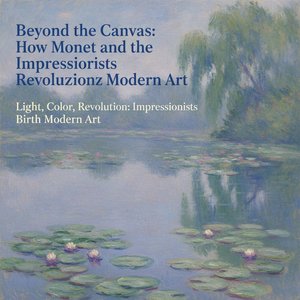
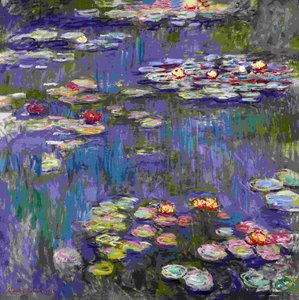
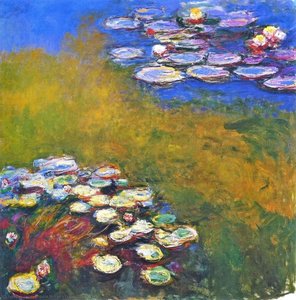
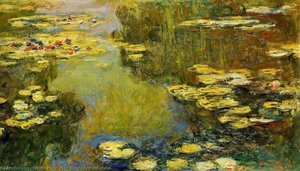
The gardens at Giverny served as more than just a setting; they were Monet’s laboratory, his sanctuary, and his greatest muse. As the years progressed, his fascination with the water lilies evolved from structured landscapes into immersive, almost abstract experiences. In his earlier works, such as those from the turn of the century, one can still discern the edges of the pond and the distinct shapes of the lily pads. There is a sense of place, a groundedness in the lush greenery and the rhythmic patterns of the flora.
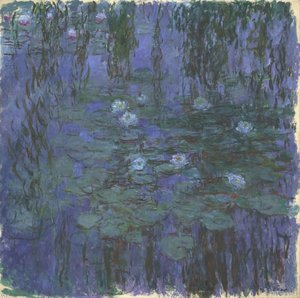
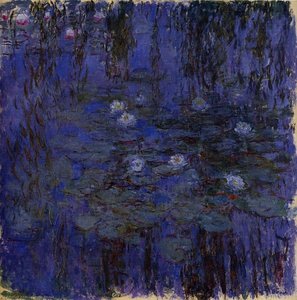
However, as Monet entered his later years, the distinction between water, sky, and leaf began to dissolve. His late-period masterpieces, often characterized by much larger scales, move toward a state of pure abstraction. The reflections of clouds and the shifting hues of twilight become indistinguishable from the lilies themselves. This evolution represents a spiritual journey, where the artist moves away from the observation of external reality toward an internal, emotional landscape. To view these later works is to lose oneself in a sea of color, where the horizon vanishes and only the rhythmic pulse of nature remains.
A Symphony of Color: The Technical Mastery Behind the Water Lily Masterpieces
The technical brilliance of the water lily series is found in the meticulous application of paint. Monet utilized impasto techniques, layering thick strokes of oil to create a physical texture that mimics the organic ripples of water. This tactile quality ensures that as light hits the painting from different angles in a room, the artwork itself appears to change, much like the real pond at Giverny. The depth of tone is achieved through a sophisticated layering process, where translucent glazes are applied over more opaque underpaintings to create a sense of aqueous depth.
Every stroke serves a purpose in this chromatic symphony. Soft, feathered edges suggest the movement of a gentle breeze, while sharper, more concentrated dabs of pigment highlight the sun-drenched centers of the blossoms. This careful balance between precision and spontaneity is what gives the works their life. The artist does not merely paint flowers; he paints the way light interacts with moisture, air, and organic matter, creating a multidimensional experience that transcends the two-dimensional plane of the canvas.
The Emotional Resonance of Serenity: Why Water Lilies Endure in Modern Interiors
In an era defined by rapid movement and digital noise, the enduring appeal of Monet’s water lilies lies in their ability to provide a sanctuary of stillness. These paintings possess a unique psychological quality; they act as visual anchors that invite contemplation and peace. The soft palettes and flowing compositions have a restorative effect on the viewer, making them much more than mere decoration. They are windows into a world where time slows down, offering a respite from the complexities of modern life.
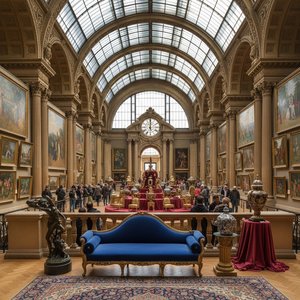
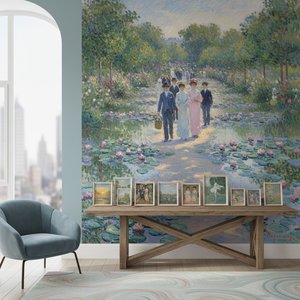
Integrating such works into a contemporary living space allows for a sophisticated dialogue between historical grandeur and modern minimalism. The organic shapes of the lilies soften the hard lines of modern architecture, while the vibrant yet soothing color palettes can complement a wide variety of interior aesthetics. Whether placed in a quiet study or as a focal point in a grand salon, these masterpieces evoke a sense of timelessness, reminding us of the enduring beauty found in the natural world.
Preserving the Impressionist Legacy: Bringing Timeless Water Lilies into the Contemporary Home
Bringing the legacy of Giverny into one's personal collection is an act of cultural stewardship. While the original masterpieces reside in the hallowed halls of museums, the art of the hand-painted reproduction allows enthusiasts to live alongside these icons. A true oil reproduction, crafted by artists trained in academic traditions, captures the soul of the original—the visible brushstrokes, the rich texture of the canvas, and the authentic depth of color that a mere print can never replicate.
At ArtsDot.com, we believe that fine art should be accessible to those who cherish its history. Our commitment to excellence ensures that every reproduction is a labor of passion, utilizing 100% cotton canvas and professional-grade oils to ensure longevity. By choosing a hand-painted piece, you are not just acquiring an image; you are inviting a piece of art history into your home, preserving the light, color, and serenity of Monet’s vision for generations to come.