The Alchemy of Azure: The Rare and Precious Origins of Blue Pigments
UltramarineUltramarine is a deep blue pigment historically derived from lazurite, the principal component of the metamorphic rock lapis lazuli. The pigment was produced by grinding the stone and undergoing a complex washing process to isolate the blue mineral, ...
For millennia, the artist’s palette was a landscape defined by the earth—rich ochres, deep umbers, and warm siennas were readily available from the very soil beneath our feet. Yet, blue remained an elusive phantom, a spectral presence that was desired yet often beyond reach. Unlike the terrestrial pigments of the ancient world, true blue was a luxury born of distance and immense difficulty. The most coveted of these was
ultramarine, a pigment derived from the semi-preprising stone
lapis lazuli. Sourced from the remote, rugged mines of Afghanistan, this precious material underwent a complex, laborious washing process to isolate its brilliant blue minerals. Its name,
ultramarinus, literally translates to "beyond the sea," a testament to the vast trade routes through Venice that brought this celestial hue to the masters of Europe. To possess ultramarine was not merely to possess a color, but to wield a symbol of immense wealth and global connection.
Celestial Symbolism: Exploring Blue as a Vessel for Divinity, Royalty, and Peace
Beyond its material cost, blue has always carried a profound spiritual weight, acting as a bridge between the terrestrial and the divine. In the ancient Egyptian civilization, the synthesis of
Egyptian blue—a mixture of ground limestone, sand, and copper—was an act of profound religious significance. This hue was inextricably linked to the life-giving power of the Nile and the eternal promise of rebirth, adorning tombs and amulets as a shield of divine protection. As art evolved, so too did the color’s symbolic vocabulary. Blue became the language of the heavens, the infinite sky, and the deep, mysterious ocean. It transitioned from the sacred iconography of the ancient world to the heraldry of royalty, eventually settling into the human psyche as a symbol of
serenity, stability, and wisdom. In the hands of a master, a wash of blue does more than depict water or air; it invites the viewer into a state of contemplation and profound peace.
A Chromatic Journey: From Renaissance Ultramarine to the Impressionist Sky
 Pesaro Altarpiece (predella)
Giovanni Bellini’s Pesaro Altarpiece (Predella): A Window Into Venetian Faith Giovanni Bellini's *Pesaro Altarpiece* (predella), completed around 1471-1474, stands as a cornerstone of Early Renaissance art in Venice—a testament to the artistic fervor...
The history of fine art is, in many ways, a history of the evolution of blue pigments. During the Early Renaissance, masters such as
Giovanni Bellini pushed the boundaries of texture and light through pioneering techniques. In his
Pesaro Altarpiece, Bellini utilized the expensive lapis lazuli alongside
smalt—a brilliant cobalt glass pigment imported from Bohemia—to create luminous, ethereal depths that seemed to glow from within the canvas. As chemistry advanced, new horizons opened. The discovery of
Prussian blue in the early 18th century and the later stability of
cobalt blue allowed artists to move away from the preciousness of stone toward a more expressive, painterly freedom. This progression paved the way for the Impressionists and modernists, from the intense, emotive depths of Picasso to the atmospheric explorations of contemporary digital alchemists like Ryu Bee-Ho, who uses blue to weave tapestries of memory and mood.
Curating Serenity: Integrating the Timeless Allure of Blue into Sophisticated Interiors
 Gemeente Musea
A Legacy Etched in Blue: The Soul of Delft To step into the Gemeente Musea Delft is to wander through a living tapestry of Dutch identity, where the air seems thick with the scent of history and the quiet dignity of the Golden Age. Located in the hea...
For the discerning collector or interior designer, the strategic use of blue offers an unparalleled opportunity to curate atmosphere. A single, large-scale masterpiece in deep azure can serve as the soulful anchor of a grand hall, while a
multi-panel arrangement—splitting a serene seascape across three or five canvases—can transform a wide architectural space into a window of tranquility. Blue possesses a unique ability to expand a room, providing a sense of airy openness even in more intimate settings. Whether through the delicate, rhythmic elegance of a blue-and-white porcelain-inspired motif or the bold, textured
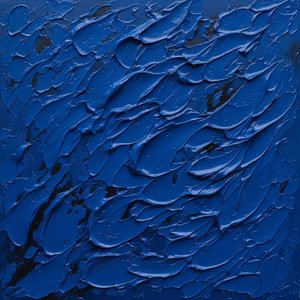
impasto of a hand-painted sky, integrating these shades allows for a sophisticated interplay of light and calm, creating environments that are both prestigious and profoundly restorative.
The Art of Preservation: Maintaining the Luminous Depth of Fine Art
To ensure that the vibrant blues of a masterpiece endure for generations, one must respect the chemistry of the medium. The longevity of fine art relies on meticulous craftsmanship, from the use of flexible gesso to prevent cracking, to the application of a protective
Damar varnish that shields the surface from atmospheric pollutants. At
ArtsDot.com, we honor this heritage of excellence in every commission. Our artists, holding degrees from prestigious Fine Arts academies, specialize in creating hand-painted oil reproductions that capture the true tactile depth and visible brushstrokes of the Old Masters—a quality that no digital print can replicate. Whether you are seeking to transform a personal photograph into a 17th-century masterpiece or looking for a bespoke architectural mural, our service provides an unparalleled experience of authenticity and prestige. From our professional digital mockups to our global, white-glove delivery, we ensure that your investment in the timeless allure of blue remains as luminous as the day it left the studio.