
The Rebellion Against Tradition: The Birth of the Pre-Raphaelite Brotherhood
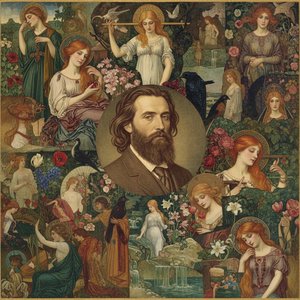
In the mid-19th century, the rigid corridors of the British Royal Academy felt increasingly stifling to a group of young, fervent visionaries. Driven by a profound dissatisfaction with the formulaic, dark, and overly academic compositions of their predecessors, a small circle of artists—including figures like Frederic George Stephens—sought to stage a revolution. They looked backward to move forward, finding inspiration in the era before Raphael, where art possessed a raw, unadulated sincerity. This was the genesis of the Pre-Raphaelite Brotherhood, a movement defined not merely by its rejection of contemporary trends, but by its radical commitment to truth.
This rebellion was more than an aesthetic choice; it was a moral imperative. The Brotherhood sought to strip away the artificiality of "slosh" (as they disparagingly referred to the heavy-handed techniques of the Academy) and replace it with a devotion to the authentic. By looking toward the early Renaissance, these artists aimed to recapture a sense of spiritual purity and meticulous observation. Their mission was to reconnect the viewer with the tangible world, ensuring that every leaf, every fold of fabric, and every glint of light served as a testament to the divine complexity of nature itself.
A Symphony of Color: The Pursuit of Luminous Detail and Naturalism
To witness a Pre-Raphaelite canvas is to experience a sudden, breathtaking clarity. Unlike the muted, somber palettes that dominated Victorian salons, the Brotherhood embraced a luminous intensity that seemed to radiate from within the canvas. They pioneered a technique of painting on a wet white ground, which allowed light to pass through the layers of pigment and reflect back, creating a brilliance reminiscent of stained glass. This method ensured that colors remained vibrant, saturated, and startlingly real.
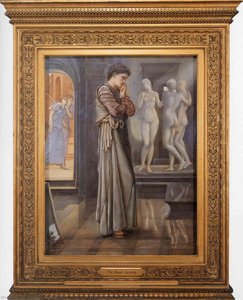
This pursuit of naturalism demanded an almost scientific level of precision. There was no room for vague shadows or obscured details; every botanical specimen and textured surface was rendered with obsessive care. In works such as those by Edward Burne-Jones, one can observe the intricate interplay of light and shadow that defines the physical presence of the subject. This dedication to detail transformed the canvas into a window through which the viewer could perceive the world in high definition, long before the advent of modern photography. It was a celebration of the minute, where the smallest petal held as much narrative weight as the central protagonist.
Myth, Legend, and Literature: The Narrative Soul of Pre-Raphaelite Masterpieces
Beyond the technical mastery of light and color, the soul of the Pre-Raphaelite movement resided in its profound literary and mythological depth. These artists were deeply embedded in the cultural zeitgeist of their time, drawing heavily from the works of Shakespeare, Keats, and Tennyson. Their paintings were rarely mere portraits; they were epic poems captured in oil. Themes of tragic romance, chivalry, and ancient myth provided a rich tapestry of symbolism that invited deep contemplation and intellectual engagement.
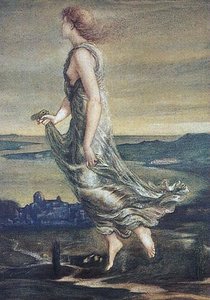
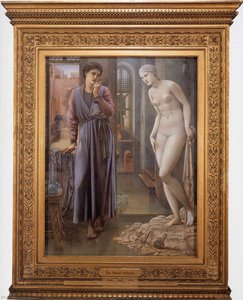
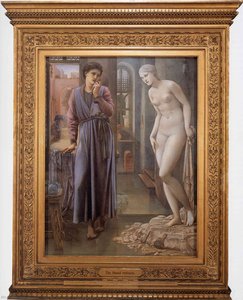
Consider the evocative power found in pieces like The Hand Refrains or the ethereal beauty of Phyllis by Burne-Jones. These works do not simply depict characters; they inhabit legends. The use of mythological archetypes allowed the artists to explore universal human emotions—longing, betrayal, and transcendence—through a lens of timeless beauty. Every element within the composition, from the specific choice of a flower to the positioning of a hand, acted as a symbolic language, inviting the enthusiast to decode the layers of meaning embedded within the romanticized scenes.
The Aesthetic Legacy: From Victorian Romanticism to Modern Visual Influence
The ripples of the Pre-Raphaelite movement extended far beyond the Victorian era, leaving an indelible mark on the trajectory of Western art. Their emphasis on decorative beauty and symbolic richness laid the groundwork for the later Aesthetic Movement, influencing everything from interior design to the Arts and Crafts movement. The Brotherhood’s ability to blend high art with a sense of ornamental grace redefined how the public perceived the relationship between fine art and the lived environment.
Even in our contemporary visual culture, the echoes of their romanticism remain palpable. The movement's focus on hyper-detailed imagery and evocative storytelling continues to inspire modern illustrators, filmmakers, and digital artists who seek to evoke emotion through visual splendor. The Pre-Raphaelite legacy is a testament to the enduring power of beauty and the human desire to find profound meaning within the intricate details of our existence.
Preserving the Vision: Bringing Pre-Raphaelite Splendor into the Contemporary Home
In an age of rapid digital consumption, there remains a profound longing for the tactile, the permanent, and the magnificent. The allure of the Pre-Raphaelite style—its depth, its texture, and its unapologetic romanticism—offers a sanctuary for the modern collector. Bringing such works into a contemporary space allows for a dialogue between history and modernity, creating an atmosphere of sophistication and timelessness.
At ArtsDot.com, we specialize in honoring this illustrious legacy through our meticulous hand-painted reproductions. We understand that a true enthusiast seeks more than just a visual likeness; they seek the "soul" of the original. Our master artists utilize traditional techniques, applying multiple layers of oil paint on heavy-duty cotton canvas to recreate the palpable texture and luminous depth characteristic of the Brotherhood’s masterpieces. Whether through a breathtaking large-scale mural or a carefully curated Giclée print, we provide the means to transform your personal space into a gallery of historical splendor, ensuring that the vibrant spirit of the Pre-Raphaelites continues to inspire generations to come.