
The Aesthetics of Decay: The Romantic Allure of Roman Ruins
To gaze upon the fractured columns and weathered pediments of ancient Rome is to witness a profound dialogue between human ambition and the inexorable passage of time. There is a haunting, melancholic beauty found in the skeletal remains of once-mighty structures, where the triumph of marble meets the quiet persistence of nature. This aesthetic of decay does not merely signify loss; rather, it celebrates a transformative state of being, where the distinction between man-made permanence and organic erosion begins to blur. For the connoisseur of classical history, these ruins serve as poignant memento mori, reminding us that even the most formidable empires are subject to the rhythmic cycles of rise and fall.
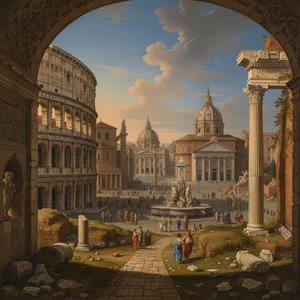
In the realm of fine art, this fascination with ruinous grandeur has long been a cornerstone of emotional expression. The sight of ivy reclaiming a triumphal arch or sunlight filtering through a collapsed dome evokes a sense of nostalgia for an era of unparalleled architectural prowess. It is within this tension—between the memory of what was and the reality of what remains—that art finds its most evocative subject matter. By capturing these fragments, artists invite us to contemplate the ephemeral nature of glory and the enduring spirit of classical civilization.
Capriccio and Veduta: Reimagining Antiquity through Baroque Vision
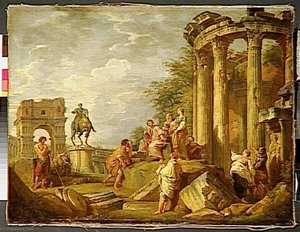
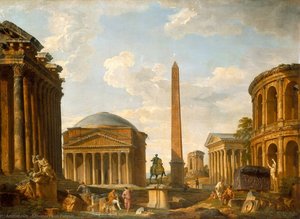
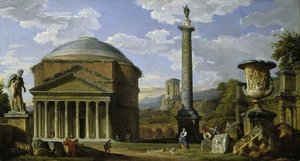
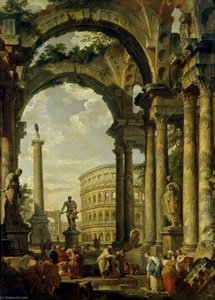
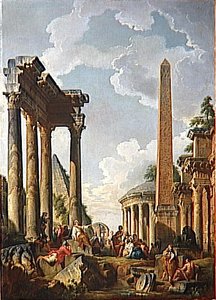
The evolution of architectural painting reached a pinnacle during the Baroque period, particularly through the ingenious genres of veduta and capriccio. While a traditional veduta sought to provide an almost topographical accuracy of a cityscape, the capriccio ventured into the realm of the imaginative. This latter style allowed masters like Giovanni Paolo Pannini to weave together disparate architectural elements—the Pantheon, the Arch of Janus, or the Temple of Vesta—into a singular, fantastical composition. These were not merely landscapes; they were theatrical stages where history and fantasy performed a seamless duet.
Pannini’s works, such as his stunning 1737 depictions of Roman ruins, exemplify this mastery of architectural fantasy. Through the capriccio, the artist could manipulate perspective and scale to amplify the sense of awe, creating vistas that felt more monumental than reality itself. By blending recognizable landmarks with invented structural flourishes, these paintings offered the viewer a curated experience of Rome—a vision of antiquity that was simultaneously grounded in archaeological truth and elevated by artistic whim. This synthesis allowed the Baroque era to preserve the grandeur of the past while reimagining it for a contemporary audience hungry for spectacle.
Light, Shadow, and Stone: The Technical Mastery of Architectural Painting
The true soul of an architectural masterpiece lies in its technical execution, specifically in the manipulation of light and shadow to define form and texture. To paint stone is to paint history; it requires a sophisticated understanding of how sunlight interacts with porous travertine, smooth marble, and weathered brick. Baroque masters utilized dramatic chiaroscuro to breathe life into these inanimate objects, using deep, velvety shadows to create depth and brilliant highlights to suggest the warmth of the Mediterranean sun. This interplay of light does more than illuminate; it sculpts the ruins, giving weight and presence to every fallen fragment.
Beyond lighting, the tactile quality of the medium plays a vital role in conveying the ruggedness of antiquity. The application of paint—the visible brushstrokes and the deliberate layering of pigments—mimics the very textures of the subject matter. When an artist employs techniques like impasto, the physical thickness of the oil on canvas can replicate the coarse surface of ancient masonry or the delicate cracks in a weathered statue. This technical rigor ensures that the viewer does not merely see the ruins but feels their immense scale and historical gravity through the very substance of the art itself.
From Grandeur to Nostalgia: The Emotional Resonance of Classical Fragments
Beyond the structural and technical, the depiction of Roman ruins serves a deeper psychological purpose: it acts as a bridge between the monumental past and the introspective present. There is an inherent emotional resonance in viewing a fragment of a once-great temple; it stirs a sense of reverence for the intellect and artistry of our ancestors, while simultaneously evoking a gentle sadness for the inevitable erosion of all things. This duality creates a complex emotional landscape for the observer, oscillating between admiration for human achievement and a contemplative acceptance of mortality.
These fragments of history function as vessels for collective memory. As we observe the broken statues or the hollowed-out basilicas in fine art, we are participating in a shared cultural mourning and celebration. The ruins become symbols of resilience—proof that even in decay, the essence of greatness persists. This emotional depth is what transforms a mere landscape painting into a profound philosophical statement, making the study of classical fragments an essential pursuit for those seeking to understand the human condition through the lens of historical continuity.
Preserving the Eternal: Bringing Historical Masterpieces into the Modern Interior
In our contemporary era, characterized by rapid change and digital ephemeralness, there is a growing desire to anchor our living spaces with the weight of history. Integrating fine art reproductions of Roman ruins into a modern interior offers more than mere decoration; it provides a sense of permanence and intellectual depth. A large-scale oil painting of a Baroque capriccio can serve as a powerful focal point, commanding attention and inviting quiet reflection within a sophisticated home or professional gallery.
To truly honor these historical themes, one must look toward the quality of the medium. The choice between a digital print and a hand-painted oil reproduction is significant. A true oil reproduction, with its palpable texture and rich tonal range, captures the "soul" of the original masterwork in a way that flat prints cannot. By selecting pieces that feature visible brushstrokes and the authentic depth of layered oils, collectors can recreate the atmosphere of an ancient museum within their own walls. In doing so, we do not just decorate; we curate a legacy, ensuring that the echoes of Rome continue to resonate through the centuries.
ArtsDot.com stands at the intersection of tradition and accessibility, dedicated to bringing the majesty of the Old Masters into the modern home. With a global legacy spanning decades, our mission is to provide meticulously hand-painted oil reproductions that honor the academic excellence of fine art. Whether you seek to transform a personal photograph into a Renaissance-style portrait or wish to adorn your walls with the architectural grandeur of Pannini, our master artists utilize time-honored techniques on premium cotton canvas to ensure every piece is a lasting testament to human creativity.