The Eternal Allure of Portraiture: Capturing the Soul of a Legacy
There exists a profound, almost spiritual distinction between a mere photograph and a true portrait. While a photograph captures a fleeting millisecond of light, a portrait seeks to arrest time itself, distilling the very essence of a human soul onto canvas. Throughout history, the art of portraiture has served as the ultimate vessel for legacy. From the neoclassical grandeur seen in Charles Smith’s Portrait of an Unnamed Member of the Smith Family, where dramatic lighting breathes life into shadows, to the intimate, meticulous detail found in Ammi Phillips’ 18th-century works, the goal has always been the same: to transcend the physical and touch the eternal.
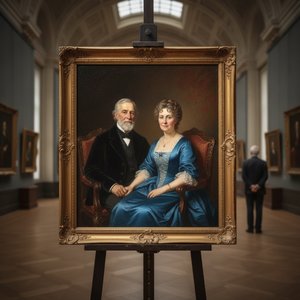
To gaze upon a portrait is to engage in a silent dialogue with the past. The subtle curve of a lip, the depth of an eye, or the dignified posture of a subject in formal attire—as seen in the striking Portrait of Mr Dilbee—conveys much more than biological accuracy. It conveys character, status, and emotion. For the true art enthusiast, these works are not merely decorations but ancestral anchors that ground a family's history within the grand tapestry of human achievement.
From Snapshot to Masterpiece: The Art of Bespoke Oil Commissions
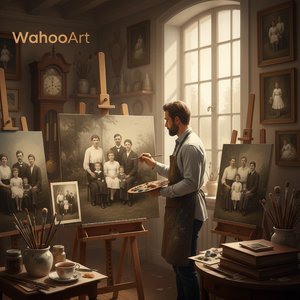
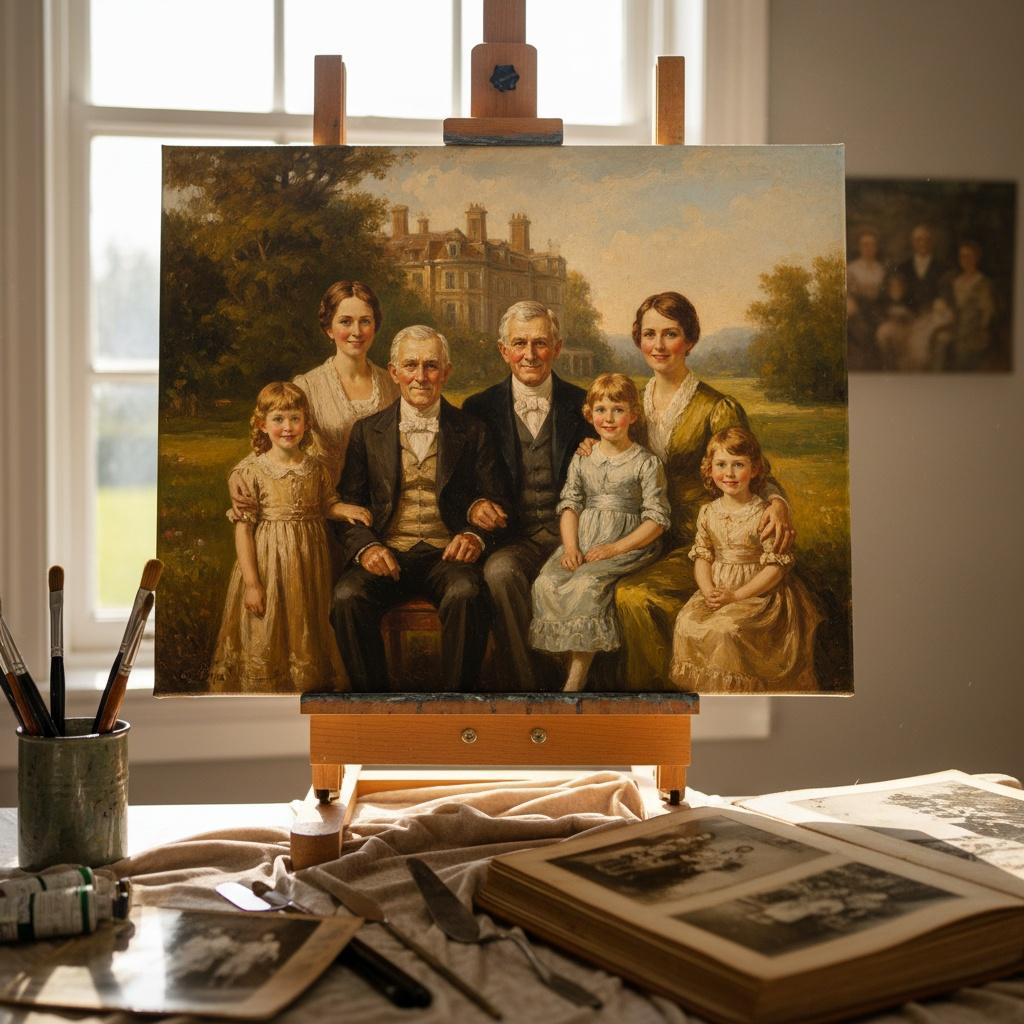
In our modern era, we are surrounded by an infinite sea of digital imagery, yet these ephemeral files often lack the weight of permanence. The transition from a contemporary snapshot to a bespoke oil commission is an act of alchemy, turning the mundane into the magnificent. This process begins with a vision—the desire to take a cherished family moment and elevate it through the disciplined hand of a master painter.
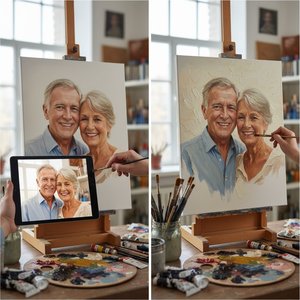
The journey of a custom commission is one of meticulous collaboration. It is not simply about replication, but about interpretation. A skilled artist does not merely copy pixels; they reimagine the subject. Through professional digital mockups, clients can witness the initial composition, allowing for adjustments in light, mood, and even period shifts. One might choose to have a modern wedding portrait reimagined with the soft, muted tones of George Chinnery’s Portrait of a Lady, or perhaps request a more dramatic, impasto-heavy style reminiscent of Van Gogh. This bespoke approach ensures that the final work is not just a painting, but a personalized masterpiece that resonates with the unique spirit of the subject.
The Alchemist's Touch: Understanding the Layers and Texture of Hand-Painted Art
The true distinction of a handmade oil reproduction lies in its tactile dimension—the "living" quality that a flat print can never replicate. When an artist applies paint to heavy-duty cotton canvas, they are building a landscape of texture. This is achieved through the painstaking application of five to ten layers of premium pigments, a process known as glazing and layering, which creates a sense of three-dimensional depth.
In these works, one can observe the impasto technique, where thick, visible brushstrokes catch the light, creating shadows within the paint itself. This physical presence is what allows a portrait to breathe. The use of specific oils, such as safflower for whites to prevent yellowing, and the final application of a protective Damar varnish, ensures that the brilliance of the colors remains untarnished. Unlike the uniform surface of a Giclée print, a hand-painted reproduction offers a sensory experience; it is an object of substance that invites the viewer to appreciate the very labor and passion embedded in every stroke.
Curating Your Heritage: Integrating Custom Portraits into Sophisticated Interiors
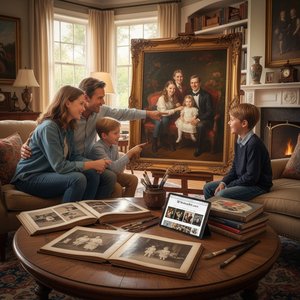
Integrating fine art into a home requires more than mere placement; it requires curation. A custom portrait acts as a focal point, an architectural element that can define the character of a room. For those with expansive spaces, such as grand staircases or long galleries, the "multi-panel" trend offers a contemporary way to display heritage. Splitting a single, sweeping family scene across three, four, or even five panels creates a rhythmic, modern aesthetic that commands attention.
Whether it is a large-format mural that transforms a ceiling into a frescoed sanctuary or a single, elegantly framed piece in a gold-leaf frame, the art must harmonize with the interior's color palette. Professional advisors can even assist by digitally placing proposed artworks onto photographs of your actual walls, ensuring that the scale and tonal balance are perfect before the first drop of paint ever touches the canvas. The goal is to create an environment where history and modern luxury coexist seamlessly.
Preserving the Present: The Science of Longevity in Fine Art Reproductions
A masterpiece is a multi-generational investment, and its preservation is a matter of scientific precision. True fine art must withstand the passage of decades without losing its luster. This longevity is rooted in the chemistry of the materials used. From the use of acid-free matting to prevent moisture damage, to the selection of 12-color pigment-based inks for Giclée prints that are rated to last up to a century, every detail is engineered for permanence.
To protect these treasures, one must respect the delicate balance of light and atmosphere. Avoiding direct sunlight and ensuring the use of robust, braced stretcher bars prevents the warping or fading that plagues lesser works. When we commit to turning our memories into oil paintings, we are not just commissioning a service; we are participating in a tradition of preservation. We are ensuring that the faces of our loved ones, captured in the rich hues and dramatic lights of the Old Masters, will remain as vibrant for our descendants as they are for us today.
At ArtsDot.com, we specialize in this delicate intersection of memory and mastery. From custom photo-to-oil transformations to museum-quality reproductions, our mission is to make the grandeur of art history accessible to every home, ensuring that your most precious moments are forever etched in the timeless language of fine art.