Introduction
To step into the world of Early Netherlandish painting is to enter a realm where light does not merely illuminate a scene, but seems to breathe life into it. In the fifteenth century, across the prosperous merchant hubs of Flanders and the Burgundian Netherlands, a profound revolution was unfolding—one that traded the stylized abstractions of the Middle Ages for an almost miraculous devotion to reality. This was an era defined by the mastery of oil paint, a medium that allowed artists to capture the translucent glow of a pearl, the heavy weight of velvet, and the quiet, spiritual depth found in a single teardrop.
These masters—Jan van Eyck, Rogier van der Weyden, and their contemporaries—did not simply paint subjects; they constructed windows into a meticulously observed universe. Through layers of glazes so thin they appear like mist, they achieved a level of detail that remains breathtaking even centuries later. Their work was a delicate dance between the earthly and the divine, where every domestic object, from a brass basin to a flickering candle, carried a hidden, symbolic weight, inviting the viewer into a state of quiet contemplation.
<- Unrivaled Precision: The birth of oil glazing techniques that allowed for unprecedented depth and luminosity.
- Symbolic Richness: A visual language where every texture and shadow tells a story of faith and human experience.
- Cultural Legacy: The foundation of Northern European realism that would influence generations of artists, from the Renaissance masters to modern collectors.
As we wander through this curated selection, we invite you to look beyond the surface. We have selected ten definitive masterpieces that serve as the pillars of this movement—works that continue to captivate the soul with their tactile beauty and emotional resonance. Prepare to encounter the textures, the shadows, and the enduring brilliance of the Northern Renaissance.
Portrait of Giovanni Arnolfini and his Wife - Jan van Eyck
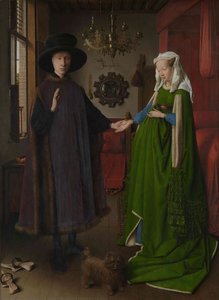 Portrait of Giovanni Arnolfini and his Wife - Jan van Eyck
In Jan van Eyck’s 1434 masterpiece, the lines of Portrait of Giovanni Arnolfini and his Wife aren’t merely drawn; they are choreographed . This is not a static composition; it is a dance frozen in time , where every translucent glaze of oil paint serves to capture the quiet pulse of 15th-century Bruges. Van Eyck utilizes revolutionary oil techniques to render the heavy velvet of the man’s gown and the luminous pearls of the woman with an almost photographic precision that defines the Early Netherlandish movement.
As you move through this sacred domestic space, the symbolism unfolds like a whispered secret: the small dog embodying fidelity, the oranges signaling wealth, and the convex mirror reflecting a divine witness. The light, streaming from a hidden window, breathes life into the textures of fur and brass, creating a profound sense of spatial volume. This painting does more than depict a couple; it invites your walls to breathe rhythm and harmony. It remains a cornerstone of art history, proving that true mastery lies in making the intricate details of earthly life feel like a celestial arrangement.
The Ghent Altarpiece: Adoration of the Lamb - Jan van Eyck
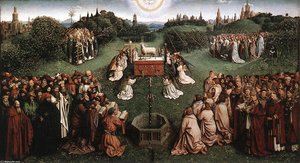 The Ghent Altarpiece: Adoration of the Lamb - Jan van Eyck
Jan van Eyck’s The Ghent Altarpiece: Adoration of the Lamb is not merely a painting; it is a breathtaking window into the divine, capturing an unparalleled sense of spiritual awe and luminous detail. As a cornerstone of the Early Netherlandish painting movement, this polyptych revolutionized Western art through Van Eyck's pioneering mastery of oil glazes. The central panel presents a vision of profound peace, where the Lamb of God stands amidst a vibrant, multi-layered congregation of saints and angels, all bathed in a celestial, translucent light.
The sheer technical brilliance—the shimmering textures of precious jewels, the heavy weight of crimson velvets, and the microscopic precision of botanical life —creates an immersive sensory experience that remains strikingly modern. For the contemporary collector or interior designer, the work’s rich palette of deep reds, emerald greens, and ultramarine blues offers a timeless blueprint for creating spaces of grandeur and contemplative depth. It stands as a monumental testament to how light and texture can transform a physical surface into a profound emotional journey.
Scenes from the Passion of Christ (left side) - memling, hans
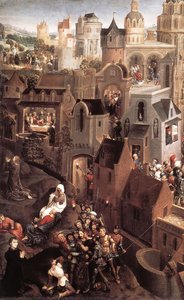 Scenes from the Passion of Christ (left side) - memling, hans
In Scenes from the Passion of Christ (left side) , Hans Memling invites us into a profound meditation on sacrifice and spiritual endurance. As a cornerstone of the Early Netherlandish painting movement, this 1470 masterpiece transcends mere religious illustration; it is a complex tapestry of human emotion and architectural grandeur. Through meticulous glazing techniques, Memling creates a luminous depth where earthy ochres and deep reds meet the sharp, precise lines of a medieval cityscape.
The work’s philosophical weight lies in its ability to weave the monumental with the intimate. While the sprawling urban landscape captures the historical gravity of Christ's journey, the subtle gestures of the onlookers—ranging from reverence to grief—resonate with a timeless human vulnerability. In today’s curated interiors, such works serve as powerful anchors of historical significance and contemplative calm. The interplay of dramatic light and shadow offers a sophisticated visual language that continues to inspire modern aesthetics, making it an essential inclusion in any collection celebrating the pinnacle of Northern Renaissance artistry.
Madonna in the Church - Jan van Eyck
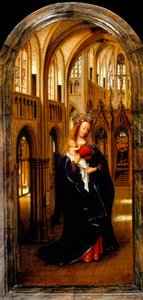 Madonna in the Church - Jan van Eyck
In Madonna in the Church , Jan van Eyck captures a moment of eternal stillness, where divine grace meets the architectural grandeur of the Gothic era. This masterpiece stands as a cornerstone of the Early Netherlandish painting movement, immortalized by its revolutionary use of oil glazes to create a luminous, spiritual atmosphere. As your eyes wander through the soaring arches and intricate stone carvings, you encounter a profound sense of reverence; the soft, diffused light illuminates the Virgin Mary’s deep blue robes and the delicate swaddling of the Christ child, breathing life into every meticulously rendered fold.
The painting transcends its 1425 origins through a breathtaking balance of naturalism and symbolism, where the cathedral itself becomes a vessel for the divine. For the discerning collector or interior designer, bringing this work into a contemporary space offers more than mere decoration; it introduces a sense of historical weight and meditative calm. The muted palette of golds, reds, and deep shadows provides a sophisticated focal point, inviting a quiet contemplation that elevates any modern architectural setting with its timeless, sacred elegance.
Deposition - Rogier van der Weyden
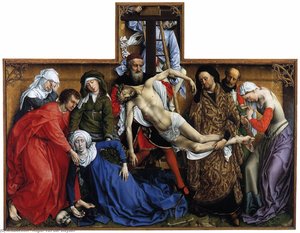 Deposition - Rogier van der Weyden
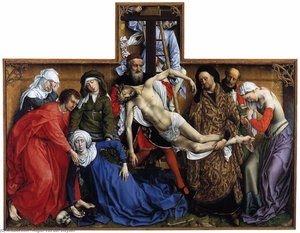
In the hushed stillness of 1435, Rogier van der Weyden captured a moment of unparalleled human tragedy. The Deposition is not merely a painting; it is a visceral experience of grief, where the weight of Christ’s body meets the profound sorrow of those left behind. As you gaze upon this masterpiece of the Early Netherlandish movement, you are drawn into a tight, sculptural composition defined by rhythmic lines and an extraordinary palette of deep crimsons, midnight blues, and somber earth tones.
Van der Weyden’s mastery lies in his ability to marry meticulous naturalism with intense pathos. The delicate glazes of oil paint create a luminous texture, making the tears on a mourner's cheek or the heavy folds of a velvet robe feel almost tactile. This profound sense of mourning and the symbolic resonance of the scene—from the skull at the foot of the cross to the mirroring poses of Mother and Son—offer a meditative depth. For the discerning collector or interior designer, bringing a reproduction of this work into a contemporary space introduces a layer of historical gravity and quiet reflection, transforming a room into a sanctuary of artful contemplation.
The Numbering at Bethlehem - Pieter Bruegel the Elder
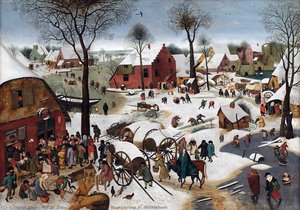 The Numbering at Bethlehem - Pieter Bruegel the Elder
To gaze upon The Numbering at Bethlehem by Pieter Bruegel the Elder is to witness a profound intersection of the divine and the mundane. Bruegel does not merely depict a biblical census; he invites us into the biting chill of a Flemish winter, where the sacred narrative is woven seamlessly into the rhythmic, bustling pulse of peasant life. This masterpiece earns its place among the definitive works of the Early Netherlandish movement through its unparalleled ability to find the extraordinary within the ordinary.
The composition is a marvel of storytelling, utilizing a rich palette of earthy ochres and deep reds contrasted against the stark, unifying blanket of snow. Every meticulous brushstroke reveals a world teeming with life—from the symbolic wheel of fortune to the quiet dignity of villagers tending to their livestock. At ArtsDot, we understand that such depth is what makes a house a home. Our hand-painted oil reproductions capture this very essence, preserving the tactile impasto and the luminous, atmospheric light of Bruegel’s original vision, allowing you to curate a legacy of historical grandeur within your own private gallery.
Madonna and Child with Canon Joris van der Paele - Jan van Eyck
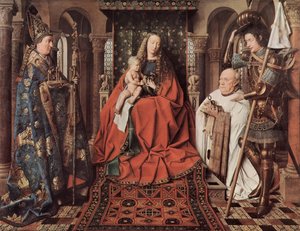 Madonna and Child with Canon Joris van der Paele - Jan van Eyck
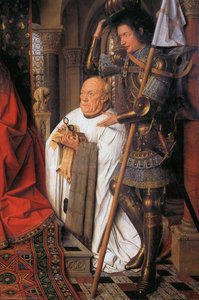
Acquiring a piece inspired by Madonna and Child with Canon Joris van der Paele by Jan van Eyck is more than an aesthetic choice; it is an investment in a profound artistic legacy. As a cornerstone of the Early Netherlandish painting movement, this 1436 masterpiece represents the pinnacle of Northern Renaissance innovation. Van Eyck’s pioneering use of layered oil glazes achieves a luminous depth and microscopic detail—from the heavy, jewel-toned brocades to the cold, reflective sheen of metallic surfaces—that remains unparalleled in art history.
The composition serves as a masterclass in spiritual grandeur, where the tender intimacy of the Madonna meets the regal, structured world of the donor. For the discerning collector, this work offers an extraordinary study in texture and light, making it a definitive pillar of the Top 10 masterpieces of its era. Today, the painting’s dramatic chiaroscuro and rich palette of deep crimson and gold find a breathtaking resonance within modern luxury interiors. A high-quality, hand-painted reproduction carries this same aesthetic authority, allowing the timeless prestige of Van Eyck to anchor a sophisticated, contemporary space with unparalleled historical soul.
Kardinal Niccolò Albergati (?) - Jan van Eyck
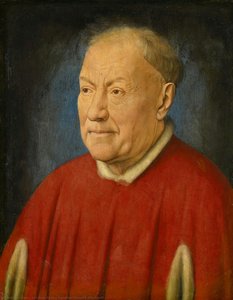 Kardinal Niccolò Albergati (?) - Jan van Eyck
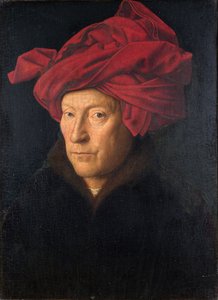
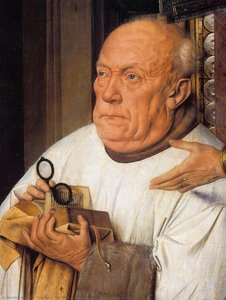
While the halls of history remember the peace congress at Arras as a triumph of diplomacy, Jan van Eyck was quietly performing a different kind of miracle: capturing the very soul of power through pigment. In his 1437 portrait of Kardinal Niccolò Albergati , Van Eyck moved beyond mere likeness to achieve a profound psychological depth that redefined the Early Netherlandish painting movement. Through his revolutionary mastery of oil glazes, he rendered the cardinal’s crimson robes with such luminous intensity that the fabric seems to pulse with life against the deep, celestial blue of the background.
Every meticulous brushstroke serves as a testament to the technical genius that allowed light to dance across textures, from the soft weight of the cardinal's hood to the subtle, weathered wisdom in his gaze. This level of focused precision and quiet dignity offers more than just historical insight; it provides a profound sense of gravitas. Incorporating such a masterpiece into a modern study or home office invites an atmosphere of contemplative brilliance and sophisticated purpose, inspiring a workspace defined by clarity and enduring excellence.
The Magdalene Reading (detail) - Rogier van der Weyden
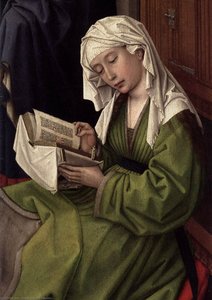 The Magdalene Reading (detail) - Rogier van der Weyden
In the quiet corners of art history, few fragments possess the profound emotional gravity found in Rogier van der Weyden’s The Magdalene Reading . To look closely at this detail is to realize that the lines are not merely drawn; they are choreographed . This is not a static composition, but a dance frozen in time, where the heavy folds of her deep green drapery and the delicate translucency of her white veil move in a silent, rhythmic harmony.
As a cornerstone of the Early Netherlandish painting movement, this work masterfully utilizes oil glazes to create a luminous, breathing skin tone that feels remarkably human. The subtle interplay of light and shadow sculpts a moment of eternal stillness, inviting the viewer into a sanctuary of devotion. For the discerning collector or interior designer, integrating such a piece into a modern space allows your walls to breathe rhythm . It offers more than decoration; it provides a profound emotional balance, transforming a room into a place where chaos finds its harmony through the quiet intensity of a saint lost in sacred text.
St Luke Drawing a Portrait of the Madonna - Rogier van der Weyden
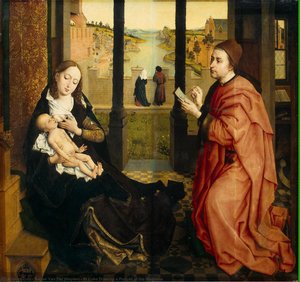 St Luke Drawing a Portrait of the Madonna - Rogier van der Weyden
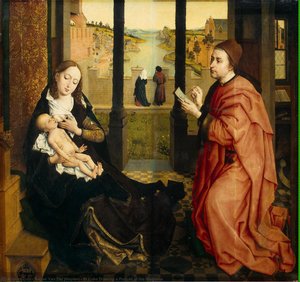
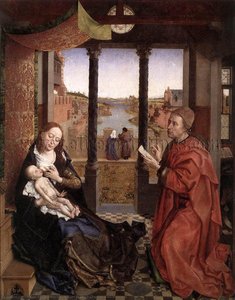
In Rogier van der Weyden’s St Luke Drawing a Portrait of the Madonna , we encounter more than a mere religious scene; we witness the very birth of the artist's sacred vocation. As a cornerstone of the Early Netherlandish painting movement, this masterpiece captures the profound intersection of human observation and divine inspiration. Van der Weyden utilizes the burgeoning oil technique to render textures so palpable—from the heavy, regal drapery of St. Luke’s throne to the tender, luminous skin of the Christ child—that the spiritual becomes tangibly present.
The painting earns its place among the era's greatest works through its masterful use of psychological depth and symbolic landscape. The serene vista visible through the window does not merely provide depth; it mirrors the quiet, contemplative devotion held within the chamber. For the modern collector or interior designer, this work offers a timeless lesson in balance and emotional resonance. It serves as an exquisite inspiration for curated spaces that seek to evoke tranquility, reminding us that true beauty lies in the meticulous, soulful observation of the world around us.
Conclusion
As the light fades from the gallery walls and the quiet shadows of evening settle over these storied canvases, we are reminded that the Early Netherlandish masters did not merely paint scenes; they captured the very breath of existence. To gaze upon these works is to realize that the meticulous glazes of Van Eyck and the profound stillness of Rogier van der Weyden are not relics of a distant, dusty era, but living pulses of light and devotion that continue to vibrate within our modern consciousness. They remind us that even in an age of digital fleetingness, there is a sacred power in the permanent—in the way a single drop of dew or the soft fold of a velvet robe can hold the weight of eternity.
These masterpieces transcend the boundaries of time and geography, moving beyond the museum frame to breathe life into our contemporary spaces. They offer more than decoration; they provide a window into a shared human soul, inviting us to slow down, to observe, and to find wonder in the intricate details of our own lives. Whether through the profound symbolism of a religious icon or the quiet dignity of a portrait, this movement continues to shape our aesthetic sensibilities and inspire the interiors of the world's most discerning homes.
We invite you to continue this journey of discovery and bring the enduring elegance of this era into your own sanctuary. You may explore the profound depth and luminous textures of our full collection , where each hand-painted reproduction serves as a bridge between the triumphs of the fifteenth century and the beauty of your present moment.