

Introduction
To step into the world of Romantic landscape painting is to surrender oneself to the sublime. It is an invitation to move beyond the mere observation of nature and instead experience its profound, often overwhelming, emotional power. During the late 18th and mid-19th centuries, a group of visionary artists looked away from the rigid order of Neoclassicism and toward the untamed spirit of the earth. They sought to capture not just the light upon a mountain peak or the mist over a valley, but the very soul of the wilderness—the awe, the terror, and the spiritual transcendence found in the face of the infinite.
This movement emerged during an era of profound cultural upheaval, as the Industrial Revolution began to reshape the human landscape with iron and smoke. In response, the Romantics turned inward and outward simultaneously, finding a sanctuary in the dramatic interplay of shadow and light, storm and stillness. Through their brushes, the landscape became a mirror for the human psyche; a crashing wave became a metaphor for passion, and a solitary ruin amidst a forest became a meditation on the passage of time and the fragility of existence.
These masterpieces remain deeply resonant in our modern age, serving as poignant reminders of our intrinsic connection to the natural world. In an era of digital saturation, the tactile depth of a Romantic canvas—with its visible, emotive brushstrokes and rich, atmospheric tonality—offers a rare moment of stillness and profound reflection. They remind us that there is beauty in the tempest and majesty in the unknown.
As we wander through this curated selection, we shall encounter ten definitive works that serve as the pillars of the Romantic movement. Each painting tells a story of human emotion projected onto the canvas of the earth, inviting you to witness the moments where art and nature became indistinguishable.
Helmingham Dell - John Constable
 Helmingham Dell - John Constable
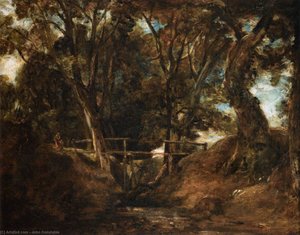
To encounter Helmingham Dell by John Constable is to step into a private, sun-drenched sanctuary of the English countryside, a moment of profound tranquility preserved in oil. As one of the most significant works within the Top 10 Masterpieces That Defined the Romantic Landscape Painting Art Movement , this painting transcends mere scenery; it is an emotional revelation. Constable moves beyond the idealized, classical landscapes of his predecessors to capture the raw, breathing vitality of nature through meticulous observation and a revolutionary use of light.
The composition draws the eye toward a rustic bridge spanning a verdant ravine, where the artist’s signature impasto technique breathes life into the textured tree trunks and lush foliage. The way light filters through the canopy creates a rhythmic, atmospheric glow that feels both intimate and expansive. For the discerning collector or interior designer, such a piece offers more than decoration; it provides a window into the sublime. Its harmonious palette of deep greens and soft, diffused highlights brings a sense of heritage and timeless elegance to any refined space, embodying the very soul of Romanticism.
Casa Bartholdy Hall in the Alte Nationalgalerie during the retouching - Caspar David Friedrich
 Casa Bartholdy Hall in the Alte Nationalgalerie during the retouching - Caspar David Friedrich
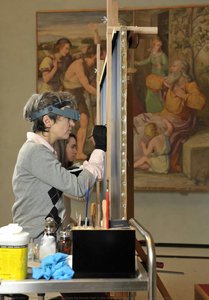
In the evocative monochrome of Casa Bartholdy Hall in the Alte Nationalgalerie during the retouching by Caspar David Friedrich, a profound sense of silvered shadow and stark, luminous grey dominates the atmosphere. This absence of color does not diminish the work; rather, it intensifies a mood of solemn introspection and quiet reverence. As one of the top 10 masterpieces that defined the Romantic landscape painting art movement , this captured moment reveals the raw, atmospheric tension that Friedrich mastered—using light and dark to evoke the sublime.
The interplay of deep blacks and ethereal whites offers a masterclass in chiaroscuro, providing a blueprint for sophisticated modern interiors. For the discerning collector or designer, integrating such high-contrast tonal ranges can transform a dining room into a space of dramatic elegance or anchor a contemporary living area with a sense of historical weight. By mirroring this monochromatic depth through curated lighting and textured accents, one can recreate the movement's signature emotional resonance, bringing the haunting beauty of German Romanticism into the heart of a modern home.
The Hay-Wain - John Constable
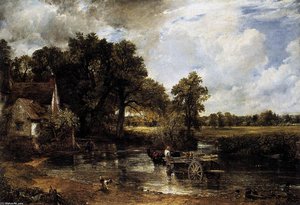 The Hay-Wain - John Constable
Imagine standing on the banks of the River Stour at dawn, where the air is heavy with a cool, silver mist and the only sound is the gentle ripple of water against wood. In John Constable’s The Hay-Wain (1821), we are not merely observing a landscape; we are breathing it. This masterpiece captures the profound tension of the Romantic era—a nostalgic longing for the pastoral idyll amidst the encroaching shadows of the Industrial Revolution.
Constable transcends mere topography through his revolutionary 'wet-on-wet' technique, using expressive brushwork to render the luminous, shifting light of the English countryside. The barge, laden with hay and pulled by steady horses, serves as a poignant symbol of agricultural harmony and human connection to the earth. As one of the definitive works of the Romantic landscape painting movement, it earns its place in this collection for its unparalleled ability to evoke tranquility. Bringing such a masterpiece into a modern interior does more than decorate a wall; it invites a sense of timeless serenity and historical depth into the soul of the home.
Boat-building near Flatford Mill - John Constable
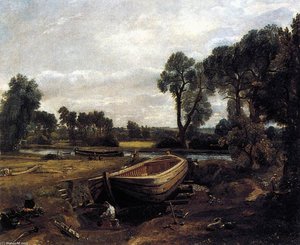 Boat-building near Flatford Mill - John Constable
Imagine standing on the banks of the River Stour, where the air is heavy with the scent of damp earth and the rhythmic, quiet sounds of manual labor. In Boat-building near Flatford Mill , John Constable does more than paint a landscape; he captures a heartbeat of rural tranquility. This 1815 masterpiece stands as a cornerstone of the Romantic landscape painting movement because it elevates the humble toil of a craftsman into a profound meditation on the harmony between humanity and the natural world.
Through masterful use of atmospheric perspective and textured impasto, Constable creates a luminous, hazy light that seems to breathe across the canvas. The way sunlight filters through shifting clouds to illuminate the verdant Dedham Vale evokes a sense of the sublime, making it an essential entry in our selection of the top 10 masterpieces . This painting reminds us that even in our fast-paced modern era, there is immense healing power in observing the slow, dignified rhythms of nature. Bringing such a piece into your home offers a permanent window to serenity, inviting a timeless, soulful peace into your daily environment.
The Admiral's House (The Grove) - John Constable
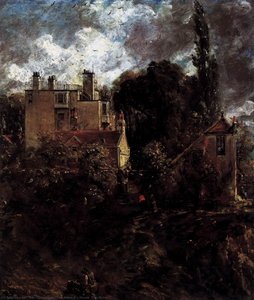 The Admiral's House (The Grove) - John Constable
To stand before a landscape is to witness a conversation between the earth and the sky, a dialogue captured with profound intimacy in The Admiral's House (The Grove) by John Constable. In this 1820 masterpiece, Constable does not merely paint a structure; he distills the very soul of the English countryside. As one of the most significant works within the top 10 masterpieces that defined the Romantic landscape painting art movement , this piece exemplifies the era's shift toward emotional truth and atmospheric realism.
The scene unfolds with a breathtaking mastery of light, where a diffused, golden glow softens the edges of the architecture, blurring the line between man-made history and the encroaching grove. His expressive, layered brushwork creates a palpable sense of moisture and air, making the atmosphere feel almost tactile. Through subtle tonal variations and a delicate use of highlights, Constable invites us into a world of quiet dignity and nostalgic beauty. This painting remains a timeless testament to how art can transform a space, offering a window into a serene, eternal moment that continues to resonate in the modern collector's home.
Flatford Lock - John Constable
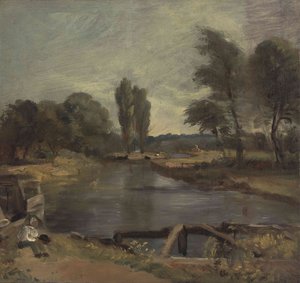 Flatford Lock - John Constable
In Flatford Lock , John Constable achieves a breathtaking mastery of atmospheric luminosity that serves as a cornerstone of the Romantic landscape painting movement. The work is defined by its revolutionary command of light; rather than merely illuminating the scene, the sun seems to permeate the very air, filtering through leafy canopies to create a delicate dance of dappled shadows and golden highlights upon the River Stour. This sophisticated use of 'optical mixing' allows the water and sky to breathe with an ethereal, translucent quality that was radical for 1811.
As one of the top 10 masterpieces that defined the era, this painting’s ability to capture a fleeting, emotive moment of English pastoral life secured its eternal place in the art canon. For the discerning collector, a high-quality oil reproduction of this piece offers more than mere decoration; the visible brushstrokes and deep tonal range bring a sense of historical prestige and quiet luxury to a contemporary interior. When placed on a grand wall, the interplay of light and shadow within Constable’s vision adds an incomparable layer of depth and soulful tranquility to any curated space.
East Bergholt - John Constable
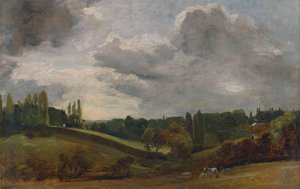 East Bergholt - John Constable
In East Bergholt , John Constable achieves a masterclass in the atmospheric nuances that define the Romantic landscape painting movement. The work is anchored by a profound command of light; rather than a static glow, Constable captures the fleeting, silvered luminosity of an overcast Suffolk sky. Through his revolutionary use of broken brushstrokes and optical mixing, he renders a complex interplay of grey, white, and soft violet, simulating the way moisture-laden air diffuses sunlight across the Dedham Vale. This meticulous attention to the 'truth' of natural light—the subtle chiaroscuro dancing across grazing horses and distant figures—is precisely what secured this piece among the top 10 masterpieces of its era.
For the discerning collector, a faithful oil reproduction of this work offers more than mere decoration; it introduces a soulful, tactile depth to a contemporary interior. The visible texture of the impasto and the moody, tonal range of the landscape create a sophisticated focal point, bringing the quiet, contemplative elegance of the English countryside into the modern home with unparalleled luxury.
Autumn – Evening – Maturity (from the seasons, times of day, and ages of man cycle of 1803) - Caspar David Friedrich
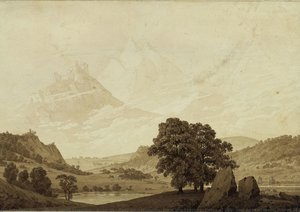 Autumn – Evening – Maturity (from the seasons, times of day, and ages of man cycle of 1803) - Caspar David Friedrich
To gaze upon Autumn – Evening – Maturity by Caspar David Friedrich is to witness a profound dialogue between the soul and the infinite. This masterpiece does not merely depict a landscape; it serves as a spiritual manifesto, where the skeletal silhouettes of autumn trees and the distant, mist-shrouded mountains mirror the quiet introspection of human maturity. Its inclusion in our selection of the Top 10 Masterpieces That Defined the Romantic Landscape Painting Art Movement is essential, as Friedrich pioneered the use of nature as a vessel for the sublime, replacing traditional narrative with raw, atmospheric emotion.
The painting’s mastery lies in its melancholic palette of ochre, deep violet, and twilight grey, creating a sense of temporal weight that transcends the canvas. At ArtsDot.com, we believe such evocative works should not be confined to museum archives but integrated into the fabric of your daily life. Whether as a focal point in a refined study or a contemplative centerpiece in a luxury hotel suite, a hand-painted reproduction of this Friedrich allows you to invite the profound stillness of the Romantic era into your own personal sanctuary, transforming any wall into a window toward the eternal.
Landscape with the Rosenberg in the Bohemian Mountains - Caspar David Friedrich
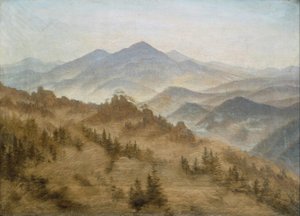 Landscape with the Rosenberg in the Bohemian Mountains - Caspar David Friedrich
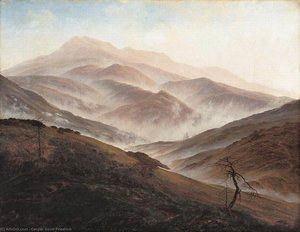
To stand before Caspar David Friedrich’s Landscape with the Rosenberg in the Bohemian Mountains is to experience a profound moment of stillness, where the soul meets the infinite. Painted in 1835, this masterpiece captures that quintessential Romantic ache—the sense of human insignificance when confronted by the sublime majesty of nature. Through a palette of cool blues, muted greys, and the ethereal texture of snow-dusted peaks, Friedrich invites us into a world where the atmosphere itself feels heavy with spiritual contemplation.
This work earns its place among the top 10 masterpieces of the Romantic landscape movement through its unparalleled ability to transform a geological scene into an emotional landscape. The meticulous detail of the foreground trees juxtaposed against the hazy, distant mountains creates a sense of depth that has mesmerized collectors for centuries. At ArtsDot.com, we honor this legacy of emotion and light. Our hand-painted oil reproductions are meticulously crafted by skilled artists to preserve every delicate brushstroke and tonal nuance, allowing you to bring the haunting beauty and tranquil serenity of Friedrich’s vision into your own private sanctuary.
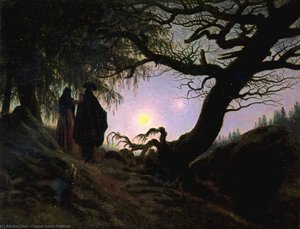
two men contemplating the moon - Caspar David Friedrich
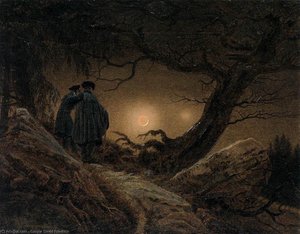 two men contemplating the moon - Caspar David Friedrich
Imagine standing in the profound stillness of a moonlit night, where the boundary between the earth and the heavens begins to dissolve. In Caspar David Friedrich’s “Two Men Contemplating the Moon,” we are not merely observing a landscape; we are invited into a sacred, psychological meditation. This monochrome masterpiece captures the very essence of the Romantic movement, utilizing a sophisticated range of silvery grays to sculpt light from the darkness. As two solitary figures gaze toward a surreal sky populated by multiple moons, Friedrich evokes the sublime —that breathtaking tension between human fragility and the infinite grandeur of the cosmos.
This work earns its place among the top masterpieces of Romantic landscape painting through its ability to transcend reality, offering a dreamlike window into the soul. The skeletal silhouette of the tree and the delicate presence of scattered birds act as anchors in a vast, silent expanse. For the modern collector, bringing such a piece into a curated space does more than decorate a wall; it introduces a sense of quiet, magnetic intensity and spiritual serenity, transforming a contemporary room into a sanctuary for deep reflection and timeless emotion.
Conclusion
As the light fades on our journey through these sublime vistas, we find that the true legacy of Romantic landscape painting lies not in the frames that hold them, but in the profound emotional echoes they leave within us. These masterpieces do more than merely document a moment in history; they serve as windows into the human soul, capturing that eternal, breathless tension between our smallness and the infinite grandeur of the natural world. To stand before a canvas of Turner’s mist or Friedrich’s solitude is to rediscover a part of ourselves—a quiet reverence for the untamed, the mysterious, and the divine.
In the modern home, these works transcend mere decoration, acting as living presences that breathe life, depth, and a sense of timelessness into our contemporary spaces. They invite us to pause, to reflect, and to reconnect with a sense of wonder that the frantic pace of daily life so often obscures. Whether through the dramatic interplay of light in an oil reproduction or the quiet strength of a curated print, these landscapes continue to shape our interiors and our inner landscapes alike, bridging the gap between centuries-old passion and today's aesthetic sensibilities.
We invite you to continue this dialogue with history and find the piece that speaks to your own spirit within our full collection . Let these enduring visions of nature’s majesty become a permanent part of your story, reminding us all that even in an ever-changing world, the beauty of the sublime remains an unchanging truth.