Introduction
There is a profound, rhythmic poetry in the movement of water—a continuous, silver thread that weaves through the tapestry of our landscapes and our very souls. To observe a river is to witness the heartbeat of the earth; it is a symbol of eternal transition, carrying the sediment of the past toward the vast, unknown horizons of the future. Throughout history, the river has served as more than just a geographical boundary; it has been the cradle of civilizations, the lifeblood of commerce, and a sacred metaphor for the passage of time and the fluidity of human emotion.
From the sweeping, atmospheric vistas of the 19th-century Impressionists, who sought to capture the fleeting dance of light upon a current, to the more structured, contemplative landscapes of the Old Masters, artists have long been captivated by this liquid motion. In every era, the river has offered a unique canvas for exploring themes of tranquility, power, and inevitable change . Whether it is the turbulent, churning rapids that evoke the sublime or the mirror-like stillness of a bend in the stream that invites deep introspection, these works transcend their physical subjects to touch upon the universal experience of life's journey.
In our curated selection today, we invite you to wander along these painted banks. We have gathered ten extraordinary masterpieces that do more than merely depict water; they capture the essence of flow and the spirit of the terrain. As we move through this collection, you will encounter a breathtaking range of techniques—from the thick, tactile impasto strokes that mimic the energy of a flood to the delicate, translucent glazes that evoke a morning mist. Prepare to be transported by these iconic works, each one a testament to the enduring power of the river to inspire, to haunt, and to heal.
A Good Pool, Saguenay River - Winslow Homer
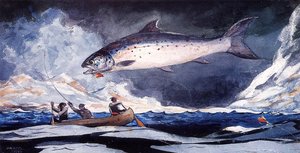 A Good Pool, Saguenay River - Winslow Homer
In Winslow Homer’s 1895 watercolor, A Good Pool, Saguenay River , the light does not merely illuminate the water; it breathes life into a moment of pure, kinetic tension. As you stand before this masterpiece, you don't just see a fishing expedition; you feel the cool, damp mist of the Canadian wilderness and the sudden, electric surge of vitality as a fish breaks the river's surface. Homer was not merely a painter of landscapes but a composer of atmosphere, using translucent washes to capture the brooding, dramatic sky that hangs over the Saguenay.
This work earns its place among the greatest river-themed artworks through its profound emotional depth. The interplay of dark, moody tones and the bright, splashing focal point creates a visual sonata of movement and stillness. It is a celebration of the sublime—where the rugged resilience of the men in the boat meets the untamed energy of the aquatic world. To bring this piece into your collection is to invite a portal of inspiration into your home, where the rhythmic pulse of the river continues to flow through every brushstroke.
El vestíbulo del infierno y las almas reuniéndose para atravesar el Aqueronte - William Blake
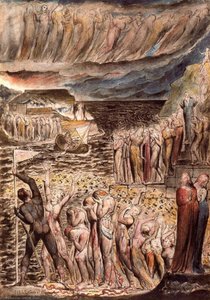 El vestíbulo del infierno y las almas reuniéndose para atravesar el Aqueronte - William Blake
In William Blake’s haunting masterpiece, El Vestíbulo del Infierno y las Almas Reuniéndose Para Atravesar el Aqueronte , the river is not merely a geographic boundary but a profound psychological threshold. As one of the most evocative entries in our exploration of artworks exploring the theme of rivers , this work captures the visceral moment souls gather at the banks of the Acheron, poised between earthly existence and eternal judgment.
Blake utilizes a masterful, somber chiaroscuro to sculpt figures emerging from oppressive shadows, where flashes of sickly yellow light illuminate bodies caught in states of despair and fervent contemplation. The murky waters of the Acheron serve as a symbolic vessel for the human journey, mirroring contemporary fascinations with liminal spaces and the fluidity of identity. In modern curated interiors, such profound imagery resonates deeply, offering a sophisticated dialogue on mortality and the sublime. Through his meticulous use of light and shadow, Blake transforms a descent into the underworld into a timeless meditation on the vulnerability of the human spirit facing the inevitable flow of time.
Fontana dei Quattro Fiumi (Fountain of the Four Rivers) - Gian Lorenzo Bernini
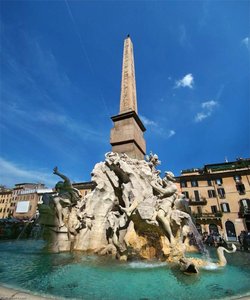 Fontana dei Quattro Fiumi (Fountain of the Four Rivers) - Gian Lorenzo Bernini
To witness Gian Lorenzo Bernini’s Fontana dei Quattro Fiumi is to behold the very pulse of the Baroque era. Completed in 1651 in Rome's Piazza Navona, this masterpiece does not merely depict water; it orchestrates a theatrical movement of the soul. Bernini masterfully captures the essence of four great waterways—the Nile, Ganges, Danube, and Rio de la Plata—transforming cold stone into a surging, living narrative of global connectivity and papal grandeur.
The sculpture breathes with an unprecedented dynamism, where light and shadow dance across figures that seem to emerge from the earth itself. Each river deity carries the weight of history, symbolizing a world united under a single, dramatic vision. Owning a piece of this legacy through a ArtsDot reproduction isn’t merely a purchase; it is an inheritance . It is a way to invite this lineage of taste into your private collection, ensuring that the breathtaking energy of Bernini’s rivers becomes a permanent, sophisticated presence on your walls —a silent, powerful nod to the masters of antiquity.
Mountainous River Landscape (Day Version) - Caspar David Friedrich
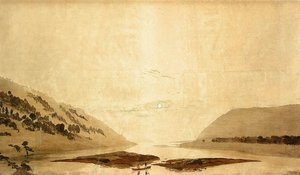 Mountainous River Landscape (Day Version) - Caspar David Friedrich
To possess Mountainous River Landscape (Day Version) by Caspar David Friedrich is not merely an acquisition; it is an inheritance of the Romantic spirit. As a pioneer of the sublime, Friedrich invites us into a world where the river serves as a silent witness to the majesty of the divine. In this 1830 masterpiece, the waterway flows with a profound stillness, mirrored by mountains that rise like ancient sentinels against a soft, daylight sky.
The composition is a masterclass in harmony: small boats drift upon the surface, while a solitary bird glides above, weaving a sense of eternal peace through the landscape. Friedrich’s expert use of light in painting breathes life into the textures of the water and stone, creating a three-dimensional depth that draws the soul inward. At ArtsDot, we believe this lineage of taste belongs on your walls. Whether you are drawn to the tranquil day version or its evocative night counterpart , bringing such a masterpiece into your home is a profound nod to the masters of art history.
The Barges - Charles-François Daubigny
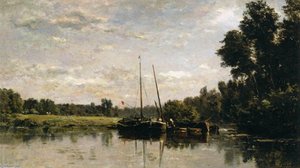 The Barges - Charles-François Daubigny
Before the Impressionists revolutionized the art world, Charles-François Daubigny was already capturing the ephemeral soul of the Seine. In 1865, with The Barges , he achieved a profound technical leap, moving beyond mere landscape to master the plein air atmosphere. This work does not simply depict a river; it distills the very essence of tranquility through a muted palette of earthy browns, lush greens, and delicate pastel blues.
The genius of this piece lies in its controlled brushwork, where soft, diffused light dances across the water's surface, mirroring an overcast sky that lends the scene an ethereal, timeless quality. The moored vessels serve as anchors of stillness amidst the gentle ripples of the riverbank. For the discerning collector, such a masterpiece offers more than visual beauty; it provides a window into a state of meditative calm. Integrating a work of this caliber into a modern home office or study invites a sophisticated atmosphere of focus and intellectual clarity, mirroring the quiet, rhythmic productivity found along the banks of the Seine.
Horses being Watered at Marly le Roi - Alfred Sisley
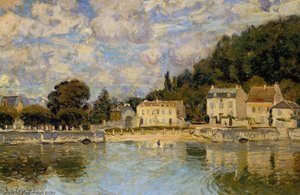 Horses being Watered at Marly le Roi - Alfred Sisley
In Horses being Watered at Marly le Roi , Alfred Sisley captures more than a mere pastoral moment; he immortalizes the rhythmic pulse of life where land meets water. As a cornerstone in our exploration of rivers in art , this 1875 masterpiece exemplifies the Impressionist obsession with the ephemeral. Sisley utilizes a delicate palette to depict the serene village edge, where the gentle movement of horses and floating boats mirrors the quiet flow of the river itself.
This work earns its place among the top selections for its profound ability to translate light into emotion. The soft, dappled brushstrokes evoke a sense of tranquility that transcends the 19th century, inviting us to reflect on the beauty of stillness within a changing world. For the discerning collector or interior designer, integrating such a piece into a curated space creates a timeless dialogue between historical elegance and modern serenity, bringing the restorative essence of the French countryside directly into the home.
Symphony in Grey: Early Morning, Thames - James Abbott McNeill Whistler
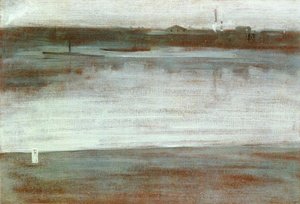 Symphony in Grey: Early Morning, Thames - James Abbott McNeill Whistler
In Symphony in Grey: Early Morning, Thames , the lines of the London riverside aren’t merely drawn; they are choreographed . James Abbott McNeill Whistler does not simply present a river scene; he presents a dance frozen in time . As part of our exploration of the world's most evocative river artworks, this 1871 masterpiece stands as a testament to the Aesthetic movement, where color and mood supersede literal narrative.
Whistler utilizes a revolutionary "tone painting" technique, layering thin glazes of oil to create a hazy, ethereal luminescence. The Thames emerges not as a bustling artery of commerce, but as a quiet, silvered mirror reflecting the dawn. Subtle shifts of mauve, ochre, and slate grey harmonize to evoke a musical arrangement—a true visual symphony. This painting is more than a depiction of water; it is an invitation to stillness. What if your living room could hold that same balance? What if your walls could breathe rhythm? To possess such a piece is to bring the tranquil, rhythmic soul of the Thames into the very heart of your home.
Old Trees, Level Distance - guo xi
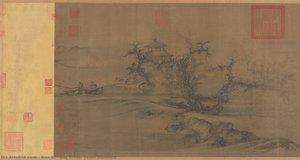 Old Trees, Level Distance - guo xi
Legend suggests that when Guo Xi composed Old Trees, Level Distance around 1080, he was not merely painting a landscape, but attempting to capture the very breath of the Northern Song dynasty. While many view the river valley as a mere geographical feature, it serves here as the vital, fluid pulse of the composition, weaving through misty mountains to symbolize the continuity of life amidst the decay of autumn.
The technical genius lies in his revolutionary floating perspective ; by abandoning rigid linear lines for layered ink washes, Guo Xi allows the viewer's eye to drift through atmospheric mists and over ancient, resilient silhouettes. This mastery of depth and tonal variation creates a profound sense of movement within the stillness. The muted ochres and somber greys evoke a poignant melancholy, reminding us of the impermanence found in nature's cycles. For the modern professional, such a masterpiece offers more than decoration; its themes of endurance and contemplative depth provide an unparalleled atmosphere of focus and intellectual serenity, making it a transformative centerpiece for a sophisticated home study or executive office.
A February Morning at Moret sur Loing - Alfred Sisley
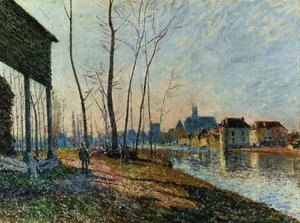 A February Morning at Moret sur Loing - Alfred Sisley
In A February Morning at Moret sur Loing , the viewer is immediately enveloped by Alfred Sisley’s masterful command of atmosphere. The true soul of this piece lies in its delicate, rhythmic brushwork; one can almost feel the crisp, biting chill of the 1881 winter air through the layered application of cool tones and soft, impressionistic strokes. Sisley does not merely depict a river scene; he captures the fleeting, translucent light reflecting off the frozen Loing, where boats rest quietly amidst a landscape of muted whites and subtle shadows. The presence of a solitary figure and a horse near the water’s edge adds a poignant, human stillness to the wintry composition.
At ArtsDot.com, we believe such profound textures deserve more than a flat digital reproduction. Our artisans specialize in hand-painted oil recreations that honor this tactile depth, utilizing 100% cotton canvas and visible impasto techniques to ensure the physical presence of every brushstroke is preserved. For the discerning collector, our reproductions bring the serene, three-dimensional essence of Sisley’s river landscapes directly into the home, maintaining the authentic spirit of the Impressionist masters.
The River Epte, Giverny - Willard Leroy Metcalf
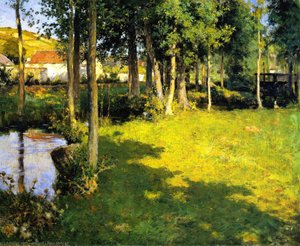 The River Epte, Giverny - Willard Leroy Metcalf
Imagine standing on the verdant banks of the French countryside, where the air is heavy with the scent of damp earth and the gentle murmur of flowing water. In The River Epte, Giverny , Willard Leroy Metcalf captures more than just a landscape; he preserves a fleeting moment of pastoral tranquility. This 1887 masterpiece earns its place among the top artworks exploring rivers through its profound ability to harmonize human presence with the rhythmic pulse of nature.
Metcalf, a luminary of American Impressionism, employs a vibrant palette and spirited brushstrokes to evoke the shimmering light dancing upon the Epte. The scene is alive with subtle movement—boats drifting lazily and figures immersed in quiet leisure—creating a sense of communal peace that transcends time. This painting serves as a vital inclusion in our collection because it reminds us how the fluid, continuous nature of a river can mirror our own need for reflection and serenity. Bringing such an evocative piece into a modern interior offers a window to a slower, more intentional world, transforming any space into a sanctuary of light and historical grace.
Conclusion
As the light fades on our journey through these flowing landscapes, we are reminded that a river is far more than a geographical feature; it is a metaphor for time itself—ever-moving, deeply reflective, and eternally renewing. The masterpieces we have explored today do not merely exist as relics of a bygone era preserved behind museum glass; they are living presences that continue to breathe life into our modern spaces. When we invite the serene currents of a Monet or the dramatic depths of a Rembrandt into our homes, we are not simply decorating a wall; we are inviting an eternal dialogue between the soul and the canvas.
These works possess a unique power to shape our emotional landscapes, offering a sense of tranquility to a busy study or a profound historical weight to a grand salon. They remind us that even in our fast-paced, digital age, there is a fundamental human need to reconnect with the rhythmic, organic pulse of nature. Whether through the visible, tactile brushstrokes of a hand-painted oil reproduction or the quiet elegance of a fine print, these images serve as windows to a deeper understanding of our own history and our enduring connection to the earth.
We invite you to continue this exploration and find the piece that speaks to your own personal narrative within our full collection . May your home always be a sanctuary where art, memory, and beauty flow together in perfect harmony.