Introduction
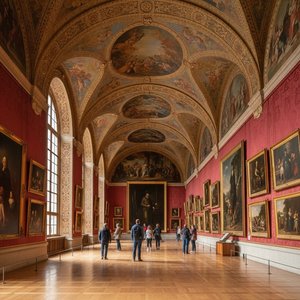
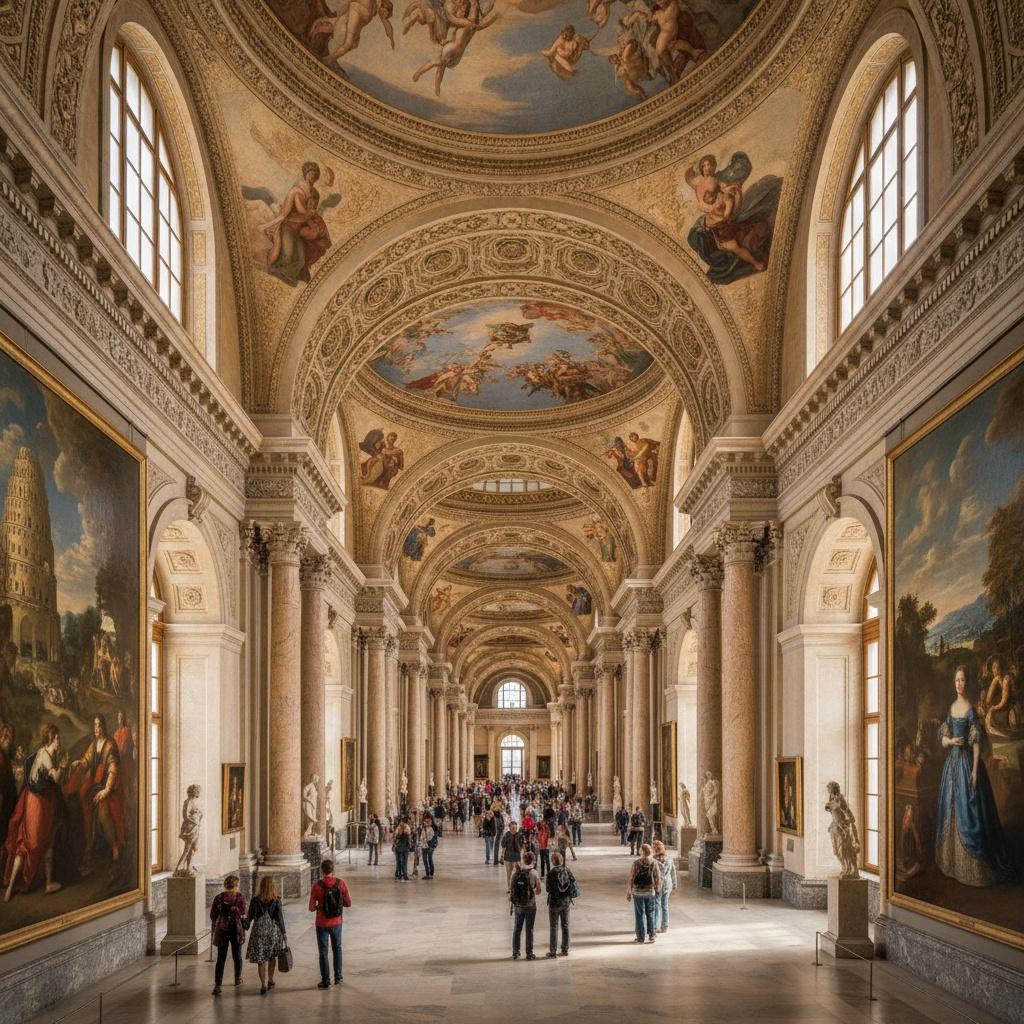
To step across the threshold of the Kunsthistorisches Museum in Vienna is to surrender oneself to a grand architectural embrace. As you enter this monumental palace of echoes, designed by Gottfried Semper to mirror the Roman Forum, you are not merely entering a museum; you are stepping into the very soul of the Habsburg legacy. The air within these gilded halls seems to hold the weight of centuries, carrying the whispers of emperors and the silent, profound gaze of the masters who once defined the boundaries of human creativity.
This is a sanctuary where the evolution of Western art finds its most majestic expression. From the meticulous, light-drenched precision of the Dutch Masters to the divine, serene grace of the Italian Renaissance, the museum’s collection serves as a continuous dialogue across time. Each corridor offers a new chapter in our collective human story—a journey that moves from the ancient mysteries of Egyptian sarcophagi to the psychological depth of Rembrandt’s portraits and the breathtaking scale of Baroque triumphs.
What makes these works remain so vital in our modern, fast-paced world is their ability to transcend the era of their creation. They offer us a moment of stillness, inviting us to contemplate the eternal themes of beauty, mortality, power, and devotion. Whether it is the subtle shimmer of light on a Vermeer canvas or the commanding presence of a Titian masterpiece, these artworks possess an emotional resonance that defies the passage of time, reminding us of our shared heritage.
In the following curation, we invite you to wander through a selection of the museum's most transcendent treasures. We have identified twenty-five essential works—pieces that do not merely decorate a wall, but define an epoch. As we guide you through this list, prepare to encounter the brushstrokes that shaped history and the visions that continue to inspire the collectors, designers, and dreamers of today.
Adoration of the Trinity (Landauer Altar) - Albrecht Dürer
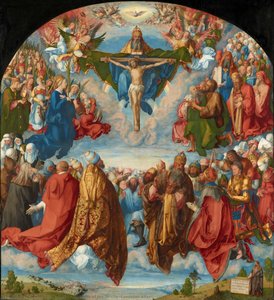 Adoration of the Trinity (Landauer Altar) - Albrecht Dürer
To stand before Albrecht Dürer’s Adoration of the Trinity is to be swept into a celestial gathering where the boundaries between the earthly and the divine dissolve. One does not merely view this monumental altarpiece; one feels the weight of Nuremberg’s spiritual and civic soul. Painted in 1511, this masterpiece captures a profound moment of humanistic transition, blending the meticulous detail of German tradition with the luminous, airy perspective Dürer acquired in Venice.
As your eyes wander through the grand, Venetian-inspired hall, you encounter a breathtaking symphony of figures—from serene saints like Catherine and Agnes to humble peasants engaged in daily toil. This inclusivity makes it a cornerstone of the top 25 artworks in Kunsthistorisches Museum, Vienna ; it is a universal tapestry of faith that transcends social hierarchy. The vibrant golds, deep pigments, and the ethereal light reflecting off Christ’s authority evoke a sense of profound peace. Bringing such a masterpiece into one's consciousness—or even through a high-quality reproduction in a private collection—serves to anchor a modern space with historical depth, reminding us of the enduring beauty found in shared human devotion.
Portrait of a Young Venetian Woman - Albrecht Dürer
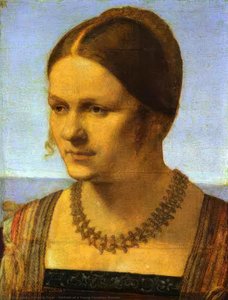 Portrait of a Young Venetian Woman - Albrecht Dürer
In the Portrait of a Young Venetian Woman , Albrecht Dürer captures more than a mere likeness; he preserves a profound moment of Renaissance introspection. Painted during his transformative travels through Italy, this work stands as a vital entry among the top 25 artworks in the Kunsthistorisches Museum, Vienna, because it represents the exquisite bridge between Northern European precision and the atmospheric, light-drenched soul of Venetian painting. Dürer’s mastery is evident in the soft, luminous rendering of the subject's skin and the delicate interplay of warm ochres and deep shadows that evoke a sense of quiet melancholy.
The sitter’s averted gaze invites us to contemplate the universal nature of beauty and the private depths of the human psyche. For the discerning collector or interior designer, this masterpiece offers an unparalleled opportunity to introduce a sense of historical gravity and serene elegance into a modern space. Whether displayed as a bespoke oil reproduction or a curated print, its timeless dialogue between texture and emotion serves as a sophisticated anchor for any refined collection.
Peasant wedding - Pieter Bruegel the Elder
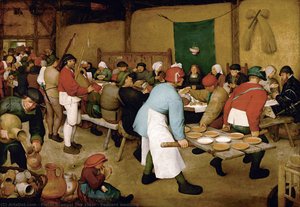 Peasant wedding - Pieter Bruegel the Elder
In the heart of the Kunsthistorisches Museum, Pieter Bruegel the Elder’s Peasant Wedding serves as a vibrant, sensory window into the soul of 16th-century Flanders. This masterpiece is far more than a mere depiction of a rustic feast; it is a meticulously orchestrated symphony of Northern Renaissance naturalism. As you stand before it, your eyes are drawn through a dense, bustling crowd where earthy ochres, muted reds, and deep browns create a warm, communal atmosphere. Bruegel captures the very essence of human connection—the clatter of pottery, the shared joy of abundance, and the subtle textures of rough wooden beams and linen aprons.
Owning a reproduction of Peasant Wedding is not simply a purchase; it is an inheritance . It represents a lineage of taste that brings the profound social observations of Bruegel directly into your private collection. At ArtsDot, we ensure this legacy lives on your walls, allowing you to experience the same tactile depth and historical grandeur that defines the world's greatest galleries.
Summer 1 - Giuseppe Arcimboldo
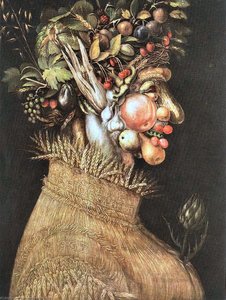 Summer 1 - Giuseppe Arcimboldo
To encounter Giuseppe Arcimboldo’s Summer 1 within the hallowed halls of the Kunsthistorisches Museum is to witness a profound metamorphosis of the natural world. This Mannerist marvel transcends traditional portraiture, presenting a human visage meticulously assembled from the very bounty of the earth. As you lean closer, the illusion dissolves into a breathtaking mosaic: ripe plums, heavy grapes, and sun-drenched grains coalesce to form a face that is both whimsical and unsettlingly lifelike.
The painting breathes with a vibrant, tactile energy; one can almost sense the cool skin of the fruit and the rough texture of the wheat stalks against the dark, dramatic void of the background. Created for the Habsburg court, this piece serves as an allegorical symphony of fertility and the fleeting cycles of life. Owning a tribute to such a masterpiece isn’t merely a purchase; it is an inheritance of a lineage of taste. At ArtsDot, we bring this extraordinary intersection of surrealism and botanical realism to your private collection, allowing the ingenious spirit of Arcimboldo to reside permanently upon your walls.
The Hunters in the Snow (Winter) - Pieter Bruegel the Elder
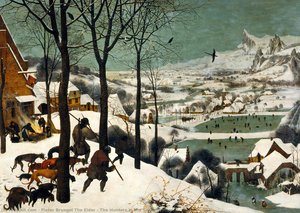 The Hunters in the Snow (Winter) - Pieter Bruegel the Elder
Imagine the biting chill of a mountain breeze and the heavy, rhythmic crunch of boots on frozen earth. In Pieter Bruegel the Elder’s The Hunters in the Snow , we are not merely observers of a landscape, but participants in the quiet struggle of survival during the onset of the Little Ice Age. This masterpiece stands as a cornerstone of the Kunsthistorisches Museum’s collection because it captures the profound, cyclical relationship between humanity and the natural world.
Bruegel masterfully guides our gaze from the weary, slumped shoulders of hunters in the foreground toward the distant, frost-dusted villages where life continues with resilient grace. Through a sophisticated use of atmospheric perspective—where cool blues and muted greys dissolve into the horizon—he creates an expansive sense of solitude and seasonal transition. This painting belongs among the museum's top treasures for its ability to evoke both the harshness of winter and the enduring warmth of community. Bringing such a profound narrative into one’s own space allows us to reconnect with the timeless, seasonal rhythms that ground our modern, fast-paced lives.
The Tower of Babel - Pieter Bruegel the Elder
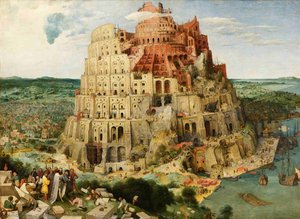 The Tower of Babel - Pieter Bruegel the Elder
To stand before The Tower of Babel by Pieter Bruegel the Elder is to witness the very texture of human ambition. One’s gaze is immediately drawn to the meticulous Northern Renaissance technique; notice how the artist utilizes layered glazes to breathe life into the rough, weathered stone and the dizzying scaffolding of the central spire. The materiality of this 1563 masterpiece—the way light catches the earthy ochres and deep shadows within the architectural crevices—creates a profound sense of monumental scale and inevitable decay.
Bruegel’s ability to weave an encyclopedic level of detail into a narrative of divine judgment is precisely why this work remains a cornerstone of the Kunsthistorisches Museum's collection. At ArtsDot.com, we strive to honor this legacy of craftsmanship. Our hand-painted oil reproductions are meticulously executed on 100% cotton canvas, capturing every essential brushstroke and tactile depth found in the original. We aim to bring the profound, three-dimensional soul of Bruegel’s genius into the private galleries of connoisseurs worldwide, ensuring that the visceral power of this historical masterpiece is preserved for generations.
Judith with the head of Holofernes - Lucas Cranach the Elder
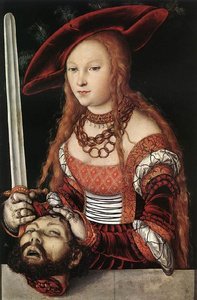 Judith with the head of Holofernes - Lucas Cranach the Elder
In the quiet, hallowed corridors of the Kunsthistorisches Museum, one encounter remains strikingly visceral: Lucas Cranach the Elder’s Judith with the Head of Holofernes . The scene unfolds with a chilling, cinematic tension; there is no frantic battle cry here, only the heavy, rhythmic silence of a completed deed. Judith sits with an almost ethereal composure, her skin rendered in luminous, porcelain tones that contrast sharply against the grim, textured reality of the severed head she holds aloft.
Cranach utilizes the masterful precision of the Northern Renaissance to weave a tapestry of deep crimsons and somber shadows, where every fold of heavy drapery feels tactile and weighted. The light catches the subtle glazes of oil, illuminating a face that embodies both divine resolve and a haunting serenity. To possess such a piece—perhaps as a bespoke oil reproduction—is to invite a profound sense of drama and historical gravity into a contemporary interior. It is an artwork that does not merely decorate a wall; it commands the atmosphere, inspiring a space with themes of courage, resilience, and the enduring power of the human spirit.
Lucretia - Paolo Veronese
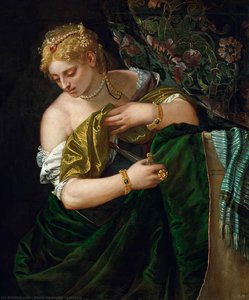 Lucretia - Paolo Veronese
In the quiet shadows of the Kunsthistorisches Museum, one cannot help but be arrested by the profound, melancholic grace of Paolo Veronese’s Lucretia . The painting unfolds like a whispered secret from the Venetian Renaissance; a moment of heavy contemplation captured in a sea of opulent textures. Veronese, a master of chromatic brilliance, employs a sophisticated use of chiaroscuro to pull the subject from the darkness, illuminating the soft contours of her face and the shimmering, intricate jewelry that speaks of immense status.
The sensory experience is overwhelming—the tactile richness of heavy silks, the deep luster of gold accents, and the dramatic interplay of light against a somber, receding background. There is a palpable tension between the external display of wealth and the internal weight of her sorrow. For the discerning collector or designer, bringing such a piece into a contemporary space offers more than mere decoration; it introduces a focal point of historical gravity and emotional depth, inviting a sense of timeless reflection and sophisticated drama to any curated interior.
Christ Carrying the Cross - Pieter Bruegel the Elder
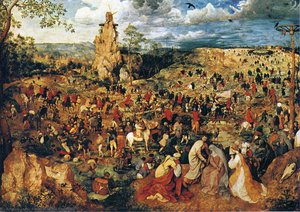 Christ Carrying the Cross - Pieter Bruegel the Elder
What story does the chaotic, teeming landscape in Christ Carrying the Cross by Pieter Bruegel the Elder tell? Beyond the central biblical tragedy, Bruegel presents a profound social tapestry of 16th-century Flemish life, where the sacred journey to Calvary is inextricably woven into the mundane rhythms of peasants, travelers, and merchants. This masterpiece earned its place among the top 25 artworks in the Kunsthistorisches Museum, Vienna, by breaking the traditional boundaries of religious iconography; rather than focusing solely on divine isolation, Bruegel places Christ within a bustling, indifferent world of earthy ochres, deep reds, and atmospheric blues.
The painting’s dense, Mannerist composition—filled with exaggerated gestures and a sense of overwhelming movement—offers a captivating escape for the modern collector. For those curating a sophisticated interior, this work provides more than mere decoration; it invites a sense of historical depth and intellectual engagement. Bringing a hand-painted reproduction of this Flemish treasure into your home allows you to capture that very tension between the eternal and the everyday, creating a focal point that resonates with both movement and timeless spiritual gravity.
Pathway in Monet's Garden at Giverny - Claude Monet
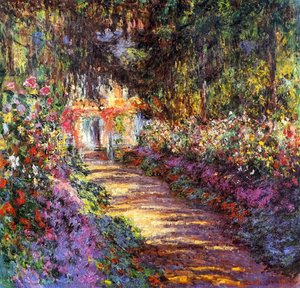 Pathway in Monet's Garden at Giverny - Claude Monet
Imagine a moment where time dissolves into a soft, golden haze, and the only reality is the scent of blooming flora and the warmth of a setting sun. In Pathway in Monet's Garden at Giverny , Claude Monet invites us to wander through his private sanctuary, capturing the fleeting pulse of light that defines the Impressionist soul. This 1902 masterpiece stands as a vital pillar among the top 25 artworks in the Kunsthistorisches Museum, Vienna, because it transcends mere landscape painting; it is an immersive sensory experience.
Through thick, expressive impasto and a vibrant palette of pinks, purples, and golds, Monet orchestrates a symphony of color that breathes with life. The winding path serves as a profound metaphor for life’s own journey—an invitation to explore the beauty found in transition. For the modern collector or interior designer, bringing such a work into a living space offers more than decoration; it provides a window to serenity, allowing the tranquil energy of Giverny to infuse contemporary environments with timeless peace and botanical splendor.
Miracle of St. Ignatius of Loyola - Peter Paul Rubens
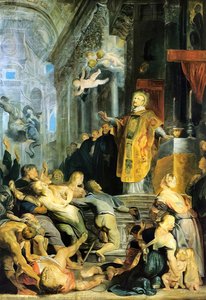 Miracle of St. Ignatius of Loyola - Peter Paul Rubens
To stand before Peter Paul Rubens' Miracle of St. Ignatius of Loyola is to be swept into a whirlwind of divine fervor and human desperation. In this breathtaking Baroque masterpiece, Rubens captures that profound, universal moment where the earthly meets the eternal; the air seems to vibrate with the tension between the chaos of suffering souls and the radiant, golden authority of the saint. It earns its place among the top 25 artworks in the Kunsthistorisches Museum through its sheer, muscular energy—a masterclass in chiaroscuro where light does not merely illuminate, but sanctifies.
The composition is a symphony of movement, utilizing rich crimsons, deep ochres, and dramatic shadows to guide the eye toward the celestial intervention. This level of emotional intensity and textured brushwork is precisely what we strive to preserve at ArtsDot.com. Through our meticulous hand-painted oil reproductions , we invite you to bring this same sense of historical grandeur and spiritual drama into your own private collection, ensuring that the palpable texture and soul of Rubens' original vision remain a living presence in your home.
Children's Games - Pieter Bruegel the Elder
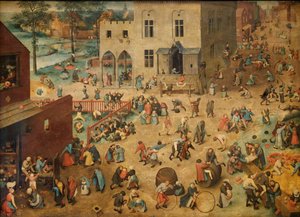 Children's Games - Pieter Bruegel the Elder
To encounter Children's Games by Pieter Bruegel the Elder is to be swept into a whirlwind of 16th-century vitality. This masterpiece does not merely depict a scene; it captures the very heartbeat of Flemish community life through a dizzying, joyful chaos of hoop rolling, stilt walking, and unbridled play. Its inclusion in the top 25 artworks of the Kunsthistorisches Museum is essential, as Bruegel redefined the Northern Renaissance by elevating the mundane activities of the common folk into a profound exploration of social cohesion and human innocence.
The painting’s rich, earthy palette and meticulous attention to the textures of rustic life create a sensory experience that transcends centuries. At ArtsDot.com, we believe such historical depth should not be confined to museum walls. We bring this exuberant energy into your private sanctuary through our hand-painted oil reproductions, allowing you to transform a sophisticated living space or a creative office into a gallery of timeless storytelling. To hang Bruegel is to invite a celebration of life’s enduring spirit into your home.
Stormy Landscape - Peter Paul Rubens
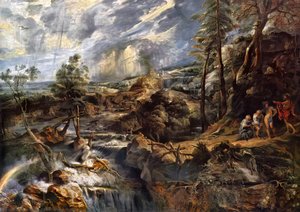 Stormy Landscape - Peter Paul Rubens
In Stormy Landscape by Peter Paul Rubens, the lines are not merely drawn; they are choreographed . This is not a static composition of nature, but a dance frozen in time , where the violent descent of a waterfall meets the heavy, atmospheric tension of an impending tempest. As one of the most commanding works within the Kunsthistorisches Museum, Vienna, it masterfully orchestrates chaos into a profound sense of harmony.
Rubens utilizes a breathtaking chiaroscuro to sculpt rugged cliffs and luminous spray, while vibrant splashes of crimson and gold in the figures' attire provide a rhythmic counterpoint to the cool, brooding blues of the sky. The subtle presence of a rainbow offers a spiritual reprieve, symbolizing hope amidst the tumult. To possess such a work is to invite that same dramatic equilibrium into one’s own environment. What if your walls could breathe rhythm ? This masterpiece serves as a reminder that even in the most turbulent moments, there is an enduring, majestic grace to be found.
Susanna and the Elders - Jacopo Tintoretto
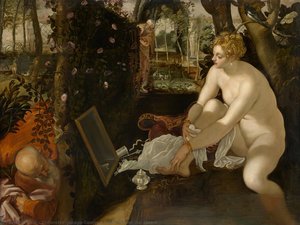 Susanna and the Elders - Jacopo Tintoretto
In the hallowed halls of the Kunsthistorisches Museum, Vienna, few works command the room with such visceral tension as Susanna and the Elders by Jacopo Tintoretto. This 1557 masterpiece serves as a profound meditation on the fragility of innocence and the predatory nature of power. Through his signature chiaroscuro , Tintoretto—often called Il Furioso —sculpts light and shadow to reveal Susanna’s vulnerable, luminous form against the encroaching darkness of the elders' gaze. The painting is a masterclass in Venetian Renaissance drama, where lush, organic textures and sweeping diagonal compositions guide the eye through a landscape of moral conflict.
Beyond its biblical narrative, the work resonates deeply with contemporary dialogues surrounding privacy, surveillance, and the ethics of the gaze. As we navigate an era of hyper-visibility, Tintoretto’s ability to capture the psychological weight of being watched remains strikingly relevant. For collectors and enthusiasts exploring the top 25 artworks in Kunsthistorisches Museum, Vienna, this piece stands as a breathtaking intersection of technical bravado and enduring human truth, making it an essential pillar of the museum's illustrious collection.
Jupiter and Io - Antonio Allegri da Correggio
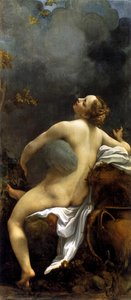 Jupiter and Io - Antonio Allegri da Correggio
To stand before Jupiter and Io is to witness a moment where the divine and the mortal dissolve into one another through a veil of pure sensation. Antonio Allegri da Correggio captures not just a mythological encounter, but the very breath of intimacy and the startling shock of transformation. As you gaze upon the luminous, soft flesh of Io, you feel the atmospheric tension of the clouds and the weight of the heavy, swirling shadows that define this High Renaissance masterpiece.
This work earns its place among the top 25 artworks in Kunsthistorisches Museum, Vienna through its revolutionary use of chiaroscuro and a sensuality that prefigured the Baroque era. Correggio’s ability to render skin as if it were bathed in moonlight creates an emotional depth that transcends the canvas, evoking feelings of vulnerability and wonder. In a modern home, such a profound piece serves as more than mere decoration; it acts as a soulful anchor, inviting a sense of mystery and classical elegance into your private sanctuary, reminding us of the enduring power of beauty and human emotion.
The Large Forest - jacob isaackszoon van ruisdael
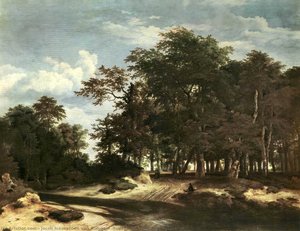 The Large Forest - jacob isaackszoon van ruisdael
In the grand tapestry of the Kunsthistorisches Museum’s collection, The Large Forest by Jacob van Ruisdael stands as a profound meditation on the sublime power of the natural world. As one of the most significant landscape painters of the Dutch Golden Age, Ruisdael transcends mere topography, using a muted palette of deep greens and earthy browns to evoke a sense of timeless solitude. The composition, featuring a winding path that disappears into the dense woodland, invites the viewer on a contemplative journey through light and shadow.
The mastery lies in his ability to render texture—the rough, weathered bark and the soft, diffused light filtering through an overcast sky—creating an atmospheric depth that feels almost tactile. For the modern collector or interior designer, this masterpiece offers more than historical significance; it provides a serene focal point for any sophisticated space. Its ability to instill a sense of calm and natural elegance makes it a timeless choice for creating an ambiance of quiet strength and organic luxury within a contemporary home.
Madonna del Rosario (detail) - Caravaggio
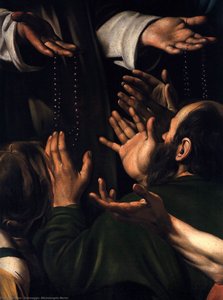 Madonna del Rosario (detail) - Caravaggio
To stand before Caravaggio’s Madonna del Rosario (detail) is to witness the very moment the Baroque era found its pulse. Legend suggests that Caravaggio, a man whose life was as turbulent as his canvases, painted not from idealized sketches but from the raw, unvarnished reality of the Roman streets, bringing the divine down to earth. In this exquisite detail from the Kunsthistorisches Museum, Vienna, we see the master’s revolutionary tenebrism in its most potent form. The composition is defined by a violent yet beautiful struggle between impenetrable shadows and a piercing, celestial light that illuminates the Virgin’s tender embrace of the Christ Child.
The technical genius lies in this dramatic chiaroscuro ; the light does not merely illuminate—it sculpts emotion, pulling faces from the darkness with startling, tactile realism. There is no polished artifice here, only the profound weight of human presence. This intense focus and the ability to find clarity amidst deep shadows offer a profound inspiration for the modern professional. Much like the disciplined mind required to curate such a masterpiece, bringing a piece of this dramatic intensity into a home office or study can foster an atmosphere of deep concentration, sophisticated introspection, and unparalleled creative power.
The Fight between Carnival and Lent - Pieter Bruegel the Elder
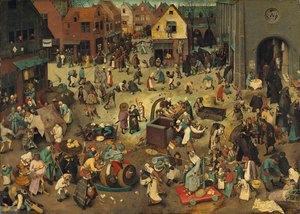 The Fight between Carnival and Lent - Pieter Bruegel the Elder
In The Fight between Carnival and Lent , Pieter Bruegel the Elder orchestrates a breathtaking sensory spectacle that remains one of the most profound highlights among the top 25 artworks in the Kunsthistorisches Museum, Vienna. This 1559 masterpiece transcends mere genre painting; it is a vibrant, panoramic exploration of the human duality between indulgence and asceticism. Bruegel masterfully divides the canvas into two contrasting worlds: on one side, the boisterous, colorful chaos of Carnival, filled with the warmth of roasted meats and the laughter of revelers; on the other, the somber, muted tones of Lent, marked by pious devotion and quiet reflection.
The sheer scale of detail—from the textures of festive pastries to the weary expressions of the penitent—offers a timeless lesson in composition and storytelling. For the modern collector or interior designer, this work serves as an unparalleled inspiration for creating dynamic, high-contrast spaces. Its ability to balance exuberant energy with profound stillness makes it a cornerstone of Northern Renaissance legacy, inviting viewers to find beauty in the eternal tension between life's celebrations and its moments of solemn grace.
Kardinal Niccolò Albergati (?) - Jan van Eyck
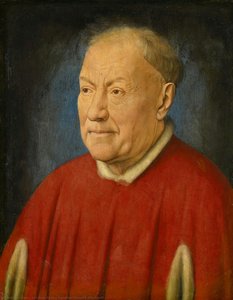 Kardinal Niccolò Albergati (?) - Jan van Eyck
To stand before Jan van Eyck’s Kardinal Niccolò Albergati (?) is to witness the very moment light was captured by human hands. As you approach this masterpiece within the Kunsthistorisches Museum, Vienna, the profound stillness of the subject envelops you. Van Eyck, a pioneer of Early Netherlandish realism, utilizes his revolutionary oil technique to transform a flat surface into a window of breathtaking depth. The cardinal’s vibrant red robes, heavy with the weight of ecclesiastical dignity, contrast strikingly against a deep, luminous blue background that seems to recede into infinity.
Every meticulous brushstroke reveals a sensory feast: the subtle texture of the fabric, the soft light catching the folds of his hood, and an expression of quiet, scholarly contemplation. This portrait is more than a historical record of Burgundian diplomacy; it is an exploration of presence and permanence. In a modern interior, such a work serves as a profound anchor—bringing a sense of intellectual gravity, timelessness, and a meditative calm that invites the viewer to pause and reflect amidst the rush of contemporary life.
Three Philosophers - Giorgione
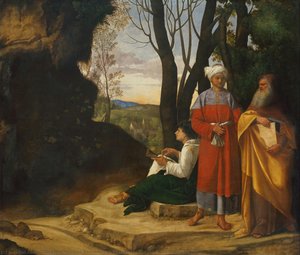 Three Philosophers - Giorgione
In Giorgione’s Three Philosophers , a profound sense of contemplative stillness is anchored by deep, earthy ochres and umbers, creating a mood of timeless introspection. This mastery of a muted, tonal palette—interrupted only by the striking, regal crimson of the figures' robes—is precisely why this work remains a cornerstone of the top 25 artworks in the Kunsthistorisches Museum, Vienna. The artist utilizes a revolutionary sfumato technique, where edges dissolve into an atmospheric haze, allowing the rugged landscape to emerge softly from the mist like a half-remembered dream.
For the discerning interior designer or collector, this painting offers a sophisticated blueprint for emotional lighting. The interplay of shadow and warm, low-light tones can be used to curate a dining room or study that feels both grounded and intellectually stimulating. By integrating these Venetian hues—the weathered rock grays and deep reds—one can evoke the same sense of quiet authority and historical depth within a modern architectural space, transforming a room into a sanctuary of reflection.
Jane Seymour, Queen of England - Hans Holbein the Younger
 Jane Seymour, Queen of England - Hans Holbein the Younger
To possess a study of Jane Seymour, Queen of England by Hans Holbein the Younger is to invest in a profound legacy of taste and historical gravity. As one of the most significant works within the top 25 artworks in Kunsthistorisches Museum, Vienna, this portrait transcends mere royal documentation; it is a masterclass in Northern Renaissance precision. Painted in 1536, Holbein captures the delicate tension of the Tudor court, utilizing a restrained palette and photographic realism to render the heavy textures of her gown and the quiet, dignified poise of a queen navigating a landscape of political upheaval.
The painting’s enduring market prestige and influence on portraiture are undeniable, making it a cornerstone for any serious collection. The meticulous detail—from the subtle shimmer of fabric to the somber, monochromatic backdrop—offers an unparalleled aesthetic depth. For the discerning interior designer, a high-quality oil reproduction of this masterpiece brings an air of timeless authority and sophisticated heritage to modern luxury interiors, commanding attention with its silent, regal elegance.
The Conquest of Jerusalem by Emperor Titus - Nicolas Poussin
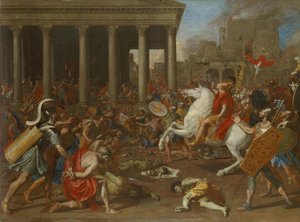 The Conquest of Jerusalem by Emperor Titus - Nicolas Poussin
To stand before The Conquest of Jerusalem by Emperor Titus is to be swept into the chaotic, sun-drenched fervor of 70 AD. In this 1638 masterpiece, Nicolas Poussin orchestrates a grand historical drama where the clash of steel and the thunder of hooves seem almost audible. The canvas vibrates with the tension of battle; soldiers maneuver through the dust, their shields catching glints of light, while horses surge through the composition with palpable energy. Even a solitary dog on the periphery adds a layer of grounded, gritty realism to this monumental event.
Poussin eschews mere ornamentation for a disciplined, classical clarity, using light and shadow to direct the eye through the complex movement of the Roman legions. For the discerning collector or interior designer, such a work offers more than historical intrigue; it provides a profound focal point of intellectual depth and narrative power. Integrating a piece of this magnitude into a curated space—perhaps as a large-scale oil reproduction—infuses a room with a sense of timeless authority and the epic spirit of the Baroque era.
Diptych - Rogier van der Weyden
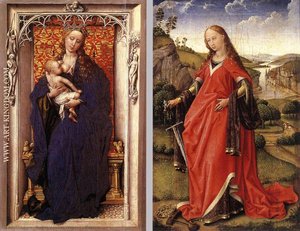 Diptych - Rogier van der Weyden
In the intimate presence of Rogier van der Weyden’s Diptych , the lines of devotion are not merely painted; they are choreographed . Within this delicate 18 x 12 cm canvas, a profound spiritual dance unfolds between two figures, frozen in a moment of eternal piety. On one side, a figure in luminous blue cradles an infant, her gaze ascending toward the divine; on the other, a presence in scarlet holds a sword, embodying the strength of faith amidst sacrifice.
This masterpiece is not a static composition, but a dance frozen in time . Van der Weyden utilizes the burgeoning brilliance of oil paint to layer textures so fine they seem to breathe—from the soft skin of the infant to the heavy, symbolic folds of royal robes. As one of the most captivating highlights among the top 25 artworks in the Kunsthistorisches Museum, Vienna, it invites you to contemplate a world where light and shadow harmonize perfectly. What if your own sanctuary could hold this same sacred balance? Imagine your walls possessing such rhythmic, quiet prestige.
The Procession to Calvary [detail] - Pieter Bruegel the Elder
![The Procession to Calvary [detail]](/media/artworks/images/thumbnails/5c/99/5c9909a65fac4045bec3bb1335b4ab6c.jpg) The Procession to Calvary [detail] - Pieter Bruegel the Elder
The Procession to Calvary [detail] - Pieter Bruegel the ElderIn the detail of The Procession to Calvary by Pieter Bruegel the Elder, the lines are not merely drawn; they are choreographed . This is not a static composition, but a dance frozen in time , where the chaotic energy of a 16th-century crowd is transformed into a rhythmic, sweeping movement toward destiny. As you gaze upon this masterpiece within the Kunsthistorisches Museum, Vienna, you witness a masterclass in Northern Renaissance technique—where earthy ochres and deep, visceral reds collide with the monumental scale of the landscape.
Bruegel captures a profound tension: the heavy, muscular presence of horses and the textured impasto of the terrain contrast with the ethereal, almost ghostly stillness of the religious figures. Every brushstroke contributes to a world where piety and human frailty intersect. It invites a singular question for the modern collector: What if your living room could hold that same balance? What if your walls could breathe rhythm? To possess such a work is to invite the harmonious chaos of history into your own architectural sanctuary.
St Sebastian - Andrea Mantegna
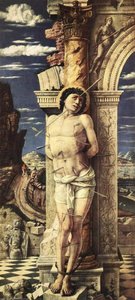 St Sebastian - Andrea Mantegna
To stand before Andrea Mantegna’s St Sebastian is to witness a profound archaeological resurrection. In this 1457 masterpiece, the air seems heavy with the scent of ancient stone and the quiet tension of martyrdom. Mantegna, a virtuoso of perspective, does not merely paint a saint; he reconstructs a Roman world through a breathtaking use of trompe l'oeil . The rugged, weathered textures of the background wall feel almost tactile, providing a stark, sculptural contrast to the vulnerable, luminous flesh of the saint.
The piercing arrows, while instruments of physical agony, serve as poignant metaphors for the era's struggle against pestilence, imbuing the work with an emotional urgency that transcends centuries. The interplay of light and shadow across Sebastian’s anatomically precise form creates a sense of monumental weight and spiritual resilience. For the sophisticated collector, such a piece offers more than historical significance; its dramatic depth and classical grandeur provide a commanding focal point, capable of infusing a contemporary interior with a sense of timelessness, reflection, and profound narrative power.
Conclusion
As the golden light of a Viennese sunset begins to spill through the grand windows of the Kunsthistorisches Museum, casting long, amber shadows across the marble floors, one realizes that we do not merely leave a building; we emerge from a profound conversation with the past. The masterpieces we have encountered—from the quiet, luminous intimacy of Vermeer to the commanding, soulful presence of Rembrandt—are far more than relics of a bygone era or static treasures preserved behind glass. They are living, breathing forces of human expression that continue to pulse with the same emotions they first captured centuries ago: the ache of longing, the serenity of grace, and the unyielding pursuit of beauty.
These works do not belong solely to the halls of Vienna; they belong to the spirit of anyone who seeks meaning in a brushstroke or truth in a shadow. They possess a remarkable ability to transcend time, migrating from the hallowed galleries of the Habsburgs into the intimate sanctuaries of our modern lives, shaping our homes and inspiring our most personal creative endeavors. To bring such an essence into one's own space is to invite a timeless dialogue into the everyday.
As you step back into the rhythm of the modern world, let the echoes of these legends linger. Whether moved by the dramatic chiaroscuro of the Baroque or the delicate light of the Renaissance, we invite you to continue this journey of discovery and bring a piece of this eternal heritage into your own collection by exploring our full collection . The museum doors may close for the night, but the artistry remains, forever waiting to illuminate your world.