The Sculptural Bridge: The Life and Legacy of Giovanni di Bartolomeo
In the vibrant, sun-drenched streets of 15th-century Florence, a period of profound intellectual awakening was unfolding, and within this crucible of creativity, Giovanni di Bartolomeo emerged as a vital sculptor. Born around 1406, his life coincided with one of the most transformative eras in human history—the transition from the stylized, spiritualized forms of the Medieval Gothic tradition to the grounded, humanistic ideals of the Early Renaissance. While the historical record offers only fragmented glimpses into his personal biography, his stone and bronze works serve as a silent, powerful testament to an artist navigating the currents of change, blending the expressive grace of the past with the anatomical precision of the future.
The Florentine landscape during Bartolomeo’s formative years was dominated by titans such as Filippo Brunelleschi and Donatello. These masters were redefining the very essence of space and proportion, championing a classical revival that sought to rediscover the mathematical harmony of antiquity. Bartolomeo breathed this atmosphere of innovation, yet he did not entirely discard the emotive power of the Gothic style. His early mastery is most evident in his religious commissions, particularly his crucifixes. In these works, one can observe a delicate tension: the drapery folds and gestures retain a certain rhythmic, spiritual elegance characteristic of Northern European influence, even as they begin to yield to a more profound, physical presence.
Mastery of Emotion and Form
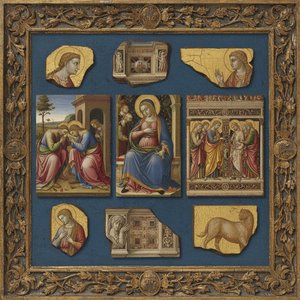
As his career progressed, Bartolomeo’s work began to reflect the burgeoning humanist movement, which placed man and his psychological reality at the center of the artistic universe. This evolution is perhaps most breathtakingly captured in his celebrated masterpiece, the Giovanna Madonna, currently housed in the Siena Cathedral. In this sculpture, the artist achieves a rare feat of technical and emotional synthesis. He depicts the Virgin Mary cradling the Christ Child with a level of realism that was revolutionary for its time, yet he imbues the scene with a palpable sense of vulnerability. The tenderness of the pose and the subtle, lifelike rendering of the figures convey a deep psychological depth, inviting the viewer to move beyond mere observation into a state of shared empathy.
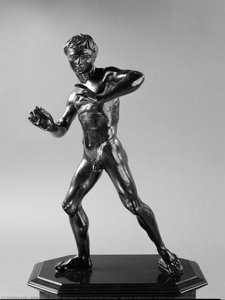
Beyond his religious devotion, Bartolomeo’s engagement with classical mythology provided him with a canvas to explore the human physique. His work Ignudo della Paura (The Frightened Naked Youth) stands as a brilliant example of this pursuit. This lithe and sturdy figure, often associated with the myth of Marsyas, demonstrates his meticulous study of human musculature and anatomy. Through such works, he bridged the gap between the symbolic figures of the Middle Ages and the heroic, anatomically accurate protagonists of the High Renaissance. His ability to capture a moment of sudden, visceral emotion—the very "fright" suggested by the title—highlights a sophisticated understanding of how physical tension can mirror internal psychological states.
A Lasting Impression on Florentine Art
The historical significance of Giovanni di Bartolomeo lies in his role as a transitional architect of form. He was not merely a follower of the great Florentine masters, but a practitioner who helped synthesize the disparate threads of his age into a cohesive new language. His contributions to the ecclesiastical landscapes of Florence and Siena provided much of the sculptural soul for these sacred spaces, ensuring that the transition from Gothic to Renaissance was marked by both continuity and profound innovation.
To reflect on his enduring impact, one might consider the following hallmarks of his artistic identity:
- Synthesis of Styles: The seamless integration of Gothic expressive gestures with Renaissance anatomical realism.
- Humanist Depth: A focus on the psychological complexity and emotional vulnerability of his subjects.
- Technical Precision: An advanced mastery of drapery, musculature, and the interplay of light and shadow in sculpture.
- Cultural Significance: Serving as a pivotal link in the evolution of Florentine sculptural traditions during the Quattrocento.
Though his name may sometimes be overshadowed by the monumental shadows of Donatello or Michelangelo, the work of Giovanni di Bartolomeo remains an essential chapter in the story of Western art—a story of an artist who looked backward to honor tradition and forward to embrace the dawn of a new human era.