The Architect of the Heavens: The Life and Legacy of Andreas Cellarius
In the grand tapestry of the seventeenth century, a period defined by the turbulent collision of ancient dogma and burgeoning scientific inquiry, few figures captured the majesty of the cosmos as elegantly as Andreas Cellarius. Born around 1596 in Neuhausen, near Worms, Germany, Cellarius was a man whose life mirrored the intellectual metamorphosis of his era. Originally known by his German surname, Keller, he later Latinized it to Cellarius, a subtle nod to the humanist traditions that would define his scholarly pursuits. His early education in Heidelberg placed him at the heart of a shifting intellectual landscape, where the shadows of the Thirty Years' War loomed large, yet the light of discovery burned brighter than ever.
The trajectory of Cellarius’s life was profoundly shaped by his encounter with the revolutionary ideas of Johannes Kepler. Studying under such a titan of astronomy allowed Cellarius to absorb the mechanics of planetary motion that were dismantling the long-held Ptolemaic view of a static universe. This scientific foundation, blended with a deep-seated talent for mathematics and meticulous drawing, transformed him from a mere scholar into a master of celestial cartography. His journey eventually led him to the Netherlands, settling in Hoorn, where he served as the rector of the Latin School. It was within this scholarly sanctuary that his most enduring contributions were forged, far from the battlefields of Europe, amidst the quiet rigor of astronomical observation and classical study.
The Harmonia Macrocosmica: A Symphony of Science and Art
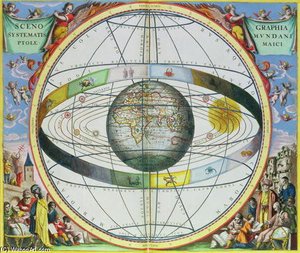
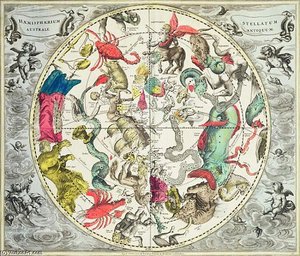
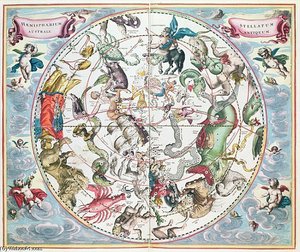
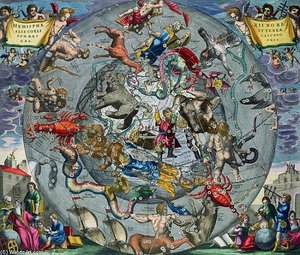
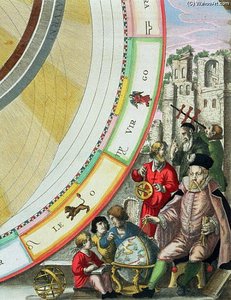
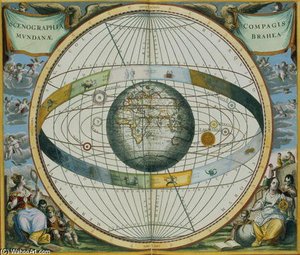
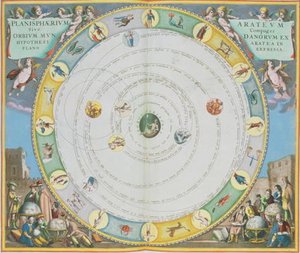
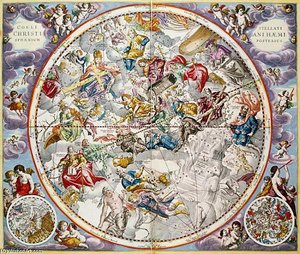
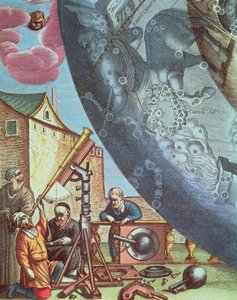
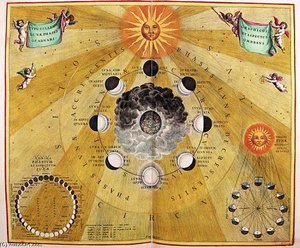
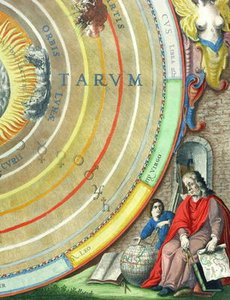
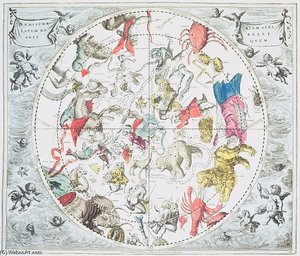
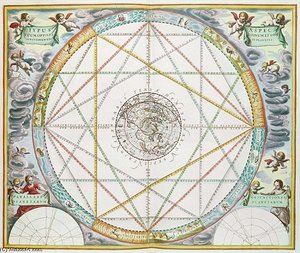
While Cellarius contributed to various fields, including military science and geography, his magnum opus remains the Harmonia Macrocosmica, published in 1660. This celestial atlas was far more than a collection of maps; it was a breathtaking visual synthesis of the known universe. In an age where the boundaries between science and art were fluid, Cellarius utilized the medium of engraving to create works that were simultaneously precise astronomical tools and exquisite masterpieces of Renaissance aesthetics. Each plate in the atlas serves as a window into a period of profound transition, capturing the tension between the geocentric models of the past and the heliocentric truths of the future.
The beauty of his work lies in its ability to weave complex scientific data with rich, mythological symbolism. To gaze upon a Cellarius map is to witness a dialogue between eras:
- Precision of Observation: He painstakingly incorporated the empirical findings of Tycho Brahe and Galileo Galilei, ensuring that his charts reflected the most accurate understanding of constellations and planetary positions available.
- Artistic Grandeur: His engravings are celebrated for their intricate detail, featuring ornate borders, dramatic celestial figures, and a sense of depth that brings the heavens to life.
- Cosmological Synthesis: He masterfully presented various cosmological systems side-by-side, allowing the viewer to trace the evolution of human thought from the ancient Ptolemaic framework to the revolutionary Keplerian mechanics.
A Lasting Impression on the Celestial Record
The historical significance of Andreas Cellarius extends far beyond the pages of his atlas. He acted as a vital conduit for the dissemination of astronomical knowledge across Europe, inspiring subsequent generations of cartographers, scientists, and artists. His work provided a visual language for the "first space race"—the intellectual struggle to determine whether the Earth or the Sun sat at the center of our existence. By documenting these competing ideologies with such grace, he preserved the very essence of the scientific revolution.
Today, the legacy of Cellarius lives on in the enduring fascination with the stars. His maps are not merely historical artifacts but are revered as fine art, standing as a testament to a time when the pursuit of truth was accompanied by an unparalleled devotion to beauty. Through his meticulous hand, the infinite complexity of the night sky was rendered accessible, turning the cold mathematics of the cosmos into a profound and moving human experience.