The Chronicler of Parisian Progress
Aron Gerschel (1832 – 1910) stands as a pivotal figure in the history of French photography, a master of light and shadow who remains largely unrecognized outside specialist circles yet undeniably influential in documenting the burgeoning intellectual and artistic landscape of late nineteenth-century Paris. Born in Niederodern, France, Gerschel emerged from a family deeply rooted in the photographic craft, working alongside his brothers, Samuel and Jules. This familial bond was more than mere kinship; it was a professional alliance that allowed him to establish a studio that would become synonymous with capturing the very spirit of its era. Through his lens, the rapid evolution of French society was not merely recorded but transformed into a series of intimate, enduring portraits.
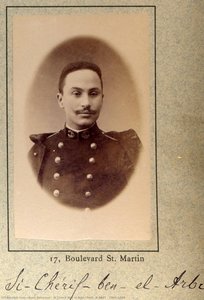
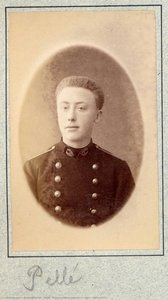
The foundation of Gerschel’s career was built upon a shared ambition to elevate portraiture from simple documentation to a refined art form. The Gerschel Brothers Studio, founded in Strasbourg in 1856, quickly gained renown for its meticulous craftsmanship and artistic vision. This collaborative enterprise represented a concerted effort to advance photographic standards and explore new creative avenues that bridged the gap between scientific observation and aesthetic beauty. As his reputation grew, Gerschel moved his operations to the heart of Paris, establishing himself at prestigious addresses such as Boulevard Saint-Martin and later Boulevard des Capucines. His studio became a sanctuary for the intellectual elite, earning him the esteemed title of Photographe de l'École polytechnique et des facultés de Paris.
A Mastery of Pictorialism and Light
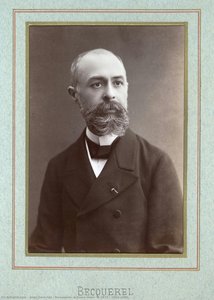
Gerschel’s artistic style leaned heavily toward Pictorialism, a movement that prioritized aesthetic considerations and emotional resonance over strict technical accuracy. He possessed a remarkable ability to manipulate the medium, skillfully employing soft focus techniques and carefully composed images to convey mood and depth. His work was never merely about capturing a likeness; it was about capturing an essence. This is most evident in his portraits of scientific luminaries, such as Antoine Henri Becquerel, where Gerschel used light to suggest the profound intellect and discovery inherent in his subjects. By blending the precision of a documentarian with the soul of a painter, he created images that felt both timeless and immediate.
The technical sophistication of his work allowed him to navigate the dualities of his era: the rigid structure of scientific progress and the romanticism of the Belle Époque. His portraits often featured:
- Soft-focus compositions that imbued subjects with a sense of dignity and mystery.
- Deliberate lighting arrangements designed to highlight the character and gravitas of Parisian intellectuals.
- Meticulous attention to detail in capturing the textures of clothing and the environments of prestigious institutions.
Legacy and Historical Significance
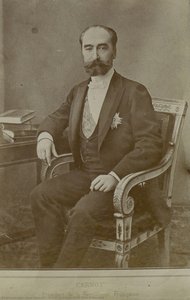
The historical significance of Aron Gerschel lies in his role as a visual historian. While the world moved toward the rapid-fire snapshots of the twentieth century, Gerschel’s work preserved the dignity of a vanishing age. He documented the faces of those who shaped modern science and diplomacy, providing a window into the prestigious halls of the École Polytechnique and the various Faculties of Paris. His ability to capture the likenesses of figures like Maurice Pellé and Antoine Henri Becquerel ensures that his archive remains an indispensable resource for understanding the social fabric of late nineteenth-century France.
Though often overshadowed by the more famous painters of his time, Gerschel’s contribution to the photographic canon is profound. He helped transition photography from a mechanical novelty into a respected medium of artistic expression. Today, his legacy lives on through the preserved portraits that continue to haunt and inspire, serving as a testament to a man who saw not just what was in front of his lens, but the enduring spirit of progress itself.