The Rhythms of Sarawak: The Artistic Genesis of Ashley Nandong
In the verdant heart of Kuching, Sarawak, where the ancient whispers of Borneo meet the vibrant pulse of modern Malaysia, the artistic journey of Ashley Nandong began. Her early life was not merely spent in observation but in deep immersion within the rich, rhythmic tapestry of Dayak culture. Growing up surrounded by the hauntingly beautiful melodies of the sapeh lute and the intricate, storytelling movements of traditional Dayak dances, Nandong developed a sensory connection to her heritage that would later become the cornerstone of her visual language. These formative years were defined by a profound engagement with the traditions of the Iban and Orang Ulu sub-ethnic groups, where every pattern and sound carries a weight of ancestral significance.
This deep-seated cultural intimacy provided Nandong with more than just inspiration; it offered her a foundational understanding of rhythm, movement, and symbolic representation. Her early explorations were as much musical and performative as they were visual, instilling in her a meticulous attention to detail and a reverence for the preservation of Borneo’s vanishing echoes. By mastering the traditional disciplines of her people, she learned to perceive the world through a lens of interconnectedness, a perspective that would eventually transition from the auditory and kinetic into the permanent medium of paint and canvas.
Academic Rigor and the Evolution of Style
While her soul was rooted in the traditions of Sarawak, Nandong sought to ground her intuitive cultural connection with formal scholarly discipline. She pursued an advanced academic path, earning both a Bachelor’s and a Master’s degree in Arts. This period of rigorous study allowed her to bridge the gap between indigenous motifs and the broader discourse of global art history. Through this academic lens, she gained the tools for critical analysis and theoretical depth, enabling her to transform traditional symbols into contemporary masterpieces that speak to a universal audience.
The result of this fusion is an artistic style that is both strikingly bold and deeply evocative. Nandong’s technique often utilizes acrylic paints on canvas, applied with a vitality that mirrors the dynamism of the Bornean rainforest. Her work is characterized by:
- Vibrant Color Palettes: Using intense, saturated hues to reflect the lushness and energy of her natural surroundings.
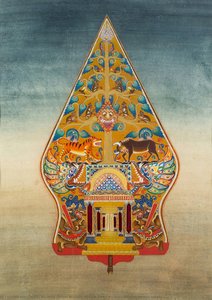
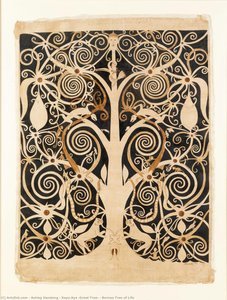
- Symbolic Motifs: The recurring use of the Tree of Life, a central emblem that explores themes of spirituality, resilience, and the cosmic connection between all living things.
- Contemporary Synthesis: A seamless blending of ancient Dayak patterns with modern painting techniques, ensuring her work remains relevant in a contemporary art market.
A Legacy of Cultural Interconnectedness
The significance of Ashley Nandong’s oeuvre lies in its ability to act as a bridge between the past and the present. Her paintings, such as the evocative Kayo Aya (Great Tree), do more than merely depict scenery; they serve as vessels for cultural memory. Through her art, the spiritual essence of Borneo is preserved and reinterpreted, allowing the stories of the Dayak people to resonate far beyond the borders of Sarawak. Her work explores the profound themes of interconnectedness—the idea that the roots of tradition are inextricably linked to the branches of modern identity.
In an era of rapid globalization, Nandong stands as a vital voice for cultural preservation. Her canvases pulsate with a life force that honors her ancestors while inviting the contemporary viewer to contemplate their own place within the natural and spiritual world. By translating the ephemeral rhythms of the sapeh and the grace of traditional dance into enduring visual narratives, she ensures that the soul of Borneo continues to echo through the halls of modern art.