The Poignant Vision of Asim Abu Shakra
Born in 1961 in the town of Umm al-Fahm, Asim Abu Shakra emerged as a profound voice within the landscape of modern Palestinian art. Growing up as the seventh of ten children in a Muslim family, his early life was shaped by the complex realities of identity and existence in a contested land. His formal artistic journey took him to the Kalisher Art School in Tel Aviv, where he studied from 1982 to 1986. It was during these formative years that Abu Shakra began to refine a visual language capable of articulating the deep-seated sense of alienation and displacement felt by those living in exile. His time in Tel Aviv allowed him to master technical disciplines, yet his heart remained tethered to the political and emotional struggles of his people.
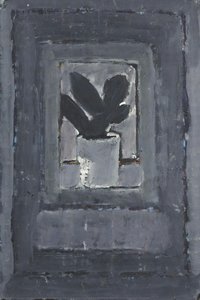
The work of Abu Shakra is deeply evocative, often characterized by a haunting stillness that speaks volumes about the human condition. He became most renowned for his cactus series, a collection of paintings that transformed a common botanical element into a powerful emblem of political and personal resilience. To many, the potted cacti in his compositions represent more than mere flora; they serve as symbols of resistance against uprooting and the enduring spirit of Palestinians facing exile. Through his brush, the cactus becomes a metaphor for a life rooted in struggle, unable to be easily displaced despite the pressures of its environment.
Symbolism and the Struggle for Identity
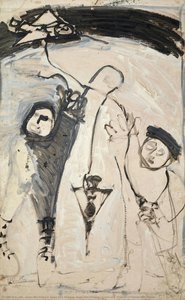
Throughout his brief but impactful career, Abu Shakra’s art functioned as a mirror to his internal and external conflicts. His paintings often navigated the delicate tension between his identity as a Palestinian artist and his life within the borders of Israel. This duality is palpable in his use of space and subject matter, where themes of isolation and longing are frequently explored. One of his notable works, Children and Planes (1985), captures a poignant moment of vulnerability, blending the innocence of youth with the looming presence of external forces that threaten stability.
The legacy of his work is marked by a fascinating and sometimes controversial historical interpretation. While Abu Shakra himself identified completely with the Palestinian cause and resisted any attempts to rebrand his symbols as purely Israeli, institutions such as the Tel Aviv Museum of Art have historically presented his cactus series through a different lens. This tension highlights the enduring power of his imagery; whether viewed as a symbol of national resistance or a broader meditation on the human experience, his art remains an inseparable part of the cultural dialogue regarding identity and memory.
A Lasting Artistic Legacy
Though his life was tragically cut short by cancer in 1990, the impact of Asim Abu Shakra continues to resonate within the art world. His ability to infuse simple, everyday objects with profound political and emotional weight has left an indelible mark on contemporary Middle Eastern art. His works serve as a testament to the power of art to document the struggle for dignity in the face of upheaval.
Today, his contributions are remembered through several key aspects:
- The Symbolism of the Cactus: A lasting icon of Palestinian resilience and the refusal to be uprooted.
- Exploration of Exile: His mastery in depicting the psychological weight of living between identities.
- Historical Significance: His role in bringing the nuances of the Palestinian experience to a wider, international audience through his unique visual metaphors.