

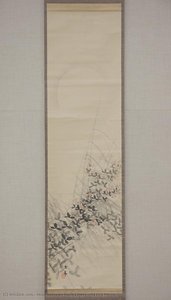
eikanshi ( go - 永歓子) isaburō (original family name - 猪三郎) shiyū ( go - 子裕) yōsōsai ( go - 養素斎)
A Life Immersed in Nature: The World of Imao Keinen Born in Kyoto in 1845, Imao Keinen—originally named Imao Inosuke—embarked on a journey that would establish him as one of Japan’s most beloved and influential artists during the late Edo and early Meiji periods. His life unfolded against a backdrop of significant societal change, transitioning from the established traditions of feudal Japan to an era embracing modernization and Western influences. Keinen's path wasn’t immediate; he balanced artistic pursuits with familial responsibilities, initially assisting in his father’s business before…
The Subject Atlas
A chart of eikanshi ( go - 永歓子) isaburō (original family name - 猪三郎) shiyū ( go - 子裕) yōsōsai ( go - 養素斎)'s corpus mapped not by date but by subject. Spokes are what they painted; rings are when; and the threads between stars reveal the patrons and places that secretly connect them.
Spokes — Subject
Each arm of the atlas gathers works by what they depict: portraits, sacred scenes, mythologies, and the scientific studies. Click a spoke to swing that cluster to the top.
Rings — Career Period
Distance from the center marks time. The innermost ring is the earliest period; the outermost, the final years. Style matures as you move outward.
Threads — Shared Context
Coloured lines link works bound by the same patron, commission, or theme. Trace a context to watch related clusters light up across subjects.