

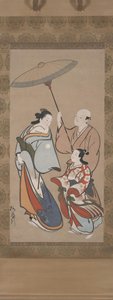
hasegawa eishun 長谷川永春, baiōken nagaharu, takeda harunobu
The Resurgence of Elegance: The Life and Legacy of Hasegawa Eishun In the vibrant, ephemeral world of Edo-period Japan, few artists captured the delicate pulse of the "floating world" with as much refined grace as Hasegawa Eishun. Known variously by names such as Baiōken Nagaharu and Takeda Harunobu, Eishun emerged during a transformative era for ukiyo-e art. While the mid-18th century was often characterized by a shift toward bolder, more experimental styles, Eishun acted as a vital bridge to the past, spearheading a sophisticated revival of the Kaigetsudō school. His work did not merely do…
The Subject Atlas
A chart of hasegawa eishun 長谷川永春, baiōken nagaharu, takeda harunobu's corpus mapped not by date but by subject. Spokes are what they painted; rings are when; and the threads between stars reveal the patrons and places that secretly connect them.
Spokes — Subject
Each arm of the atlas gathers works by what they depict: portraits, sacred scenes, mythologies, and the scientific studies. Click a spoke to swing that cluster to the top.
Rings — Career Period
Distance from the center marks time. The innermost ring is the earliest period; the outermost, the final years. Style matures as you move outward.
Threads — Shared Context
Coloured lines link works bound by the same patron, commission, or theme. Trace a context to watch related clusters light up across subjects.